Understand
Open a bundle in a real reader, switch among graph, treemap, sunburst, and circle-packing views, search by structure, and trace lineage across hops.
Explore knowledge →Open a bundle of Markdown as a graph and a reader, question it with the agent you already use, and review every proposed change before it touches a file.
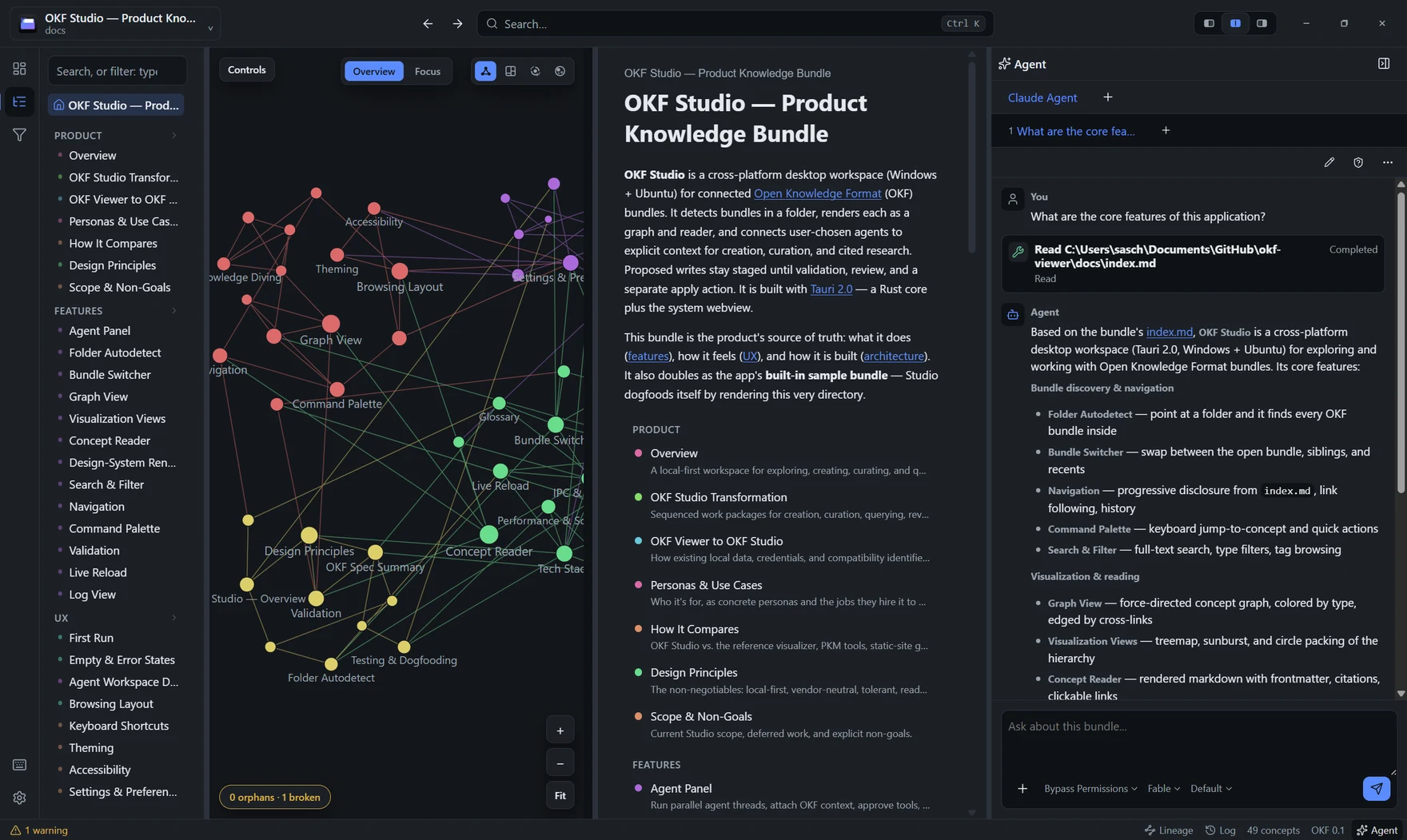
One workspace covers reading a bundle, questioning it, changing it, and versioning the result. Open any area for the details.
Open a bundle in a real reader, switch among graph, treemap, sunburst, and circle-packing views, search by structure, and trace lineage across hops.
Explore knowledge →Ask the agent you choose, right beside the graph and reader. Context goes in explicitly, and every answer keeps an inspectable evidence receipt.
Work with agents →Create knowledge from zero or improve what exists. Writing is checked, changes land in a staged tree, and you review every diff before it touches a file.
Review and improve →Keep the result: commit reviewed changes into Git history without leaving the workspace, and run remote operations only when you ask.
Version with Git →A reader with a live index, highlighted code, and a relationship panel showing what a concept links to and what cites it. Hover a link to preview its target, and branch side quests into tabs that keep their own history.
Explore knowledge →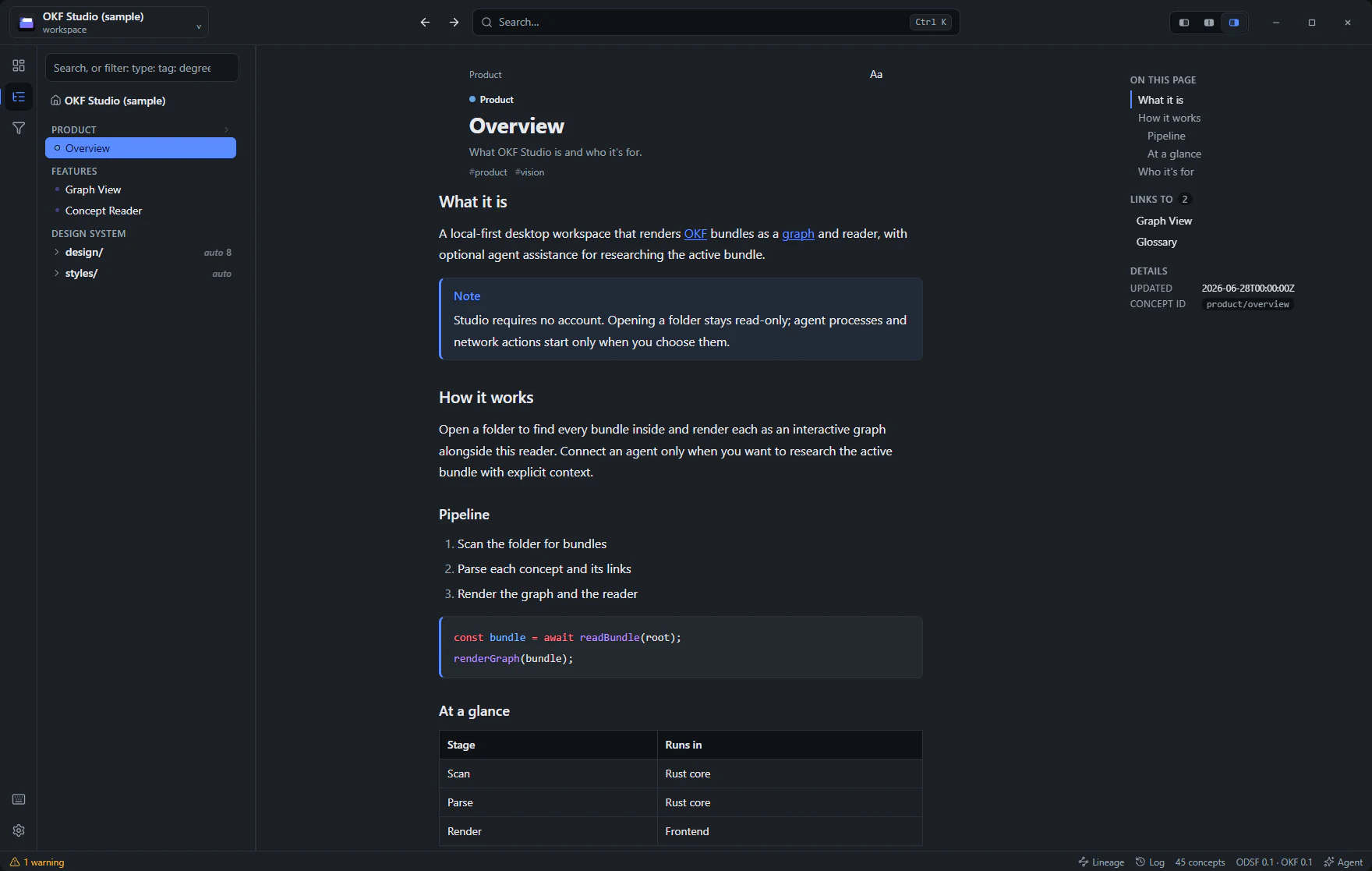
An agent thread runs next to the graph and reader and answers from the open bundle. You see exactly what context goes in, and every answer keeps a receipt of the excerpts it used and the conflicts it found.
Work with agents →Proposed changes wait in a staged tree. You read each diff, deterministic validation runs against the spec, and the change lands in one transaction you can restore, with Git history beside it.
Review and improve →The agent proposes
Changes land in a staged tree, never directly on your files.
You review
Every diff hunk, and every claim before and after.
Studio validates
Deterministic checks against the OKF spec.
You apply
One restorable transaction, committed to Git when you say so.
Each of these is how the app is built, not a setting you can leave in the wrong position.
A bundle is a folder. Each concept is a Markdown file whose frontmatter gives it a type, an owner, and its links to other concepts. That is the whole Open Knowledge Format: no database, no SDK, nothing to export it from later.
It is Google's open, vendor-neutral spec, so a bundle written for Studio still reads in any other tool that speaks it. Design systems get the same treatment through ODSF, which adds tokens and runnable examples; this site is built from one.
---
type: Metric
title: Checkout funnel
owner: growth-analytics
related:
  - concepts/cart-abandonment.md
---

# Definition
Sessions that reach /checkout and complete
payment, over sessions that reach /checkout.revenue-knowledge/
├── index.md the entry point
├── concepts/
│ ├── checkout-funnel.md
│ └── cart-abandonment.md
└── runbooks/
└── revenue-drop.mdFree and open source. Pick your platform.
v0.10.0 · builds are unsigned, so your OS may warn on first launch · macOS builds from source · all releases
Upgrading from OKF Viewer? Migration notes · Requirements and details on the download page