Enemy intent telegraph
Lemma: The enemy shows what they're about to do before the player commits to a response. This converts combat from "RNG fight" into a complete-information optimization puzzle at the per-turn (or per-encounter) timescale. Randomness moves out of what the enemy will do and into what resources the player has to respond with.
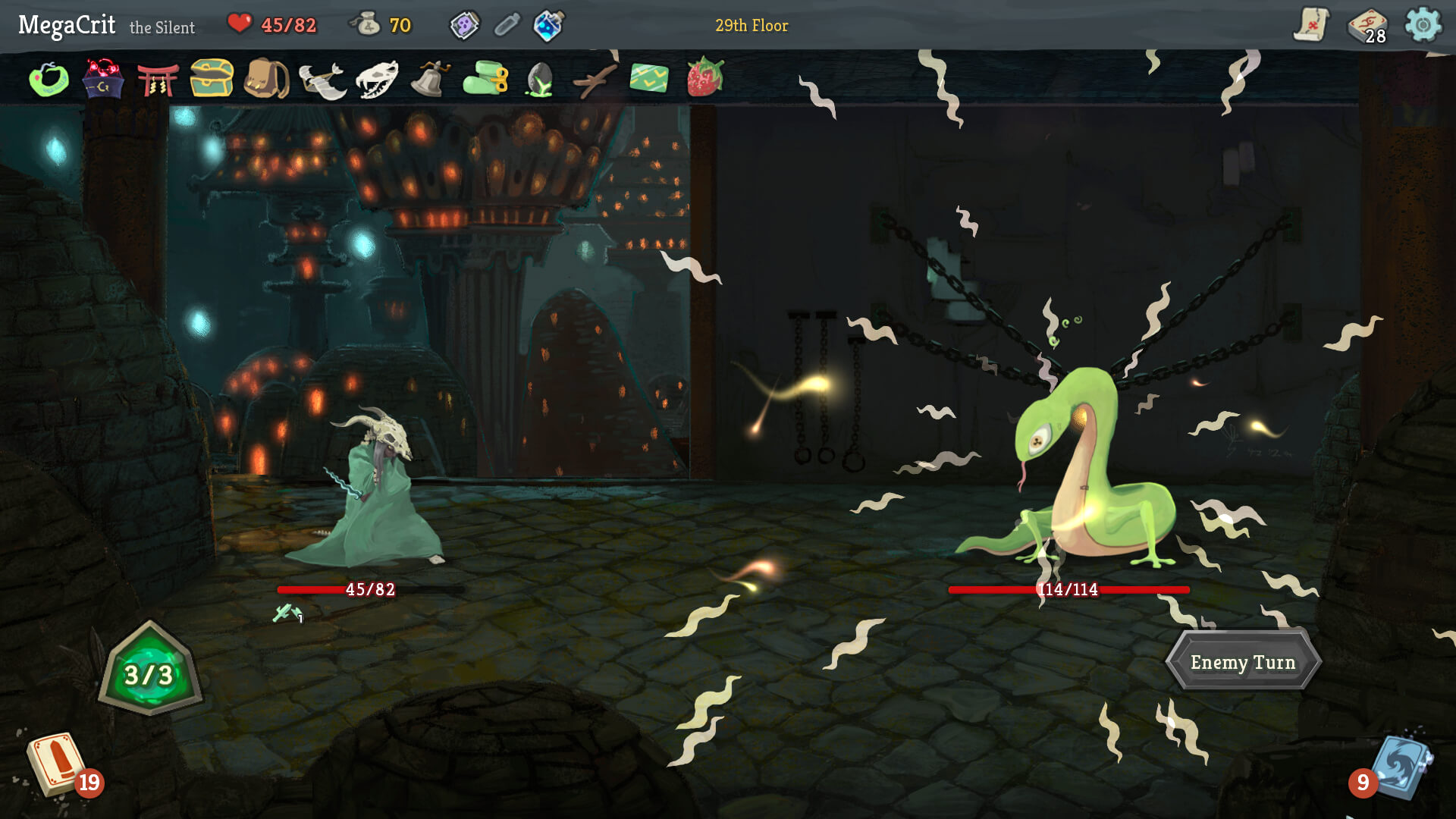 Slay the Spire's intent icons, the canonical implementation. The icon above each enemy shows the next action (attack with damage number, buff, defend, multi-hit count). Combat is a turn-by-turn optimization puzzle, not a coin flip. Source: Steam.
What it solves
A combat system where the enemy's next action is hidden has two failure modes:
- It's pure reaction. Players just spam defense and hope. There's no deliberate planning.
- It's pure pattern memorization. Players who've seen the encounter before know what to do; everyone else dies.
Telegraphing the next attack solves both. Each engagement becomes a decision: given what's coming, what's the best response with what I have right now? That's a puzzle, not a coin flip. And the puzzle is fresh each turn because the resources you have to solve it (the cards in your hand, the cooldowns up, the position you're in) keep changing even when the enemy intent shape is familiar.
Variants across games
| Game | Telegraph form | Timescale | What the player solves |
|---|---|---|---|
| Slay the Spire | Icon above each enemy: attack (with damage number), buff, debuff, defend, special, multi-hit count | Turn-based, before the player's turn | Allocate energy: attack now? block exactly the incoming damage? buff for sustained combat? Block expires next turn, so over-blocking wastes energy. |
| Mega Man Battle Network | Tile state on the 6×3 grid: flashing / coloured panels mark incoming attack zones; charging enemies highlight their row; hazardous floor (lava, poison, ice) is visibly tagged | Real-time, but on a discrete grid | Where to stand. Slide left, jump rows, steal panels to compress the enemy's space. Reaction is positional, not button-press. |
| Sparklite | Genre-default wind-ups: hitch + flash + swing for melee enemies; layered phase patterns for biome bosses | Real-time, top-down action | Dodge in 2D space; learn boss patterns. Tight starter HP makes telegraphs load-bearing: un-telegraphed attacks would make the patch-board tightness feel unfair. |
| Moonlighter 2 | Boss wind-ups + ground markers + projectile fan-outs in 3D isometric | Real-time, mid-combat | Position relative to telegraphed AoEs; commit to perk-locked weapon-combo windows. |
| Path of Exile 2 | Boss/elite wind-ups, cone tells, ground markers, animation commits | Real-time, mid-combat | Dodge-roll now, position before the swing, choose between reactive defense and offense. The "build" doesn't dodge; the player does. |
| Xenoblade Chronicles 1 | A full cinematic of the future hit: the attack plays out before it happens with damage number and status. 5–15 seconds to act. | MMO-real-time, mid-combat | Replan the next 5–15s: shift aggro, buff the target, swap Monado mode, interrupt the wind-up. The most prep-driven telegraph in the genre. |
| Hollow Knight | Boss wind-up animations + recovery windows. Each recovery window is the player's "Focus heal" opportunity. | Real-time, 2D side-on | Read the boss pattern to find the heal window. Greed = eat the next attack and waste 33 Soul. The telegraph design is fully integrated with the heal system. |
| Clair Obscur: Expedition 33 | The attack animation itself, with the type always legible (parryable / must-jump / Gradient-flagged) but the timing deliberately theatrical: delayed wind-ups, mid-swing pauses, off-beat multi-hit strings | Turn-based selection, real-time execution | Choose a defensive verb per hit (dodge safe, parry for AP + counter, jump, Gradient Counter) and land it on a rhythm the animation is actively trying to fake you out of. Timing literacy is the difficulty curve. |
The cases span turn-based to real-time, icon-based to spatial-tile to animation-tell. The insight is invariant: show the player what's coming and let them solve. What changes is the medium of the telegraph (icon, tile colour, wind-up animation) and the response vocabulary (allocate energy, slide rows, dodge-roll, position).
A few are worth contrasting:
- Spire telegraphs what action; PoE2 telegraphs which animation; MMBN telegraphs which tiles. Same pattern, three render targets.
- Sparklite and Moonlighter 2 are the "standard genre default" cases: every action-roguelite has wind-ups. They're listed because the load-bearing role of the telegraph is what makes the tight HP / locked-perk builds feel fair. The pattern earns its concept page even when it's not the headline mechanic.
- PoE1 is the explicit counter-example. Screen-clearing combat dissolves telegraphs into noise; PoE2's slowdown was greenlit partly to restore them. (See
anti-screen-clear-combat.) - Expedition 33 splits the honesty axis in two. Spire-style honesty about what is coming, adversarial hostility about when. That split is why the same system earned both "best combat in a decade" reviews and serious accessibility criticism: the second axis has no assist anywhere outside Story mode.
This pattern is the most-imitated single mechanic in the modern roguelike-deckbuilder: every Spire-like ships intent icons. It's also the keystone of the soulslike combat tradition (Souls / Elden Ring / Sekiro): wind-up + tell + dodge window. And it predates both: tile-grid telegraphs were already the combat language of Battle Network in 2001.
Visual contrast
| Slay the Spire | Mega Man Battle Network | Path of Exile 2 |
|---|---|---|
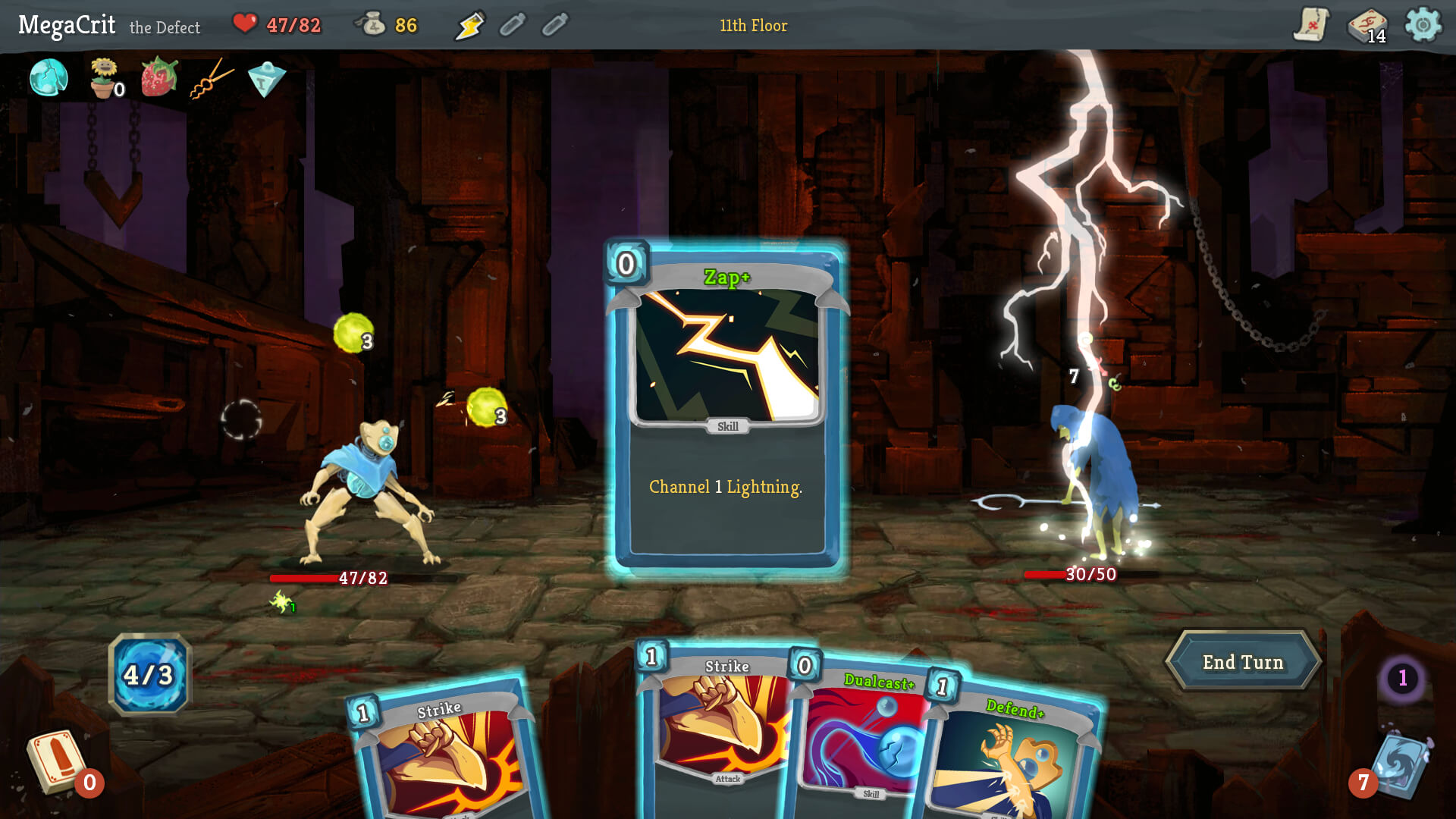 | 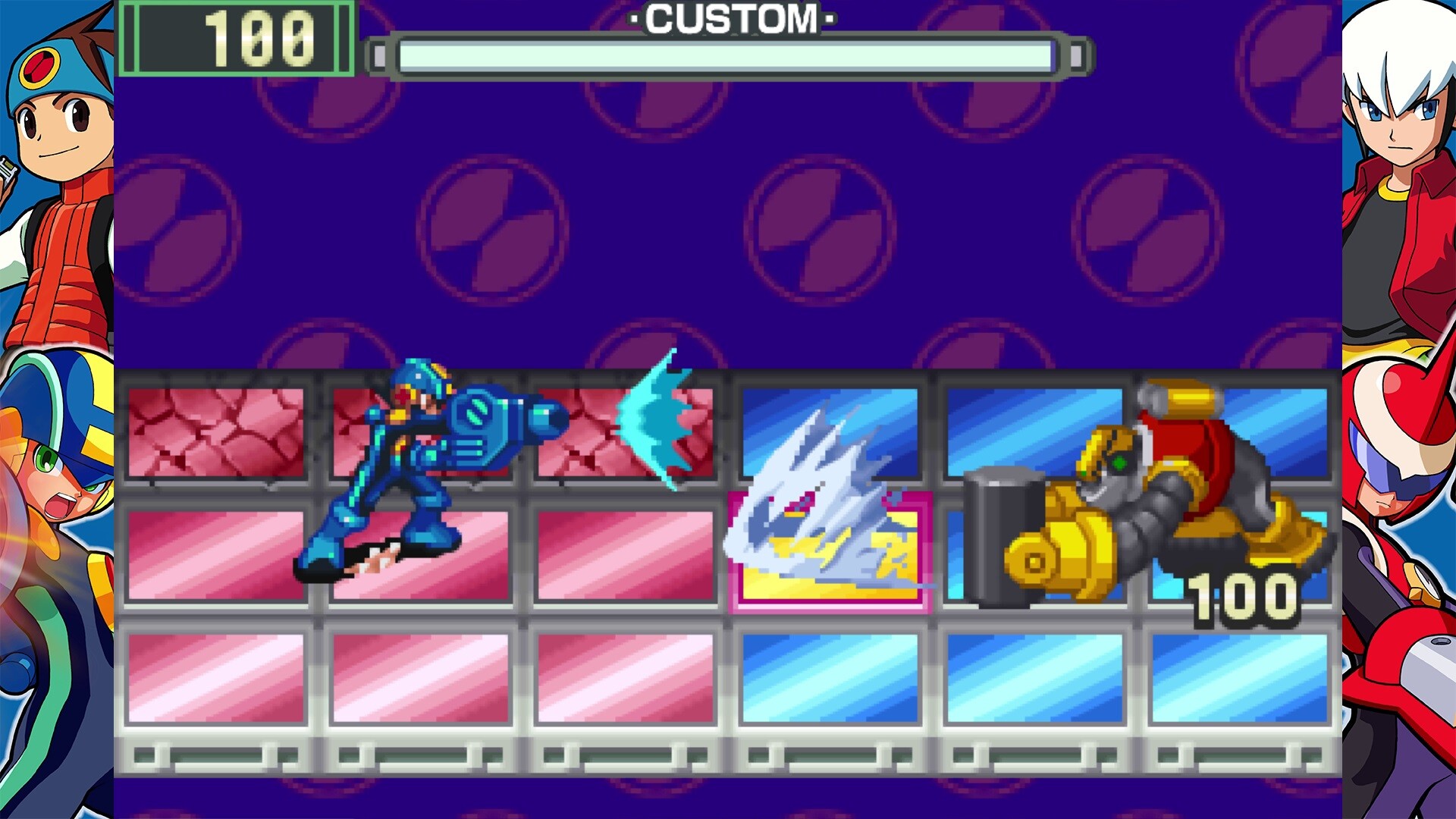 | 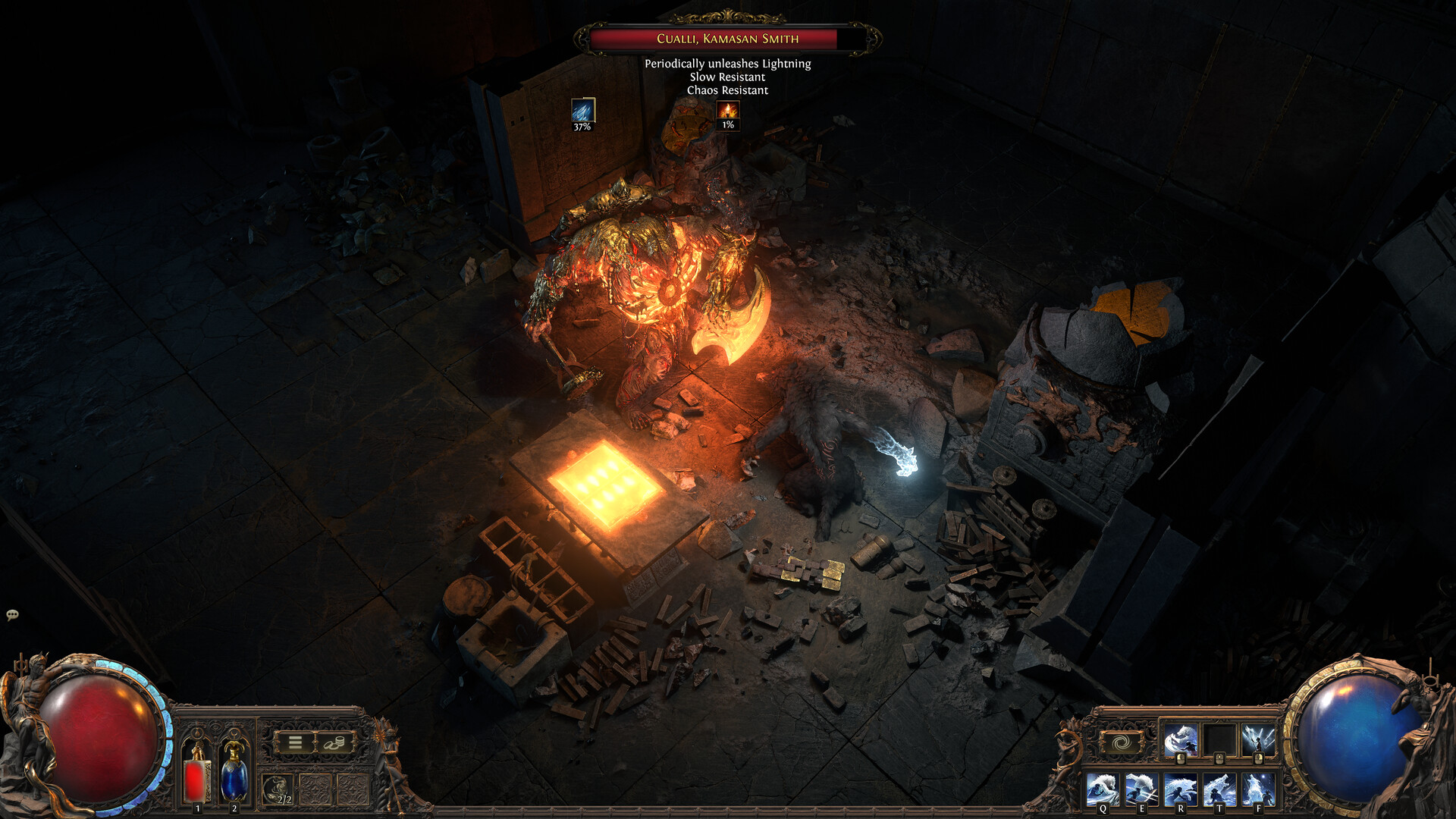 |
| Icon above each enemy = next action. Combat is a per-turn allocation puzzle. | Telegraph through the grid: panels flash, rows highlight, hazards mark the floor. Reaction is positional. | Boss wind-ups + ground markers. Real-time, soulslike-leaning. The player dodges, not the build. |
| Sparklite | Moonlighter 2 | Clair Obscur: Expedition 33 |
|---|---|---|
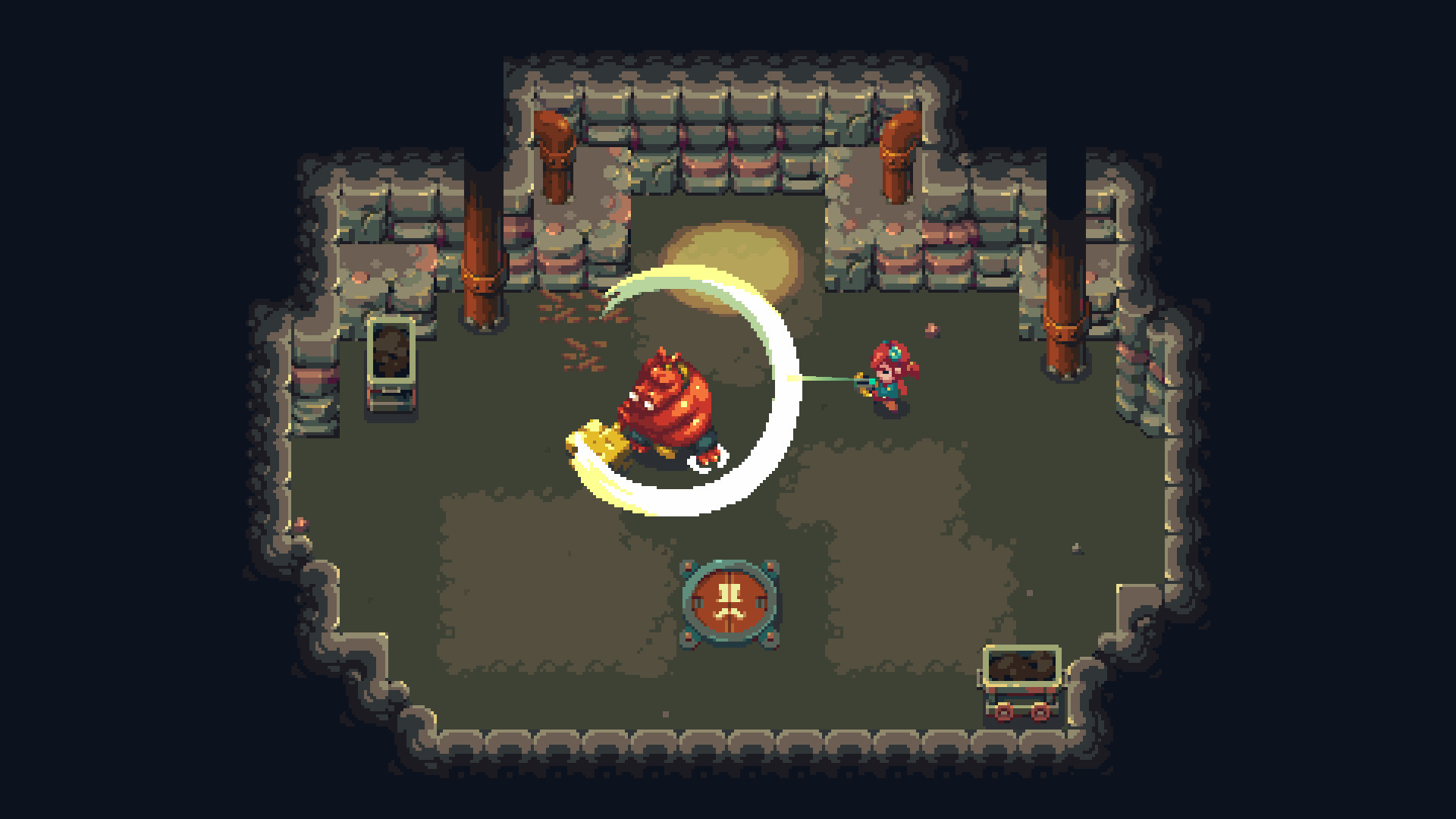 | 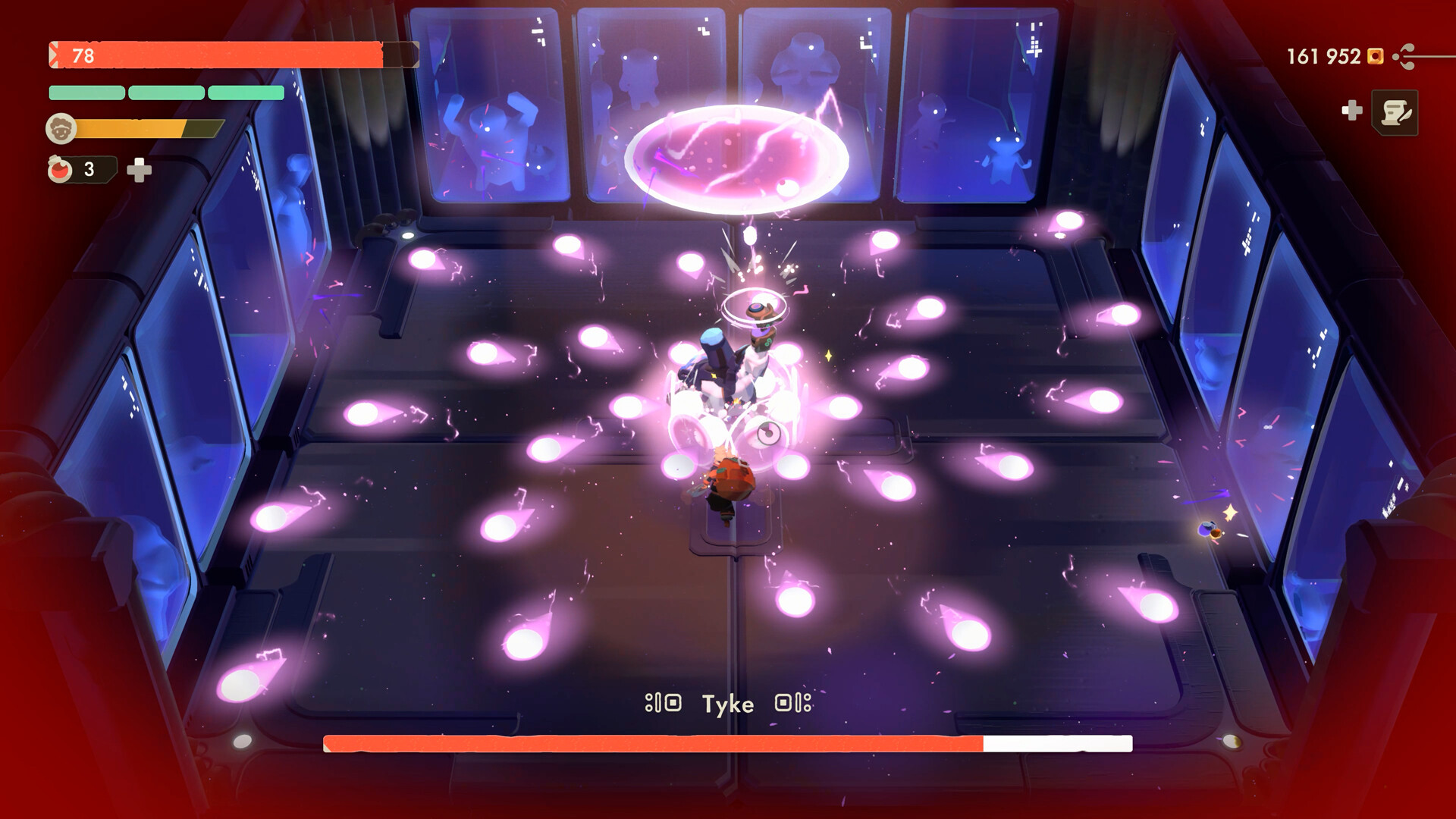 | 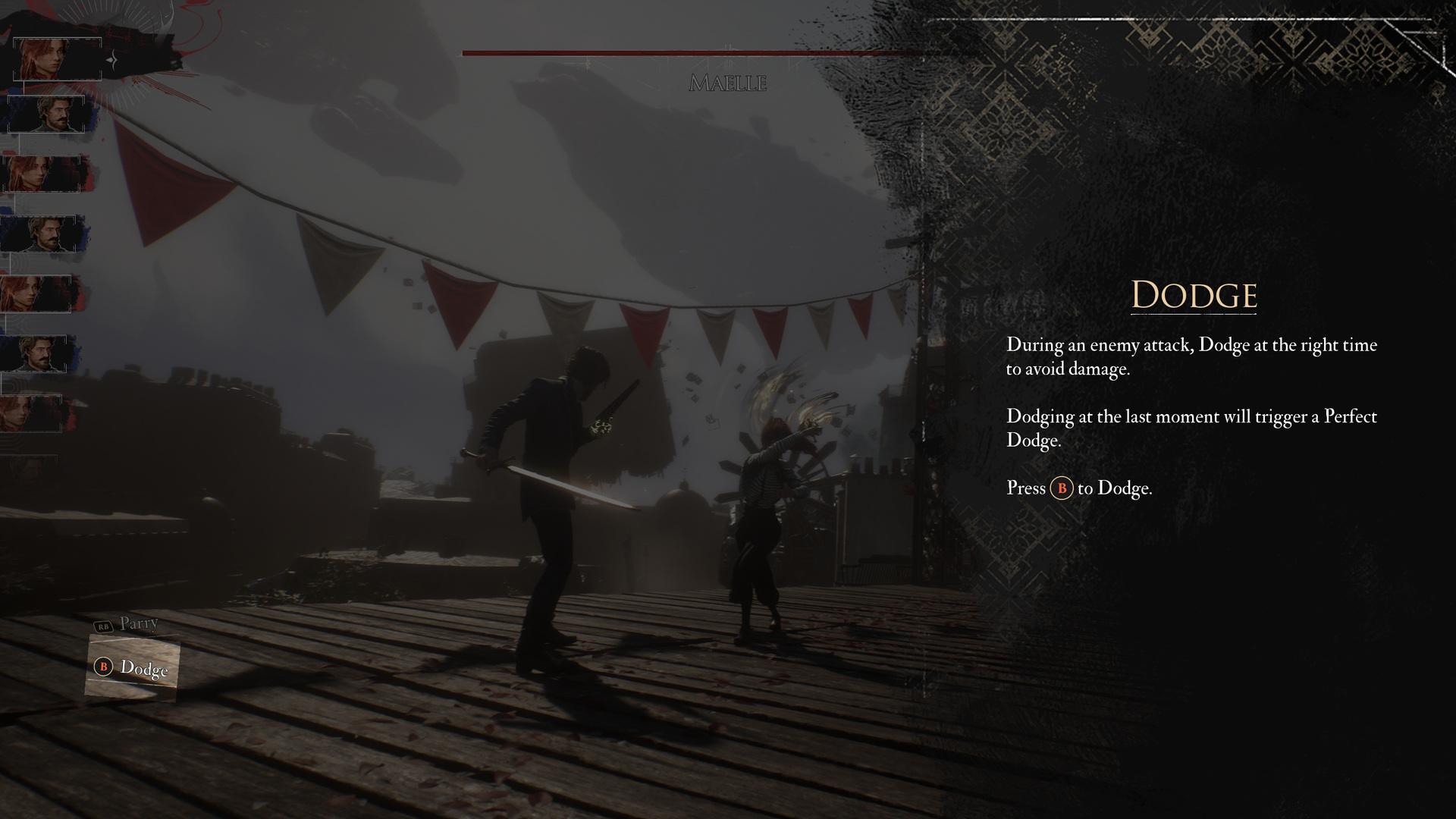 |
| Standard 2D wind-ups + flashes. Load-bearing for the tight 3-heart starter HP. | 3D ground markers + projectile fan-outs. Telegraph as the floor of fairness for locked perk builds. | No icon, no bar: the wind-up animation is the entire channel, and its rhythm is deliberately deceptive. Honest in kind, adversarial in timing. |
When to use this pattern
- Combat designs where the player has limited per-turn or per-encounter resources (energy, dodge stamina, cooldowns) that need allocation against known incoming damage.
- Games that want skill expression to come from decision quality rather than reflexes alone (Spire) or both (Souls).
- Roguelikes / roguelites where re-fighting a slightly different encounter shape benefits from the "same monsters, different draw" puzzle texture.
Avoid when:
- Combat is meant to be hidden-information (poker-shaped, fog-of-war PvP). The whole point of telegraph is removing surprise.
- Encounters are too dense to legibly telegraph. PoE1's screen-clearing combat made telegraphing every monster impossible: there are 80 monsters on screen. Telegraph requires combat slow enough that the player can read the tells. (See
anti-screen-clear-combat.)
Pitfalls
- Telegraphs that lie or omit are worse than no telegraph. If a "defend" intent sometimes does damage, players stop trusting the system and revert to spam-defense. Spire's intent icons are gospel: they tell the truth deterministically. Honesty in the telegraph is non-negotiable.
- Telegraphs that are too dense become noise. A boss with 12 simultaneous tells produces a screen of icons that no one parses. PoE2 has been criticized at high build power when so many telegraphs overlap that none are readable.
- Telegraph + screen-clearing combat is incompatible. If the player kills the enemy before the wind-up resolves, the telegraph is decorative. PoE2 explicitly slowed combat to make telegraphs matter; Spire enforces it via turn structure.
- In real-time variants, telegraph + RNG damage variance can feel cheap. If you dodged the tell but still take damage from an unannounced second hit, the telegraph contract is broken. Souls/PoE2 enforce: if you dodged the tell, you took zero from that attack.
Adjacent patterns
anti-screen-clear-combat: the upstream design choice that makes telegraphing readable. PoE1 vs. PoE2 is the canonical case: same studio, same engine, same genre, opposite combat philosophies.expiring-block: Spire's specific "use this turn or lose it" defense. Telegraph + expiring block is what forces the per-turn allocation puzzle: too much block wastes the energy, too little and the announced damage gets through.bonus-with-drawback: many keystone-style passives in ARPGs interact with the telegraph contract (e.g. "you can't dodge but +damage" turns combat into pure resource math instead of reaction).
Why this matters as a design lesson
The pattern moves randomness off the enemy and onto the player. The enemy is deterministic-in-intent; what's random is which cards drew, which cooldowns are up, which positions are open. That inversion is what lets a fight feel both deterministic-tactical (you know what's coming this turn) and replayable-strategic (your kit varies run to run).
For your own designs: if combat feels like a coin flip, ask whether the player can see what they're solving. If the answer is "no, they just react," telegraphing is the cheapest fix to convert reactions into decisions.