Loadout as budget
Lemma: Power lives inside a fixed budget, points, cells, slots, or hand size. Adding more of one thing necessarily means having less of another. Vertical growth is gated by something the player must spend, not just earn.
What it solves
The naive instinct in progression design is "more = better": more health, more damage, more skills. That instinct produces power-creep, players accumulate everything until the game becomes trivial.
A budget mechanic refuses the more-is-better drift. Power isn't accumulated; it's packed. Every choice is also a sacrifice.
This solves several problems at once:
- Active opportunity cost at every loadout decision.
- Bounded power growth without nerfing content.
- Identity for individual builds: different budgets produce visibly different playstyles.
- Re-engagement: players love rearranging budgets they've outgrown.
Variants across games
| Game | Budget shape | What you "pack" | The packing constraint | Trade-off cost |
|---|---|---|---|---|
| Sparklite | Spatial: 3×3 → 5×5 grid | Patches with Tetris footprints (1–4 cells) | Cells available on the patch board | Fitting a 4-cell damage patch costs 4 cells you can't use for HP / map / energy |
| Warframe | Numeric + categorical: 60 mod points + polarity slots | Mods costing N points each | Total points + matching polarity = packing efficiency | A non-matching slot costs +25%; matching slot costs −50% |
| Slay the Spire | Combinatorial: 3 energy / turn + ~5-card hand from a thin deck | Cards costing energy | Energy per turn + draw consistency | Bigger deck dilutes draws; energy can't carry to next turn |
| Moonlighter 2 | Adjacency-driven: fixed backpack grid where placement triggers synergies | Relics with conditional placement tags (POINTED, ABSORB, corner, row) | Adjacency rules + grid position | Where you put a relic determines whether it triggers a synergy or wastes its tag |
| Path of Exile 1 | Massive numeric: 1500 nodes shared across classes; ~122 points at level 100 | Single-point passives, multi-point notables, keystones, jewel sockets | Total points + pathing: points spent traversing also count | Respec costs Orbs of Regret; full re-spec is endgame-currency-expensive |
| Mega Man Battle Network | Layered fixed budgets: 30-chip Folder + 4×4 NaviCust grid + ~5-card Hand drawn from Folder | Battle Chips (codes A–Z + ★), NaviCust programs (Tetris shapes), opening Hand from random draw | Folder size (30) + Hand size (5) + NaviCust cells; chip codes constrain co-play | Fewer co-playable codes = more dead Hand draws; more bug-tolerant NaviCust = more debuffs |
| Xenoblade Chronicles 3 | Combinatorial: 8-art palette × class × cross-class master: pick a class for each character; pick which 3 arts of that class are active; pick alt-arts from a different mastered class | Arts (class-bound), Master Arts (from another mastered class), accessory slots, gem slots | 8 art slots × ~20 classes × N other classes mastered for cross-slotting | Pick the wrong cross-class slot and you've burned 60+ hours of class mastery; the loadout is the build |
| Hollow Knight | Pure numeric: 11-notch charm budget | ~45 charms with integer costs (1–5 notches each) | Total notches; opt-in overcharm state lets you exceed at the cost of 2× damage taken | A 5-notch charm eats nearly half the early budget; cheap-charms-only vs. one-big-charm builds play very differently |
| Nier: Automata | Numeric storage budget: starts ~64, max 256: that includes the HUD | Plug-in chips: combat passives, Auto-* accessibility, AND the HUD elements (HP bar, minimap, damage numbers). Same chip exists at multiple storage costs depending on quality | Total storage; mandatory OS Chip cannot be removed without dying; three saved Sets (A/B/C) for fast role-swap | Showing the minimap costs storage you can't spend on Auto-Heal. Frame and action share one budget: the only entry where the UI itself is in the loadout |
| Pokémon RSE | Tiny 4-slot moveset per Pokémon, drawn from hundreds of typed options; plus 510 EVs across 6 stats per Pokémon | Battle moves (typed; with PP); Effort Values (cap 252 per stat); held items (1 slot per creature) | 4 move slots: adding a 5th forces forgetting an existing move permanently; EVs hard-capped at 510 total / 252 per stat | A 5th move replaces a 4th: coverage vs power vs status vs finisher; EVs in two stats means none in the others. The smallest-grain canonical case in this knowledge base |
| Balatro | 5-slot Joker loadout from a pool of 150+; slot order matters (Jokers fire left-to-right) | Jokers (passive triggers: flat adders, scalers, conditional triggers, chain meta-jokers like Blueprint) | 5 slots; expansion via Negative editions (rare) and Antimatter voucher; Spectral cards can destroy all Jokers as a "swap" cost | A Joker dropped is 5 turns of build identity gone. Slot order doubles the optimization space: Blueprint copies the Joker to its right, so the chain composition matters |
| Psychonauts 2 | Tiny slot budget: 4 equipped PSI powers from ~9, on two shoulders and two triggers; plus 3 Pin slots bought with currency | Powers (Telekinesis, Pyrokinesis, PSI Blast, Levitation, Mental Connection, Time Bubble, Clairvoyance, Projection) and Pins (passive modifiers, 100–750 Psitanium) | 4 slots, and traversal powers compete with combat powers for them: Levitation is your glide, Mental Connection is your grapple, and both cost a combat slot | Swapping requires a pause-menu rebind, so a mixed enemy wave with a hard counter you didn't bring means opening a menu mid-fight. Two slots are effectively pre-spent on mobility staples |
| Clair Obscur: Expedition 33 | Numeric, level-coupled: Lumina Points per character (≈ character level, permanently extendable via a consumable) | Luminas: passives learned by winning 4 battles with the source Picto equipped, costing 1–40 points each | Total points only; no slot cap, so the budget is the entire constraint | A 40-point Energy Master eats what could be twenty 1–2 point utilities; the budget grows every level, so the trade is re-litigated all game |
Visual contrast
| Sparklite | Warframe | Slay the Spire | Moonlighter 2 | Path of Exile |
|---|---|---|---|---|
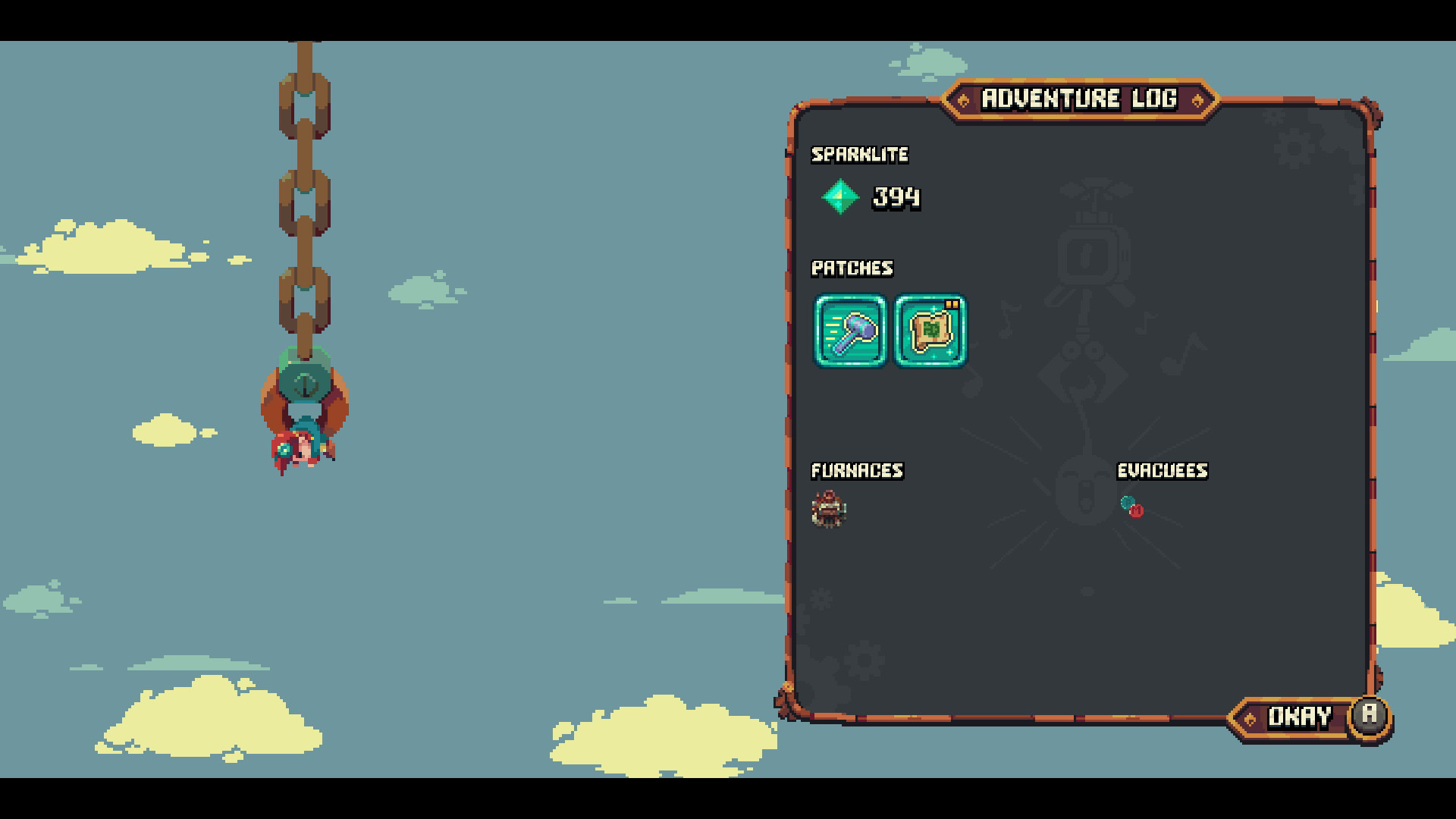 | 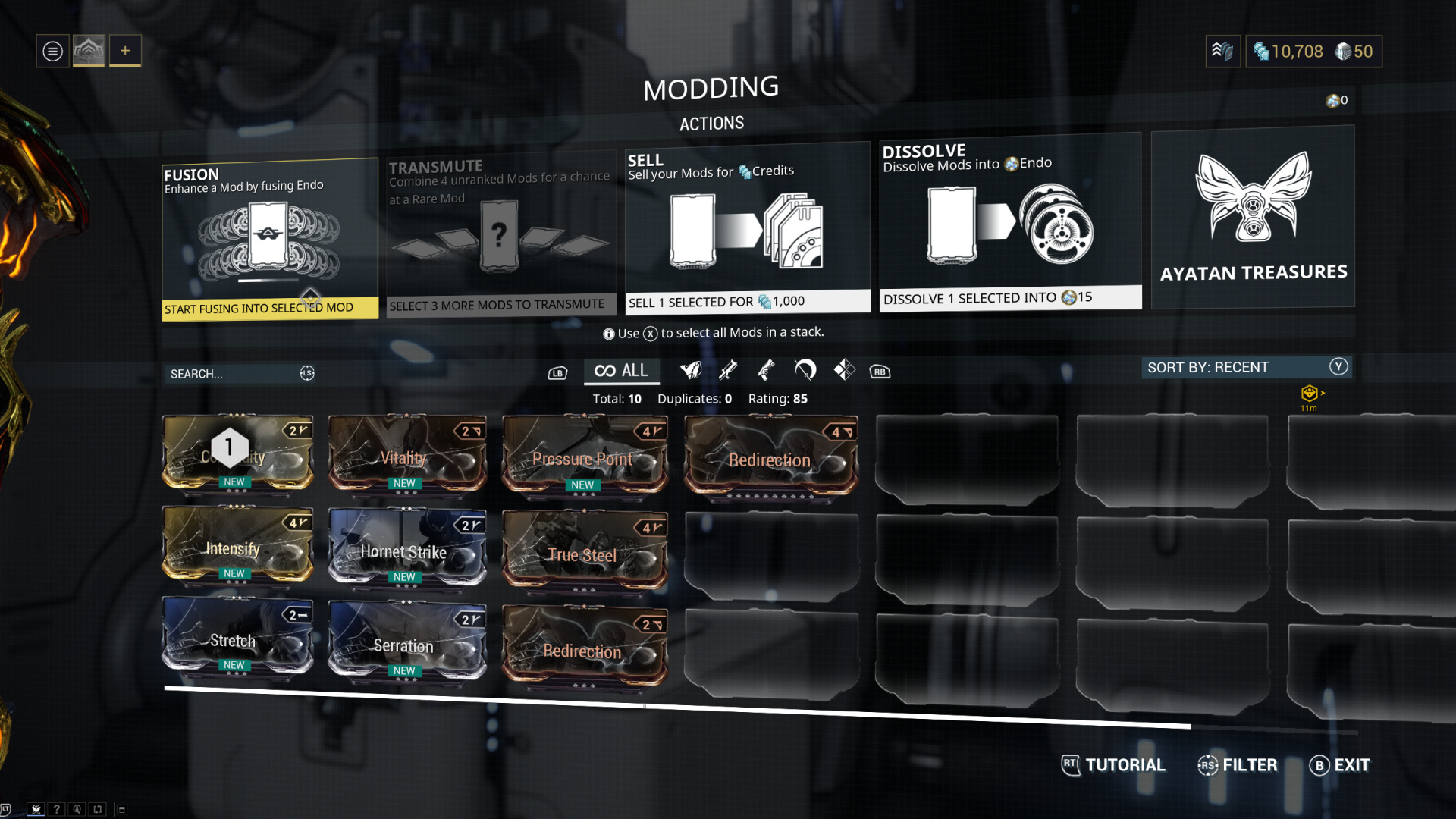 | 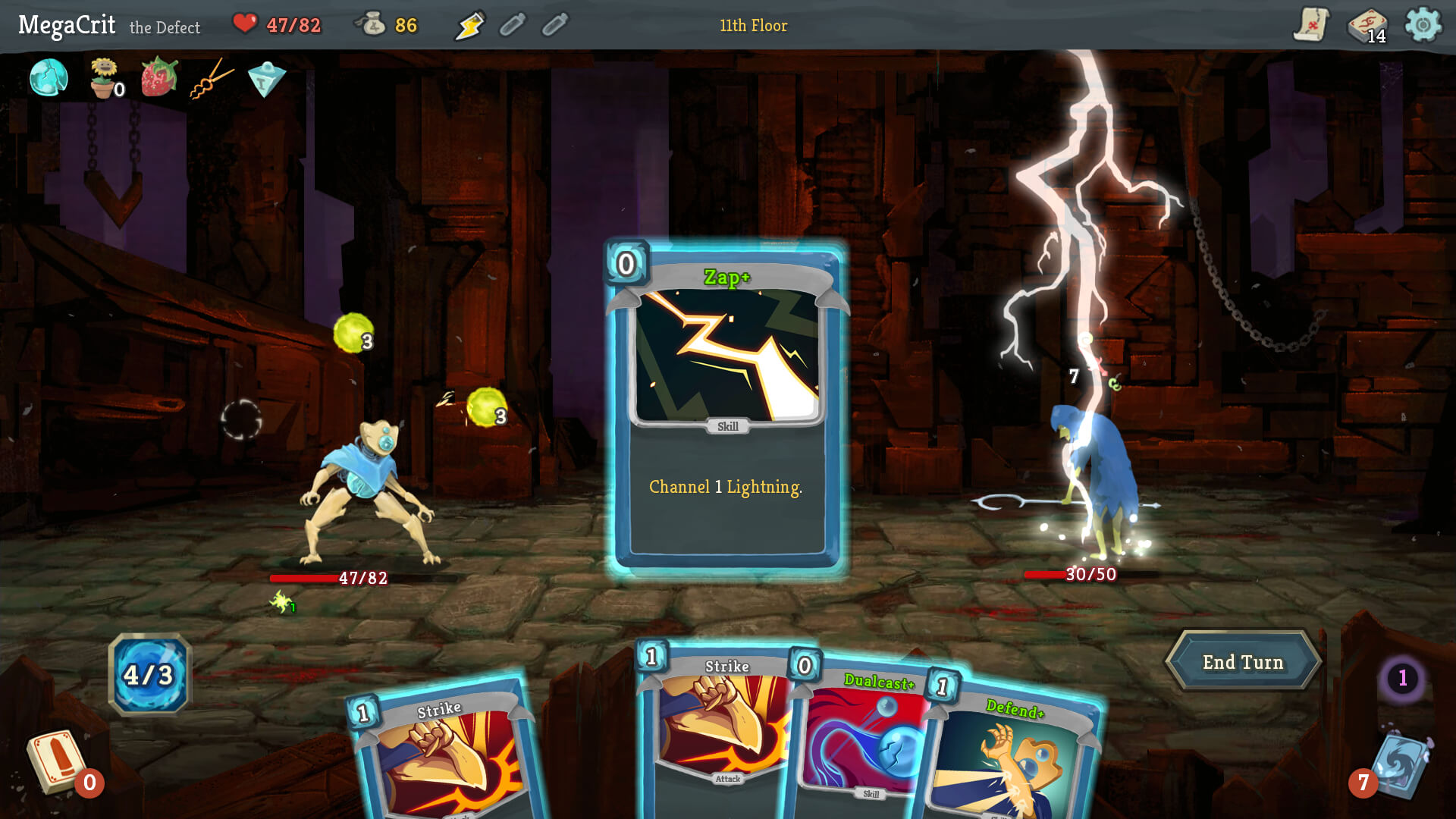 | 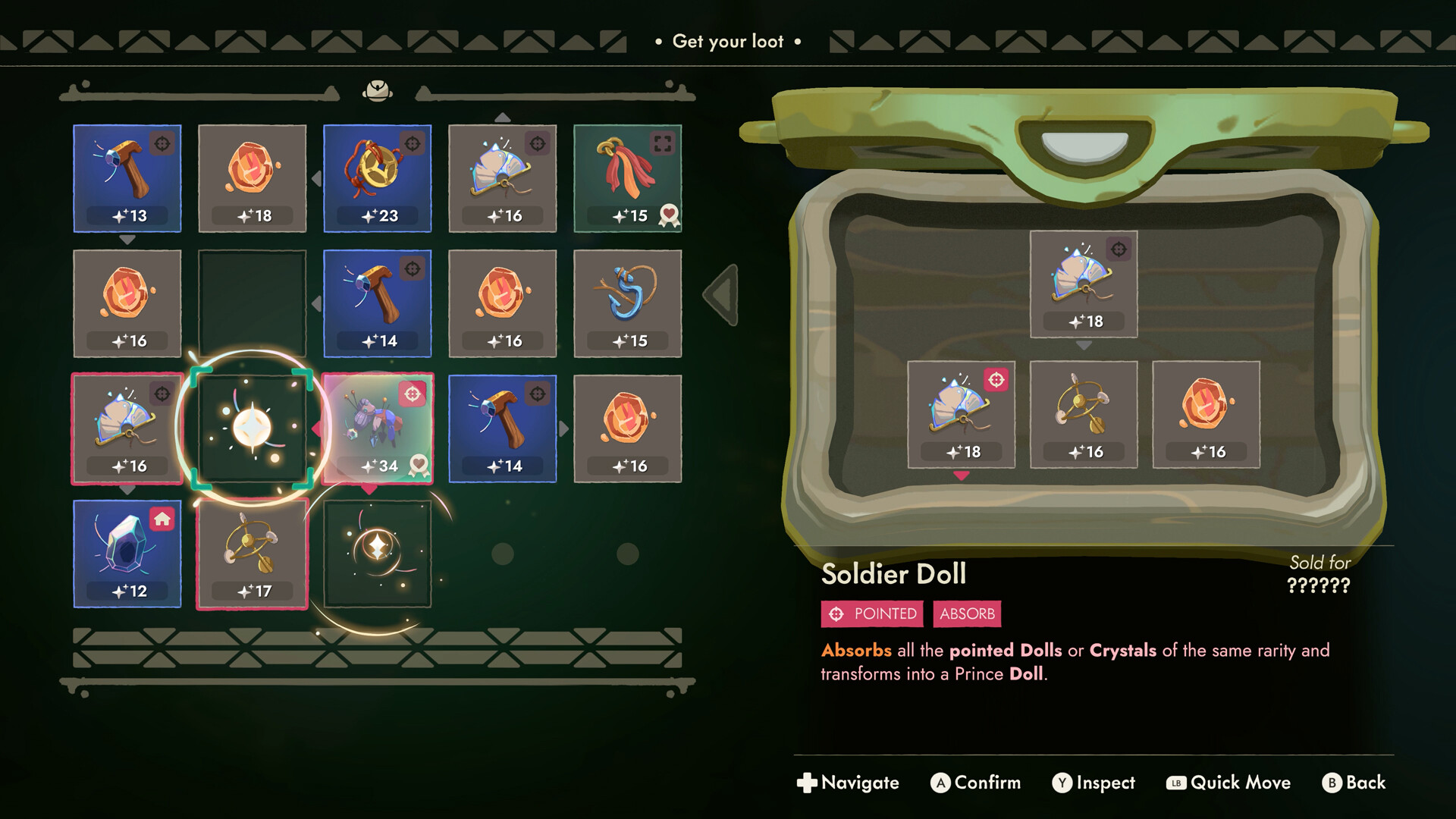 | 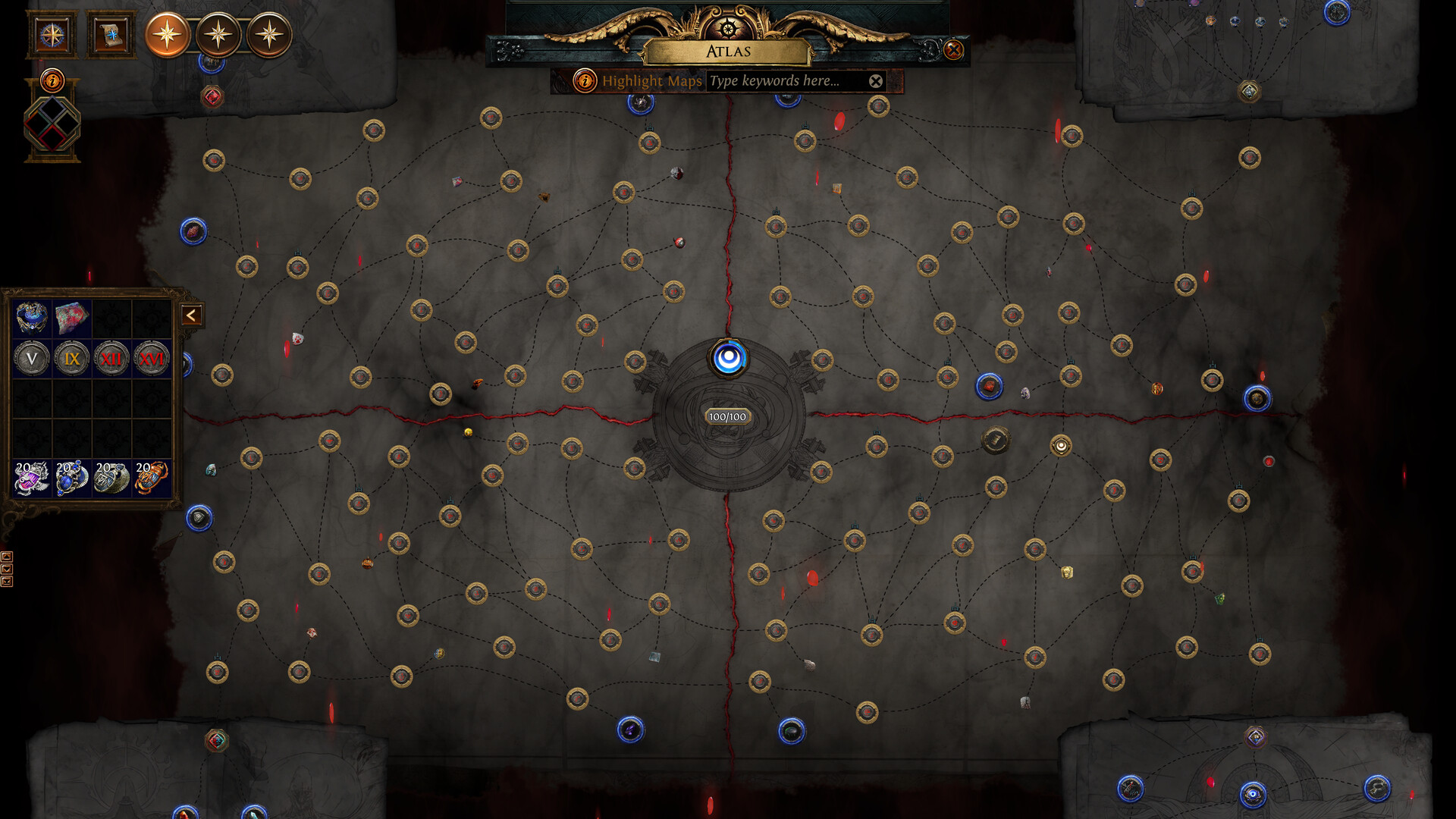 |
| Patches collected, awaiting placement on the Med Bay grid | Mod points + polarity slots; matching polarity halves cost | 4/3 energy + 5-card hand; every turn is allocation | Backpack grid where adjacency triggers POINTED / ABSORB synergies | Atlas tree (≈700 nodes): the meta-budget; the character passive tree is even bigger (~1500 nodes) |
| Hollow Knight | Nier: Automata | Pokémon RSE | Clair Obscur: Expedition 33 | Psychonauts 2 |
|---|---|---|---|---|
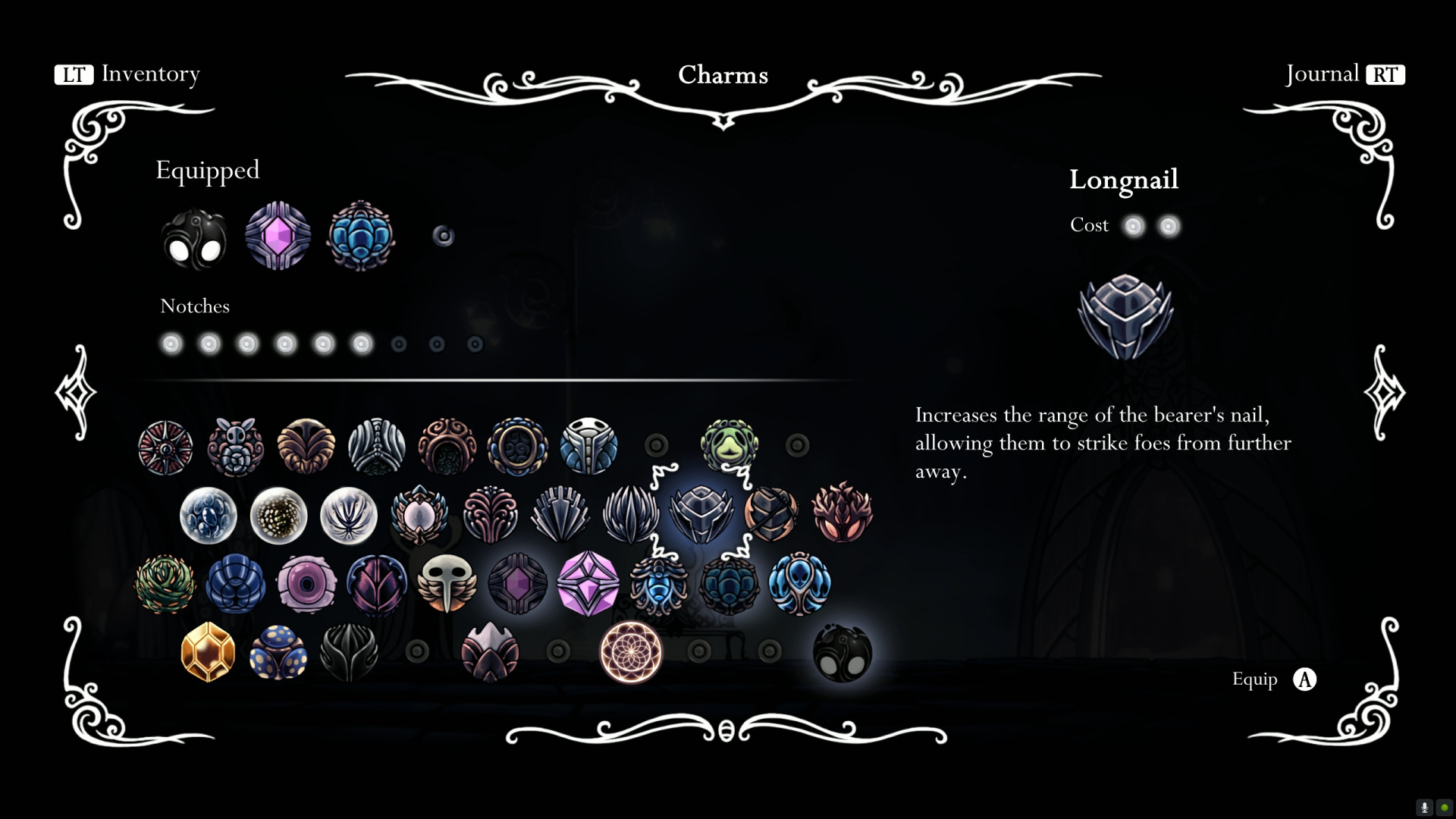 | 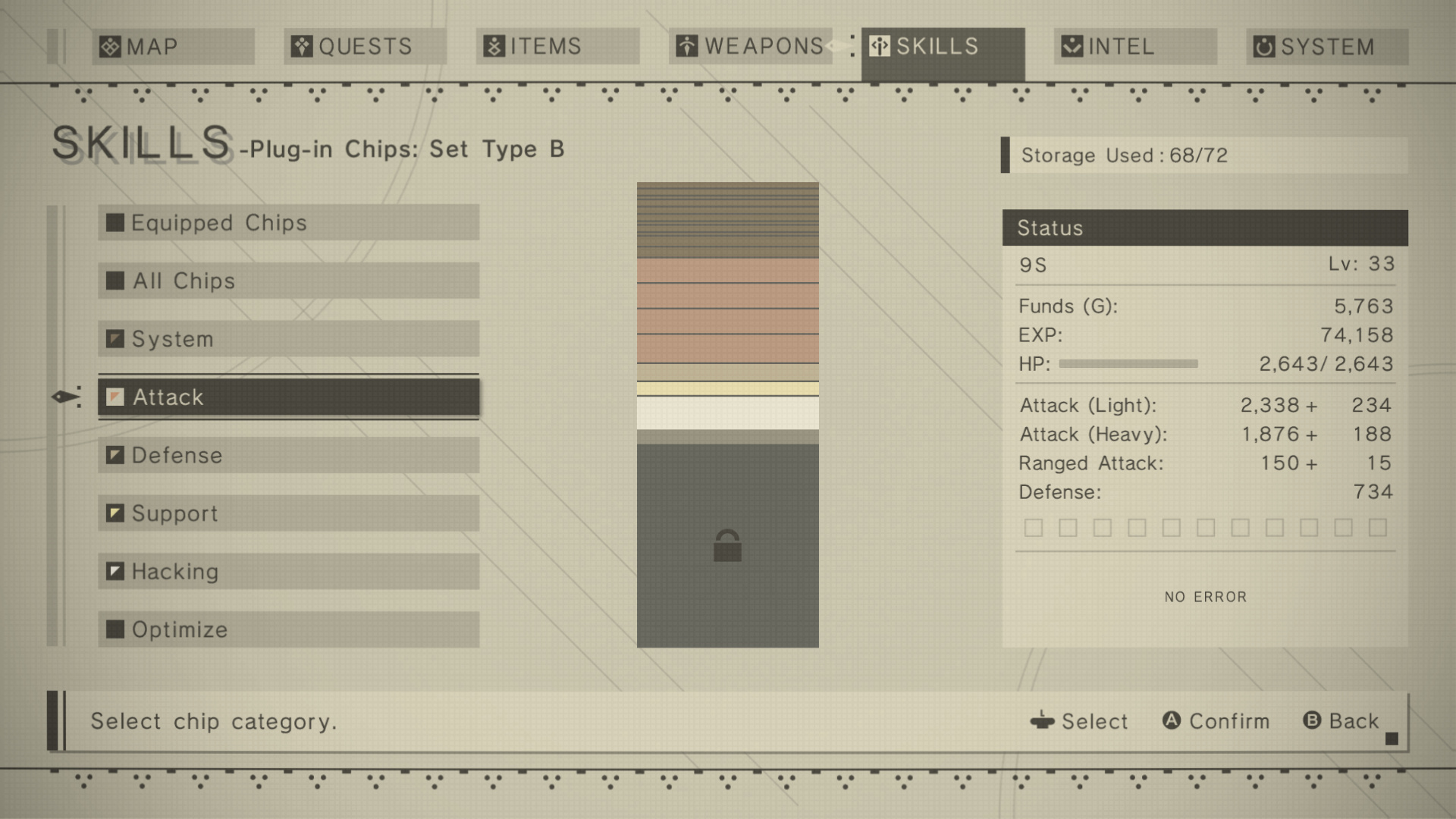 | 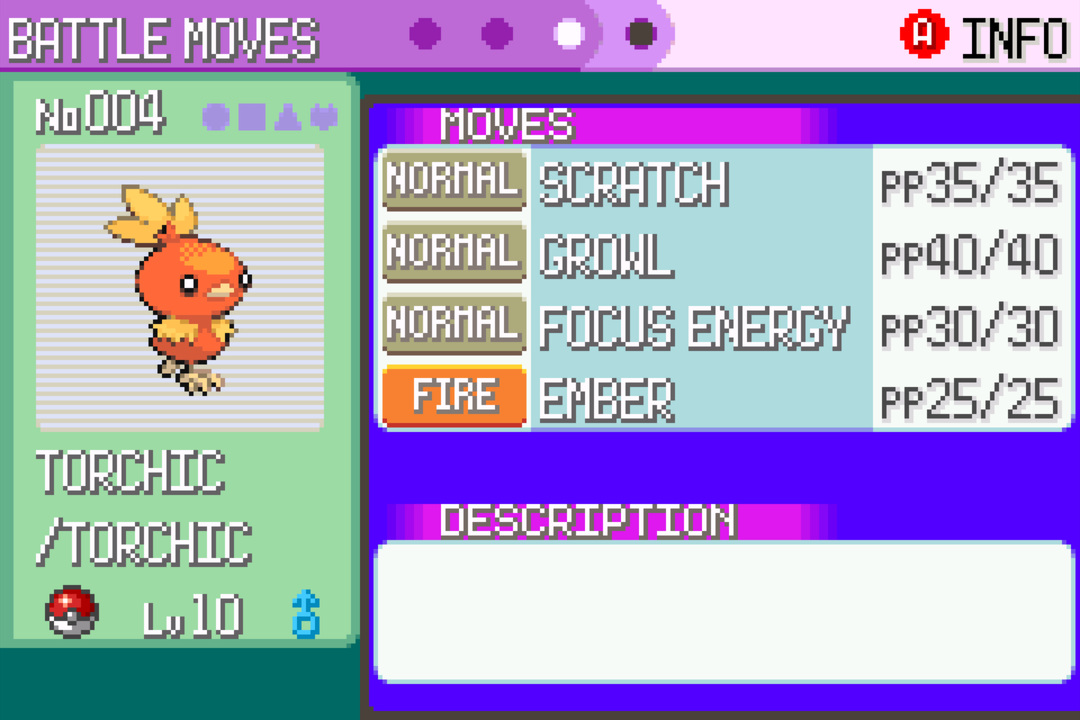 | 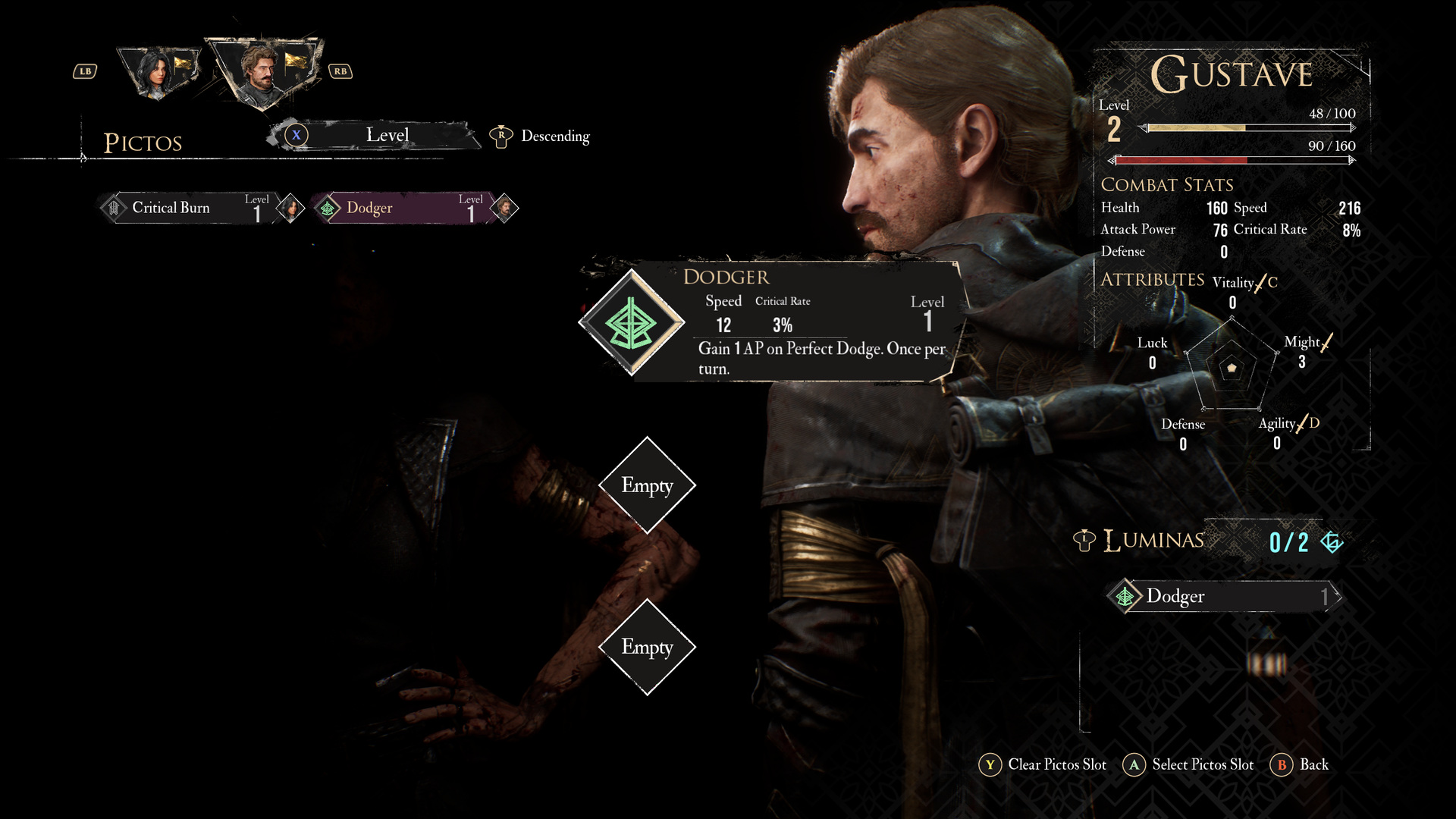 | 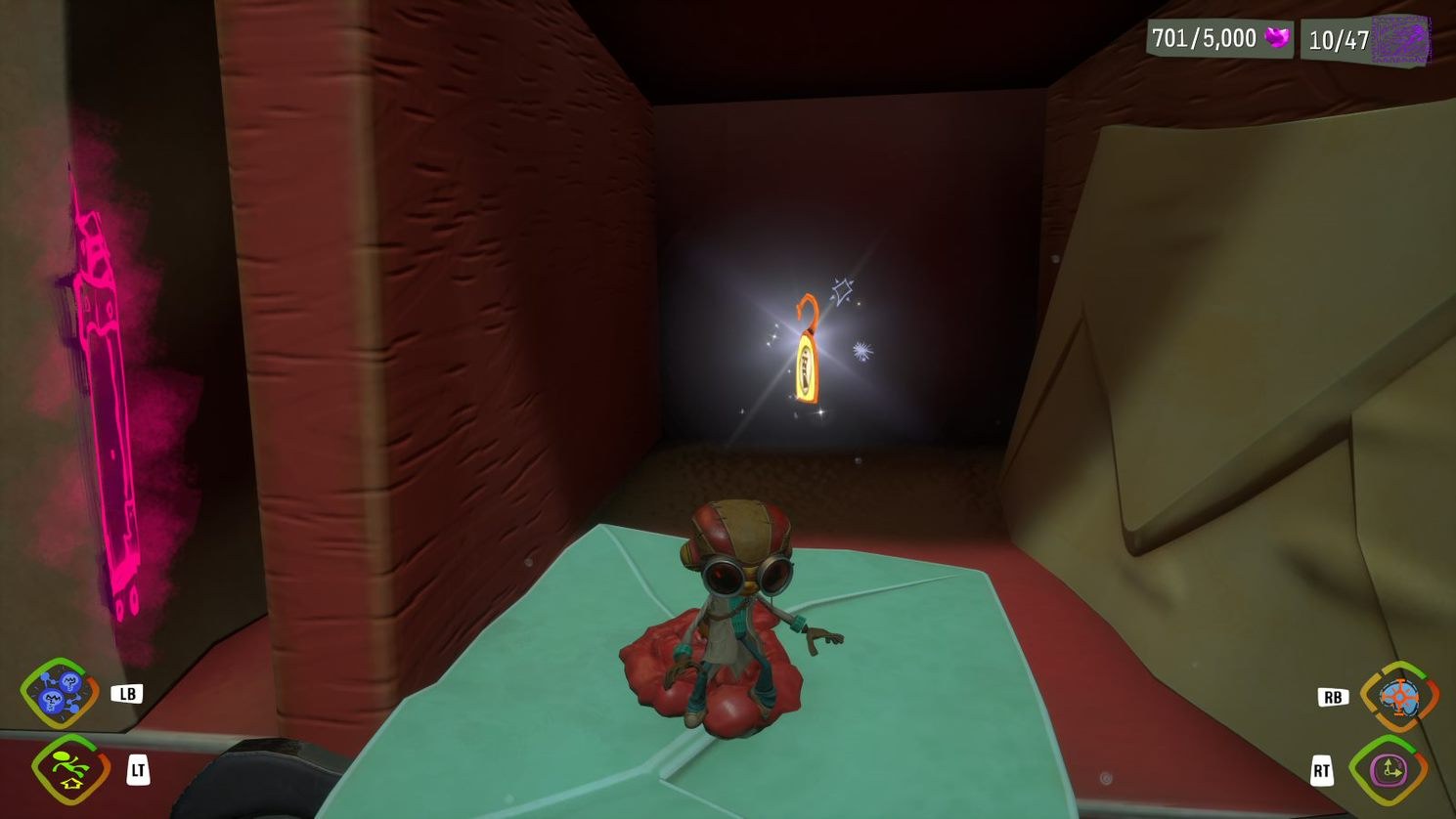 |
| 11 notches, ~45 charms with integer costs. Pure numeric. | 72 storage, chip costs 1–17. Same numeric form: but the HUD elements (HP bar, minimap, damage numbers) are also chips in the same budget. | 4 move slots, hundreds of typed moves. The smallest-grain budget: and the constraint that's anchored Pokémon battling for ~30 years. | Lumina Points (bottom right, 0/2): a budget that starts near zero and grows every level. Costs 1–40 per passive, no slot cap. The only entry here where budget items are learned from other equipment. | The whole budget is the four corner icons. No numbers, no grid, just four buttons, and your glide and your grapple are two of the bidders. The only entry here where movement competes with combat for the same slots. |
When to use this pattern
- Roguelites / run-based games where each run wants distinct identities.
- Looter-shooters / RPGs with long-term build progression that risk power-creep otherwise.
- Deckbuilders, deck-light card games, ability-bar designs.
- Anywhere "more upgrades" would otherwise just keep stacking.
The pattern requires:
- A clear, visible packing space (the grid, the mod points, the hand size).
- A way to expand the budget at real cost (Forma re-leveling, med-bay tier-ups, deck thinning).
- Distinct items with non-uniform "weight": if everything is the same size, the budget doesn't bite.
Pitfalls
- Budgets that are too generous defeat the point. If the player can fit everything they want, the constraint isn't a constraint. Sparklite's mid-game flatness comes from the 5×5 board being roomy enough to fit "the answer."
- Budgets that never expand feel punishing. Players need progression somewhere: the budget itself is a good axis of progression (Sparklite's med-bay tiers, Warframe's Reactor/Catalyst).
- Spatial budgets are intuitive but author-heavy. Designing patches/items with multiple footprints takes more art and tuning than a flat numeric cost.
- Numeric budgets can feel abstract. Warframe's polarity-matching is initially opaque to new players. The math has to be explained well or the depth is invisible.
Adjacent patterns
power-creep-mitigation: broader category. A loadout budget is one mechanism for mitigating power creep; there are others (e.g. enemy scaling, content gating).opportunity-cost-loadout: restates the trade-off framing.subtractive-deckbuilding: Spire's specific implementation: a deck that's too big is worse, so the budget pressure is internal to the deck rather than external to it.grid-inventory: the specifically-spatial flavor.
Why this matters as a design lesson
The variants above show that the same design problem (preventing power-creep while keeping progression interesting) can be solved with completely different math, spatial, numeric, or combinatorial. The choice of math shapes the feel of the constraint:
- Spatial budgets feel puzzly and tactile.
- Numeric budgets feel algebraic and optimization-driven.
- Combinatorial (deck-based) budgets feel probabilistic and adaptive.
Pick the math that fits your game's tone. The pattern is the same; the texture is yours to design.