Combat
A near-complete redesign from the original. The 2D top-down pixel-art game became a 3D isometric action-combat game, with combat depth borrowed from Digital Sun's other titles.
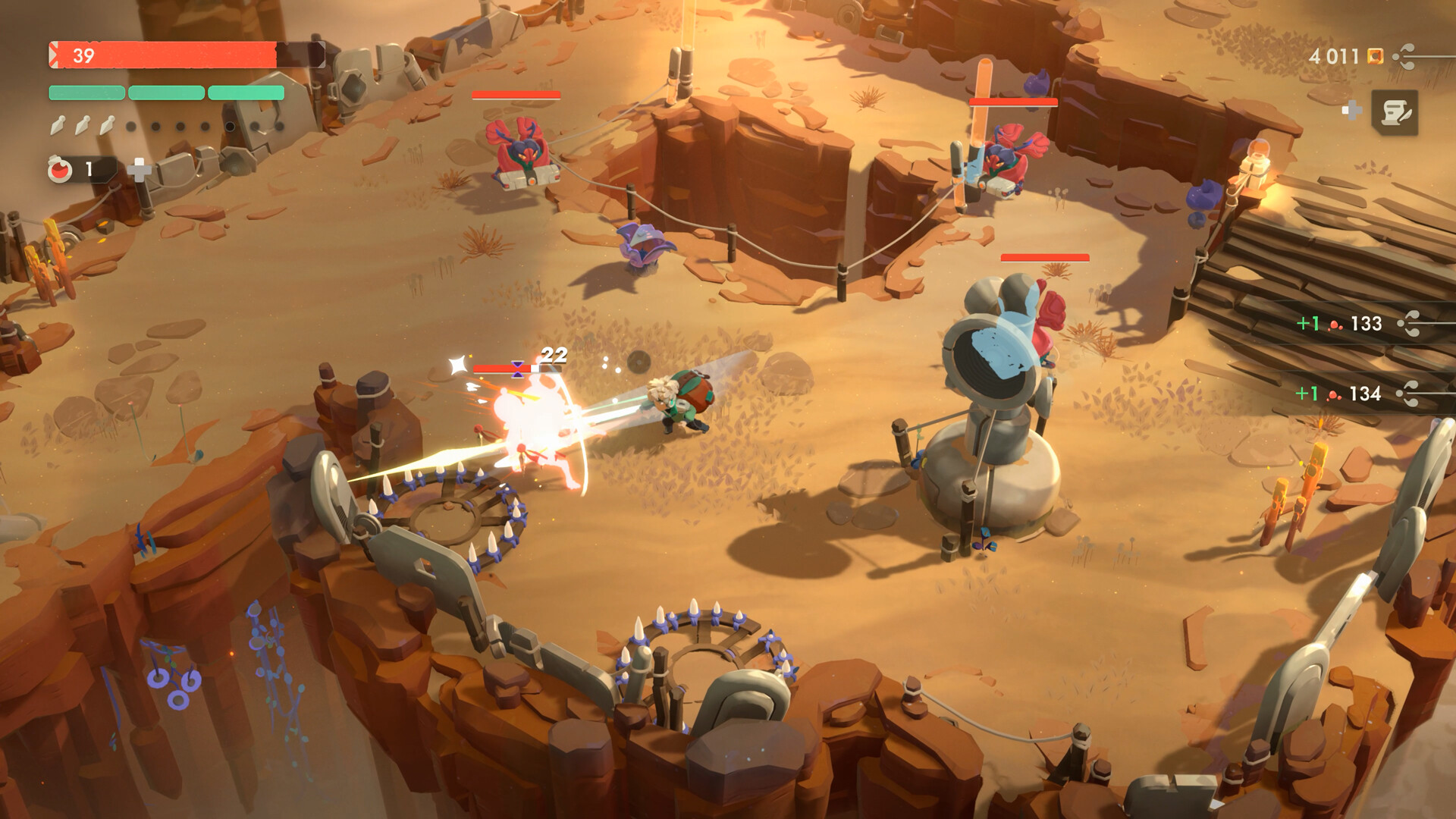 Top-down 3D combat in Zephyr Fields. Note the three perk slots in the upper-left HUD (greyed/teal squares); these track perks chosen along the dungeon map (Hades-style). Source: Steam.
Four weapon types
Moonlighter 2 ships with four main weapons (vs. the original's larger but flatter set):
- Sword: close-range, fast.
- Hammer / heavy: slow, AoE.
- Bow: ranged.
- Wand / projectile: magic.
Each weapon has its own moveset and combo grammar. Reviewers cite the combat as substantially deeper than the original, partly because Digital Sun's prior projects (The Mageseeker, Cataclismo) gave them combat-system experience the original Moonlighter didn't have.
Perks (Hades-style boons)
Mid-run perk node-pickups (Ice / Thunder, etc.) attach modifiers to your loadout. ~100 perks across the game. Picking one closes off others; perks are run-defining, not stackable, very much in the Hades model.
Boss encounters
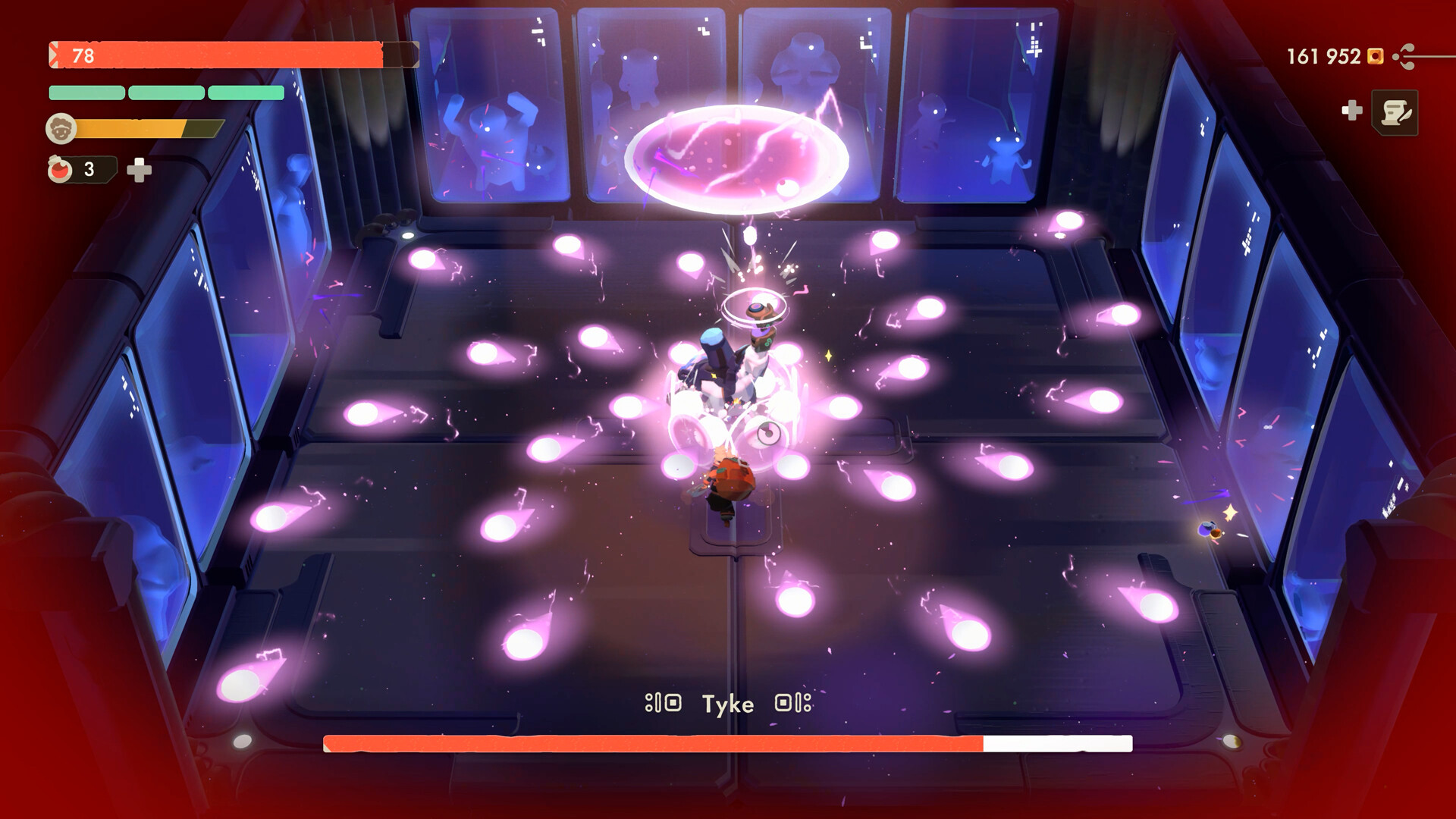 A boss encounter: bullet-hell projectile patterns in 3D. Source: Steam.
Bosses end each biome arc. Mechanically standard for the genre (telegraphed attacks, multi-phase, arena hazards). Their design role is the gate at the end of a map run: beating them grants progression to the next biome and unlocks new village investments.
What this teaches
- 3D action combat is harder than it looks for a sequel. Reviewers consistently note the 2D→3D shift loses some charm even as it gains depth. If you sequel a beloved 2D game in 3D, expect this trade-off and design for it.
- Genre fusion lives or dies on the action half. The original Moonlighter's biggest weakness was its combat; the sequel's biggest improvement is its combat. The shop side was already good. Making the dungeon side actually compelling is what unlocked the genre-fusion potential the franchise always had.
Patterns this exemplifies
handcrafted-pcg-hybrid: encounters / arenas hand-authored, dungeon path procedurally arranged.enemy-intent-telegraph: boss attacks announce themselves via wind-ups, ground markers, and projectile fan-outs in 3D. Standard for the action-roguelite genre.