Moonlighter 2: The Endless Vault
Sequel to the 2018 dungeon-crawler-meets-shopkeeper-sim. Goes "full roguelike", explicitly Hades-inspired, with a 3D isometric remake of the original's dual-life loop. Worth dissecting because the genre fusion (action roguelike + tycoon-sim) sits under one of the most original loadout mechanics in indie: the backpack as a Tetris-like price-stacking puzzle.
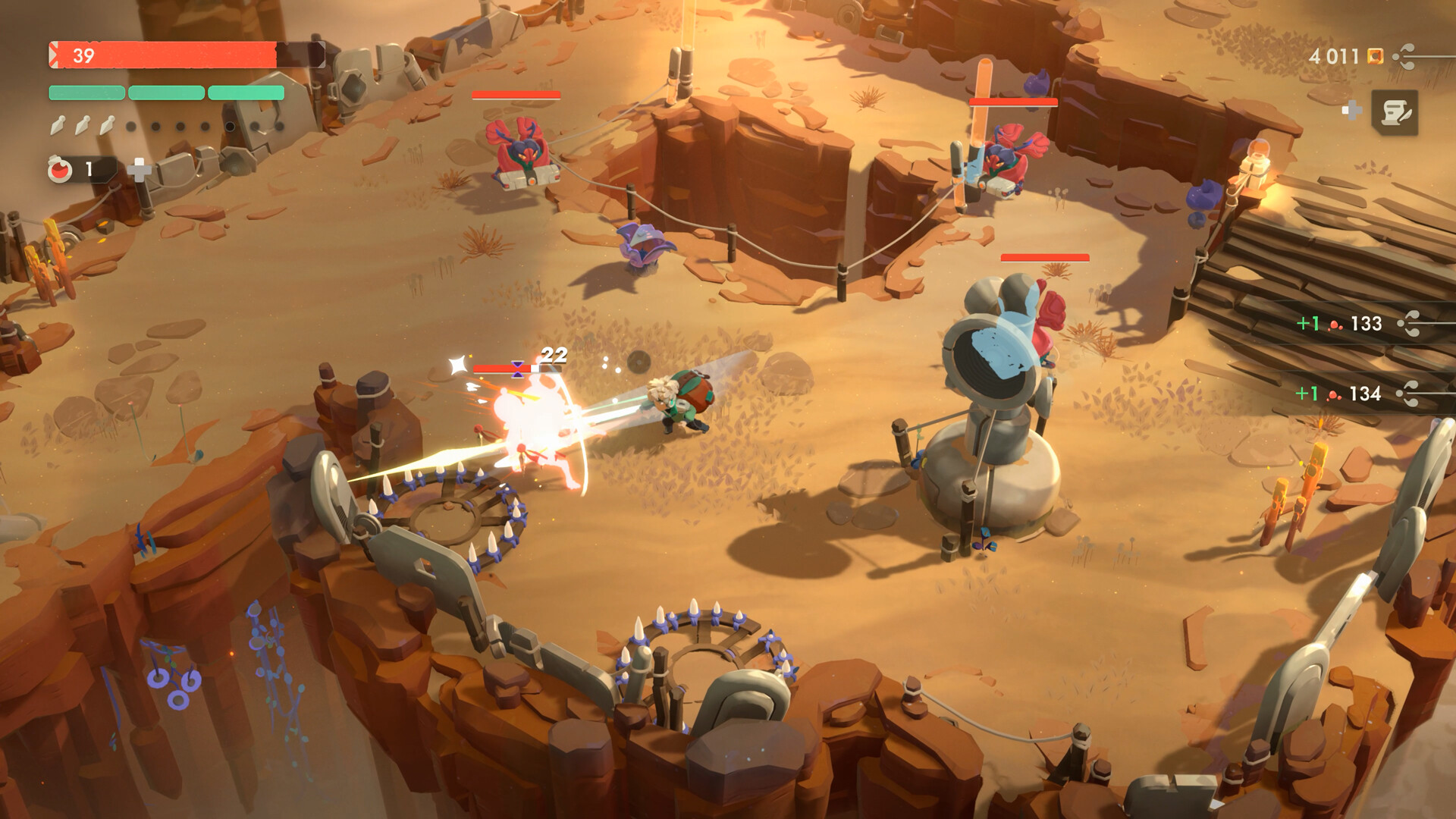 Top-down 3D combat in a Zephyr Fields biome. The 2D pixel-art original is now 3D isometric, with a deeper combat system inherited from Digital Sun's work on The Mageseeker. Source: Steam.
Snapshot
| Studio | Digital Sun (Madrid) |
| Publisher | 11 bit studios |
| Released | November 19, 2025 (Early Access) |
| Platforms | PC, Mac, Xbox |
| Run length | ~30–60 min per dungeon descent |
| Iconic mechanic | Backpack-puzzle pricing + dual-life loop |
| Core dialectic | Greed vs gold: go deeper for loot, but a bigger haul means harder packing |
| Inspirations | Original Moonlighter (2018), Hades (map + perks), Slay the Spire (path choice) |
| Sibling projects | The Mageseeker, Cataclismo (combat depth + 3D experience came from these) |
Macro loop
Tresna village (persistent hub)
  → set up shop, pick the day's perks/decorations
  → enter Endless Vault dungeon
    → choose path on the map (Hades/Spire-style DAG)
      Chest, Event, Potion, Blacksmith, Recipe, Elite, Miniboss, Boss, Ice/Thunder Perk
    → fight through encounters, loot relics
    → arrange relics in the backpack, a placement puzzle
       (POINTED / ABSORB / corner / row / column synergies stack quality)
    → return to Tresna (or die; die and you keep what fits)
  → showcase relics in display cases for customers
    → quality % multiplier × popularity stat → sale price
    → customer reactions (faces) tell you when to lower or hold
  → end of day: tally sales → invest in village NPCs / blacksmith / shop upgrades
  → next day
The hook: two mini-games stitched together by the loot. The dungeon teaches you to go deeper for better relics; the shop teaches you that better relics aren't worth more unless you pack them right. Greed pulls in two directions at once.
Mechanic deep-dives
- Dual-life loop: dungeon by day, shop by night; the original Moonlighter's signature, evolved.
- Backpack puzzle: the iconic mechanic. Relics with POINTED / ABSORB / row / column synergies; quality stacking.
- Dungeon map: Hades/Spire-style DAG with rich node types and perk-track choices.
- Shop & pricing: showcases, customer reactions, popularity, day-themed bonuses, decorations.
- Combat: 3D isometric, four weapon types, ~100 perks.
- Progression: village investment, blacksmith upgrades, perks.
Through other lenses
- Ludonarrative reading: these mechanics read through the resonance lens. Verdict: affirms. The dual-life loop and backpack-as-sales-prep are the structure of the gameplay's halves, not decoration on it.
What this game teaches
- Loot value can be a placement problem, not a quantity problem. Most games make you pick which loot to keep; Moonlighter 2 makes you pick where to keep it. Quality stacks dramatically with adjacency.
- Mini-game-as-loadout works. The backpack is the loadout and the puzzle and the price-discovery layer, all in one screen.
- Genre fusion needs a single binding constraint. The dungeon-roguelite and the shop-sim are both viable on their own. What binds them is the same items flow through both, with each game taking a different stance on what those items are for.
- Hades-style maps generalize. Even a shop sim benefits from "pick your route" replacing "auto-advance through random rooms."
- Sequels can re-platform safely if the core loop is preserved. The 2D→3D shift was substantial; reviewers note combat pacing changed, but the loop is recognizably Moonlighter.
See lessons for the longer take.