Sparklite
16-bit top-down action-adventure × roguelite. Top-of-mind because of two things: a Tetris-style "patch board" that turns power upgrades into a spatial puzzle, and "permalife", death reshuffles the world but the character keeps progress.
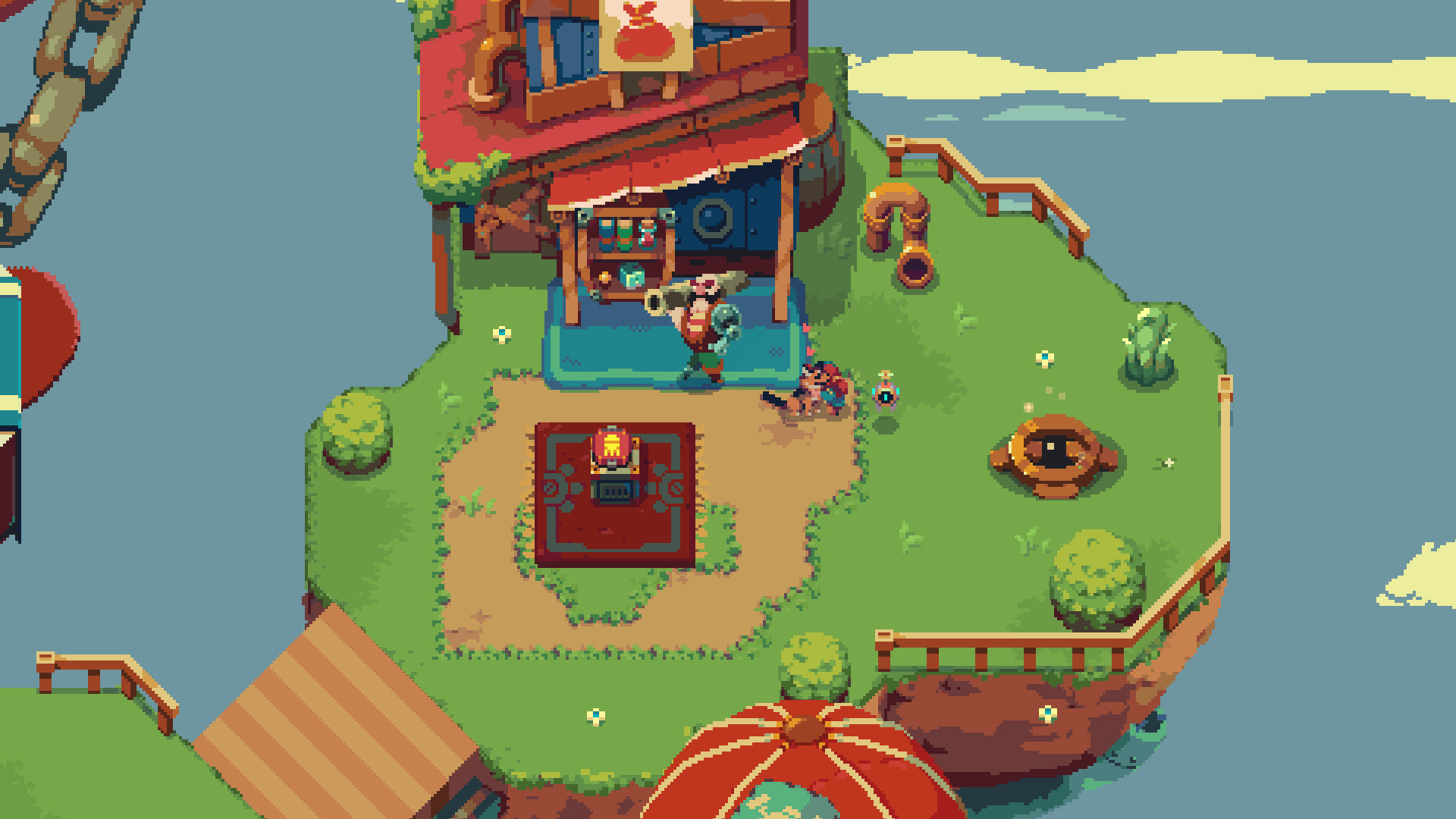 The Refuge: Sparklite's persistent hub. NPCs and facility upgrades accumulate across deaths. Source: Steam.
Snapshot
| Studio | Red Blue Games (Edward + Lucas Rowe, Kevin Mabie) |
| Released | November 2019 |
| Platforms | PC, PS4, Xbox One, Switch, mobile |
| Run length | 10–30 min per descent; ~20-hour campaign |
| Iconic mechanic | Patch-board grid inventory + permalife |
| Core dialectic | Power growth vs spatial budget |
| Inspirations | Link's Awakening, Binding of Isaac |
| Setting | Planet Geodia. Steampunk + fantasy. Anti-industrialism / climate-change allegory. |
Macro loop
Refuge (hub, persistent)
  → choose loadout: weapons, gadgets, patches arranged on grid
  → descend to Geodia surface (procedurally arranged tiles)
    → explore biome, fight enemies, find vaults/furnaces/chests
    → collect Sparklite, patches, gadget schematics
    → either: defeat the area's Titan (boss) → progression beat
    → or: die → world re-fractures and rearranges
  ← return to Refuge
    → spend Sparklite on facility upgrades
    → fuse / rearrange patches on the grid
    → talk to NPCs (some give repeatable quests)
  → next descent
The hook: the world rearranges on death, but the character doesn't. The devs call this "permalife" instead of "permadeath", the replay structure of a roguelite without its hostility to narrative or to less-skilled players.
Mechanic deep-dives
- Patch board: the headline mechanic. Tetris-style power placement with footprint as opportunity cost.
- World structure & loop: Refuge hub, tile-shuffled biomes, what brings you back.
- Combat: wrench, gadgets, sub-weapons; pattern recognition over reflex.
Through other lenses
- Ludonarrative reading: these mechanics read through the resonance lens. Verdict: mild affirm, patches, sparklite, and Refuge are fiction-grounded; combat and dialogue stay neutral. The case study in partial resonance done modestly.
What this game teaches
- A small grid is a brutal forcing function for choice.
- "Permalife" is a friendlier alternative to permadeath that retains roguelite tempo.
- Hand-authored tiles + procedurally chosen layout is a great cost/value point if full PCG is out of reach.
- Don't let meta-progression solve the early game too well: you'll trivialize the mid-game. The patch board solves the start so cleanly that, once stacked, mid-game becomes a victory lap.
See lessons for the longer take and design tensions for what the devs themselves said about the choices.