Hollow Knight
A 2D metroidvania from Team Cherry (2017) that took the genre's exploration-and-ability-gating spine and grafted on soulslike combat consequences, currency drops on death, a Shade enemy spawns where you fell, you must fight your past self to recover what you lost. The result is a metroidvania that punishes and teaches without ever telling you where to go.
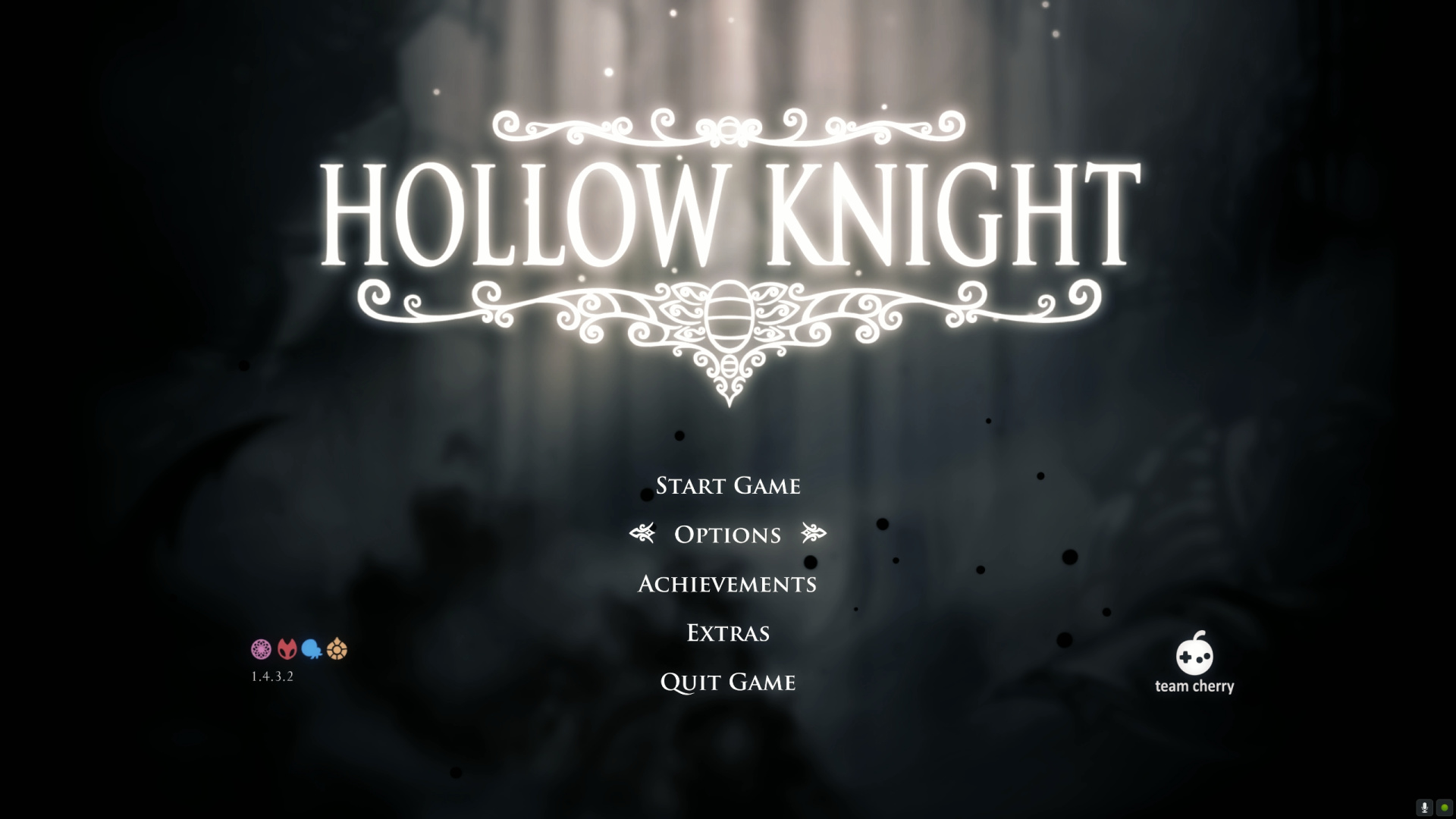 Hollow Knight: Team Cherry's 2017 metroidvania that won unanimous critical acclaim and a devoted community despite shipping with no quest markers, no fast travel by default, and a deliberately obscure narrative. Source: Game UI Database.
Snapshot
| Studio / publisher | Team Cherry (Adelaide, Australia): three-person studio |
| Released | 2017 (Steam) → 2018 (Switch DE), expanded with 4 free DLCs through 2018 |
| Genre | 2D metroidvania, soulslike combat lineage |
| Business model | Premium one-time purchase, no MTX, all DLC free |
| Iconic mechanic | Charm-notch loadout + Soul-as-heal-mid-combat resource |
| Core dialectic | "What if metroidvania exploration had soulslike consequences?" |
| Hours to credits | ~30h main path, ~50–80h to true ending, 100h+ for full completion + Pantheons |
Mechanic deep-dives
- Charms & notches: the loadout-as-budget system that defines build identity. ~45 charms, fixed notch budget, opt-in overcharm states.
- Soul & focus: heal mid-combat by spending Soul, but Focus locks you in place for ~1.5s. The decision-cost of every heal.
- Map & discovery: you can't see a map until you find Cornifer. Exploration earns cartography. The Iselda + Hunter's Journal layered systems.
- Shade on death: soulslike currency-loss recovery: drop your Geo where you die, fight a Shade-of-yourself to reclaim it, lose it permanently if you die again first.
Through other lenses
- Ludonarrative reading: these mechanics read through the resonance lens. Verdict: affirms, voiceless vessel ↔ voiceless verb-set; you learn the world by walking it.
What this game teaches
- Removing quest markers shifts the player's mental model from follow to explore. Hollow Knight has effectively zero objective markers. The player's attention is on the world itself, not on a UI arrow. Most players who've never experienced this report the first ~5 hours as disorienting and the next 30 as the best metroidvania they've ever played.
- A loadout budget can be tiny and still produce huge build variation. ~45 charms × 3-to-11 notch slots = thousands of distinct viable builds. The constraint is the design.
- Combat consequence + recovery loop = engagement. Dropping currency on death and forcing a recovery fight is a cheap way to make every death meaningful without locking the player out of progression.
- Atmosphere as exposition. Hollow Knight has minimal direct narrative: characters say cryptic things, environment tells the rest. Players spend the post-credits months piecing the lore together. The writing volume is small; the implication volume is large.
- Free DLC builds long-tail community. Team Cherry shipped four substantial free expansions over the year following 1.0. Each DLC was a multi-week event for the community. Goodwill: enormous.
See lessons.md for the longer take.