Shop & pricing
The night-time half of the dual-life loop. Where the dungeon's loot becomes gold.
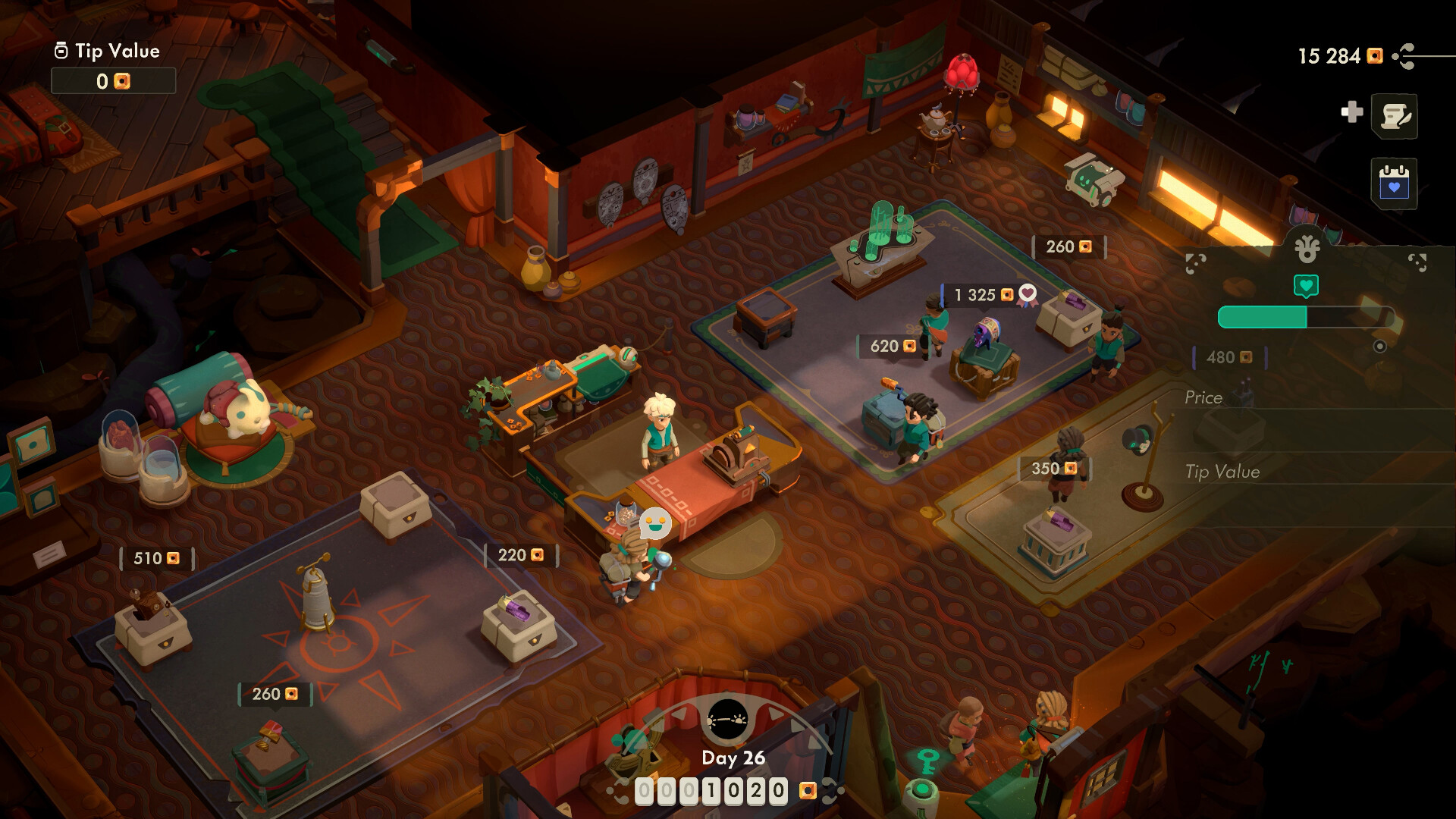 The shop in operation. Customers browse, prices are visible above each display case, "Tip Value" tracks bonus gold. Note the day counter at the bottom: the loop runs in real-time within the shop. Source: Steam.
How pricing works
The original Moonlighter's pricing was a price-discovery minigame: you'd guess a value, watch for customer reactions (😀 too cheap → 🙂 fine → 😐 expensive → 😡 too high), and refine over multiple sales. The sequel keeps the customer-reaction signal but adds layers above and below it:
- Quality multiplier comes from the backpack puzzle: you've already partly determined the price before the customer sees the item.
- Popularity: relics from a specific biome / category have a popularity stat that fluctuates per day (see "themed days" below).
- Customer reaction: the showcased item's current price against an internal ideal price. Faces tell you to raise or lower.
- Showcase tier: Modest Display Case is plain; better display furniture multiplies further.
The final sale price is roughly:
base × quality_multiplier × popularity × showcase_bonus + tip_valueSo the merchant sim is less guess-the-number, more layer-the-modifiers.
Themed days
Some days have themed bonuses:
- "Uncommon-rarity day" → uncommon relics get +popularity.
- "Kalina-region day" → relics from the Kalina biome get +popularity.
Effect: decisions in the dungeon are downstream of decisions in the shop calendar. Knowing tomorrow is "Kalina day" means you're farming Kalina relics today.
This couples the two halves of the loop tighter than the original. Reviewers have mixed feelings, some find it elegant, others find it makes the original's "free price exploration" feel mathy by comparison.
Decorations & furniture
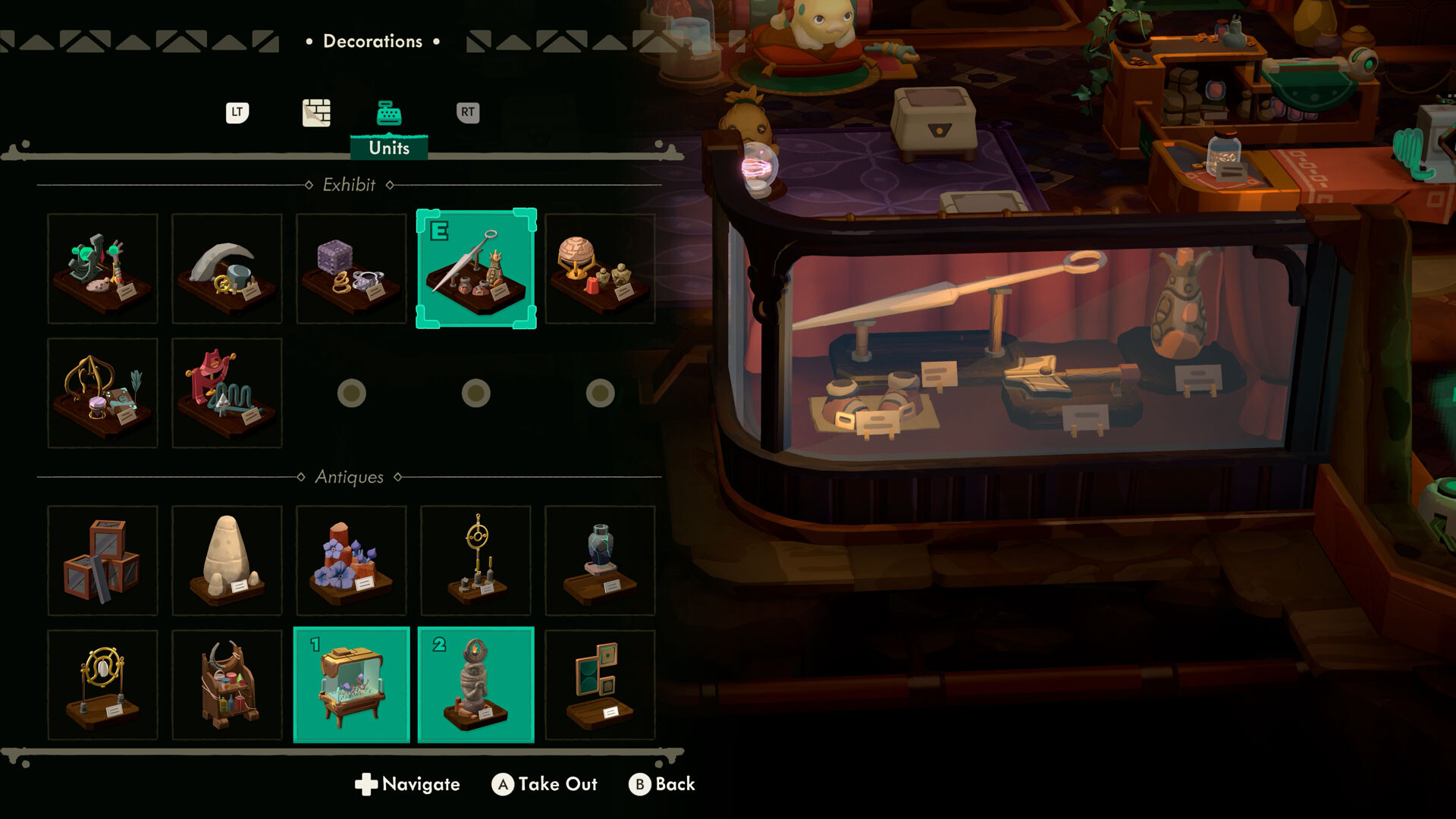 Decoration furniture menu. Displays affect popularity and quality multipliers; antiques are passive boosts. Source: Steam.
Furniture isn't just cosmetic, display cases and antiques actively modify sale price. Shop layout becomes part of the build. This is the third axis of optimization (after dungeon path + backpack placement).
End-of-day summary
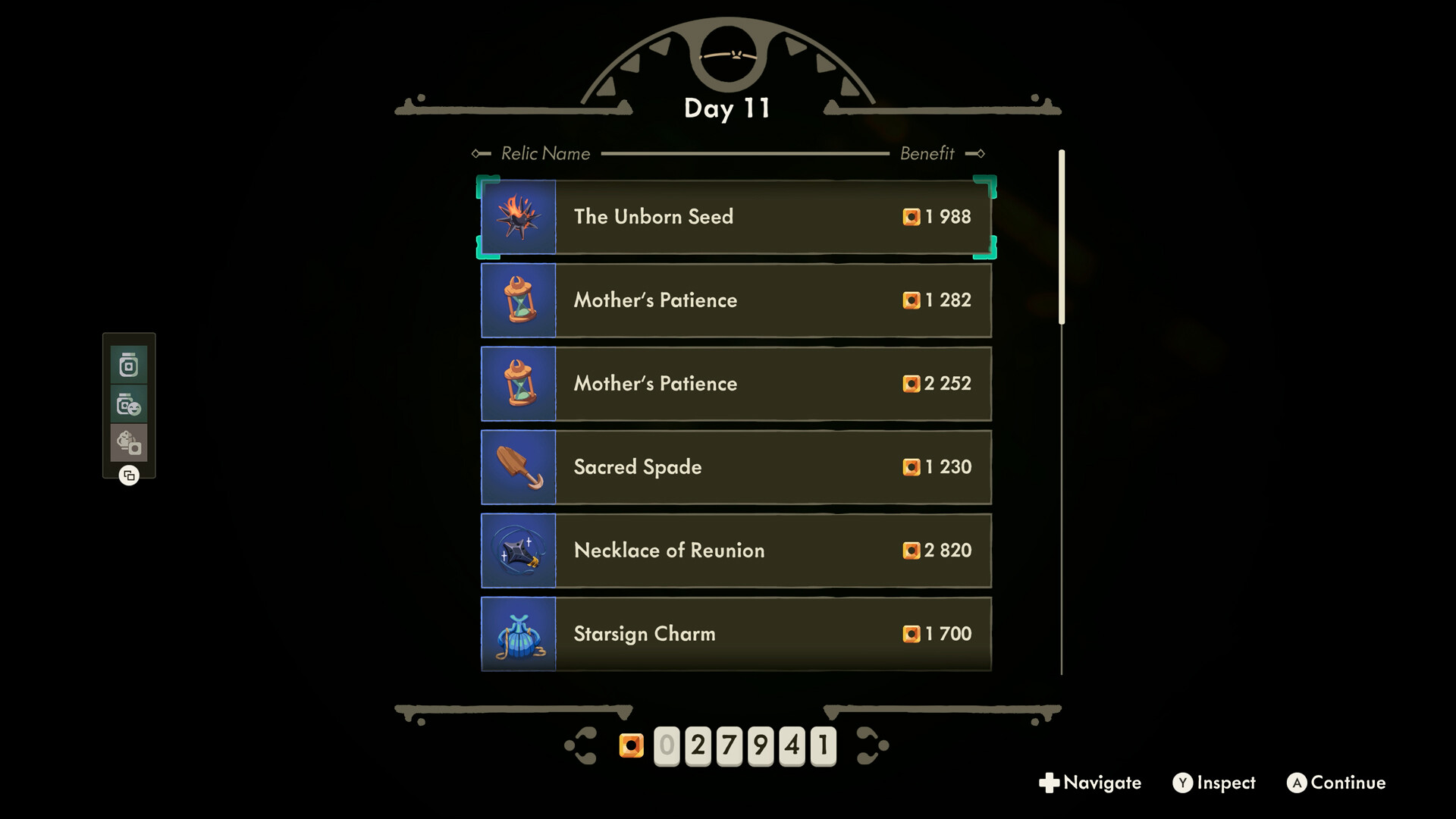 End-of-day relic-sale summary. Shows what sold, for how much, and the day's total (27,941 gold). Source: Steam.
The day-end is the dopamine pinch point, see your packing/pricing decisions paid out in concrete numbers. Same shape as a Spire post-run score screen, or a Hades House of Hades return.
Critique surfaced in reviews
- The pricing minigame lost some charm. Original-game fans liked figuring out base prices from scratch; the sequel front-loads more of that work into the backpack puzzle, leaving the live-shop part more passive.
- The math can feel impenetrable early. Quality % × popularity × showcase × tip is a lot of unseen multipliers, and reviewers note new players "see numbers but don't understand them."
Pattern angles
The shop-pricing system is best read as a separate-but-coupled mini-game to the dungeon-roguelite. It's not strictly part of any single cross-game pattern, but the coupling, same items move through both games, with each game judging them differently, is part of dual-life-loop.