World & camp
The run structure: a painted overworld connecting hand-crafted levels, punctuated by expedition flags (the bonfire analogue) and a persistent camp. Exploration is deliberately friction-forward: no minimap, no quest markers inside levels, no objective breadcrumbs beyond the world map.
The Continent
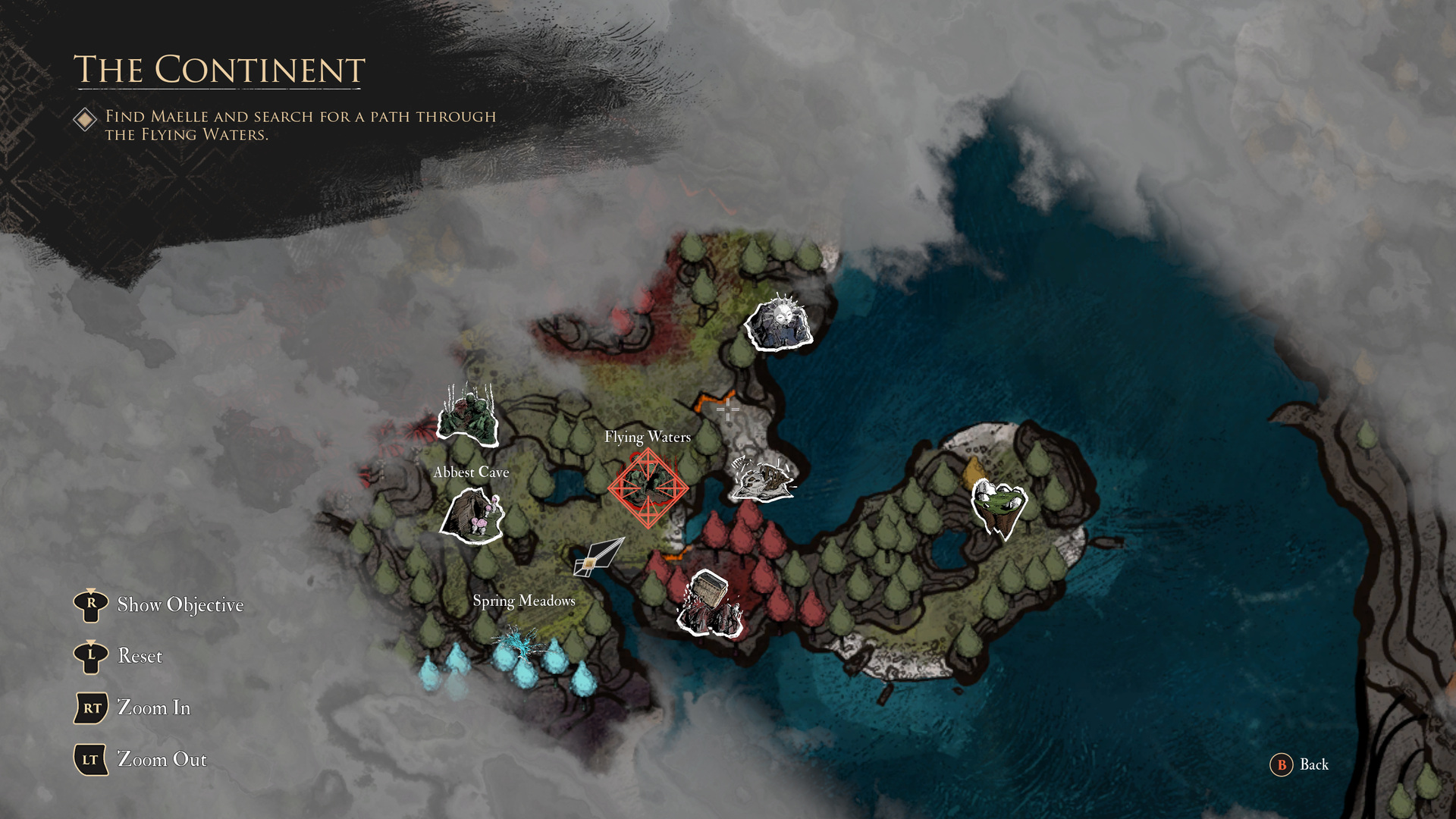 The world map is an actual painting: regions as illustrated nodes, the current objective as one written sentence. Source: Game UI Database.
Between levels the party walks a miniaturized overworld (classic JRPG world-map scale, tilt-shifted) with visible roaming enemies and optional detours. Traversal capability is gated by Esquie, the expedition's giant companion, whose abilities (swimming, later flying) function as the metroidvania keys that open the map up act by act, until Act III turns the Continent into an open endgame playground of optional dungeons and superbosses.
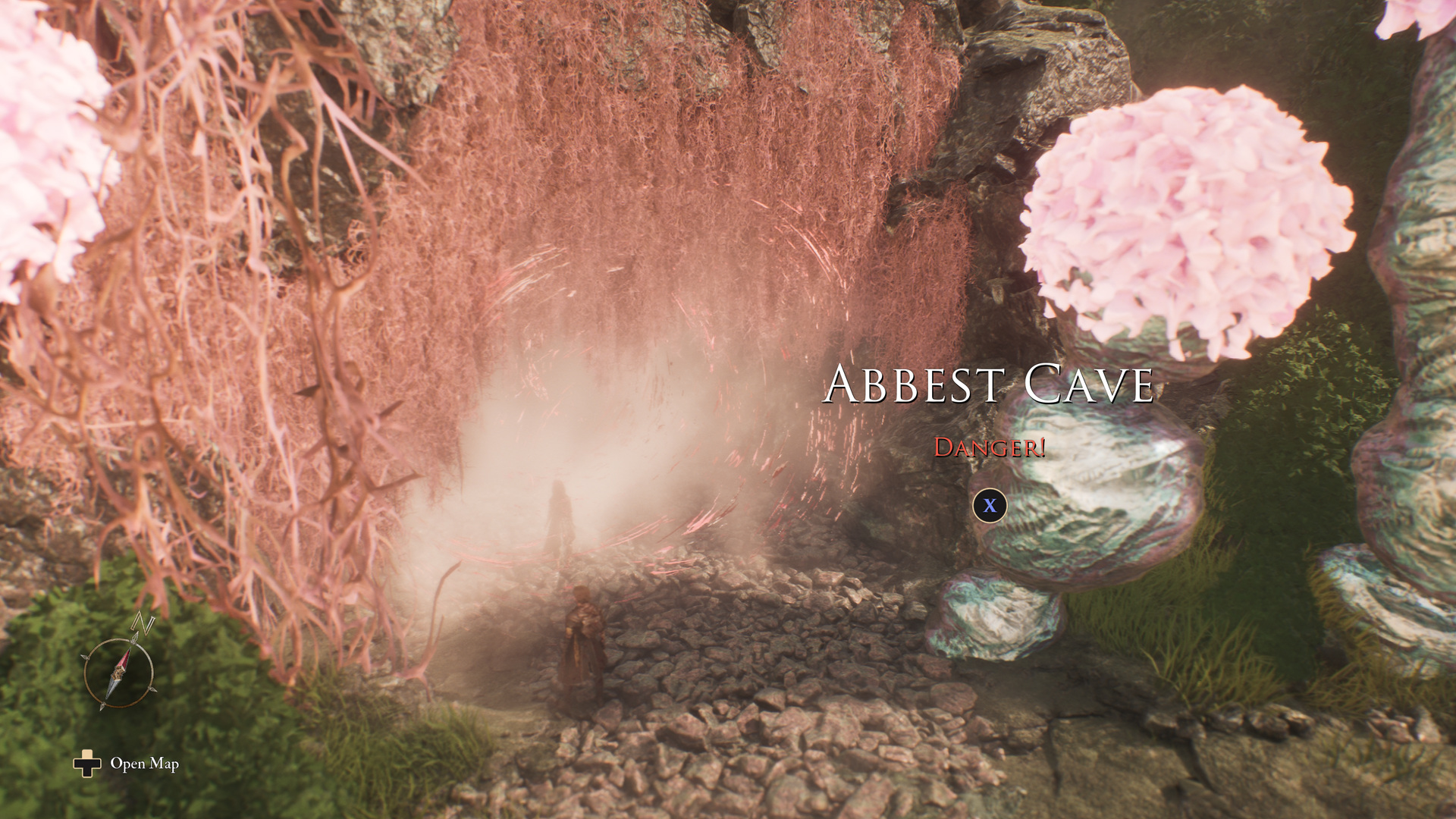 Entering a region from the overworld. The only difficulty telegraph is a one-word tag: "Danger!" warns you're under-leveled without saying by how much. Source: Game UI Database.
Inside levels there is no minimap by explicit design. Broche's argument (quoted in design tensions) is that maps make players stop seeing the environment; the game instead relies on lantern-glow guidance and level readability, and it took sustained criticism for it. Collectibles do the memory work instead: journals of the previous expeditions (numbered countdowns of people who tried this exact route and died), records, and Gestral side content.
Expedition flags
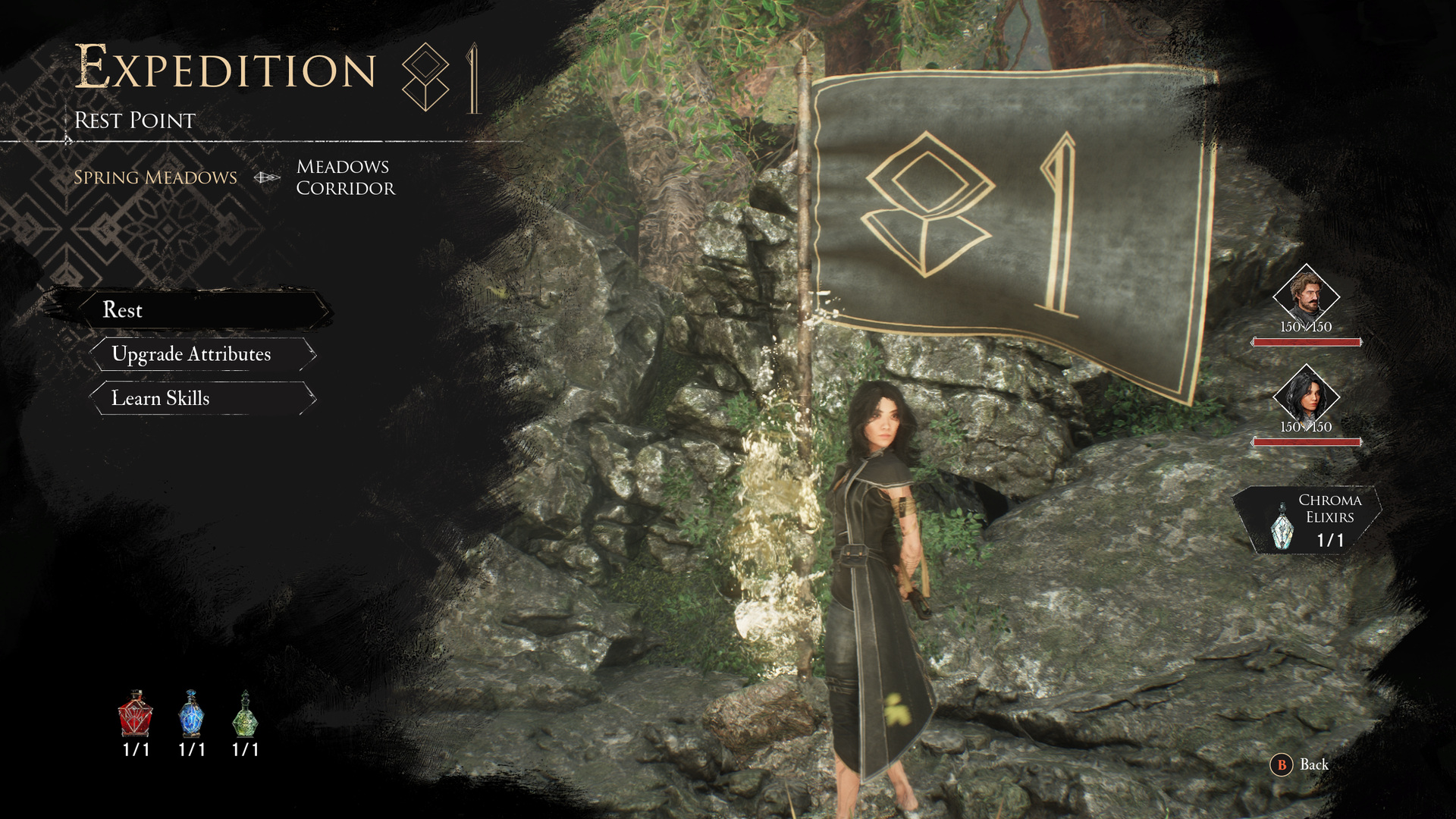 A flag planted by Expedition 81: rest, upgrade attributes, learn skills. Tint counters on the left show consumables refilled to full. Source: Game UI Database.
Flags are the checkpoint, respec bench, level-up altar, and tint refill in one object, and every one of them was planted by a previous expedition. The Souls bonfire pattern (bonfire-rest-point) arrives here with its fiction inverted: rest points aren't yours, they're inherited from the dead. From the flags you also enter the camp, the persistent hub where party relationship conversations happen and the Curator sells upgrades, weapon leveling, and Lumina Point extensions.
Failure
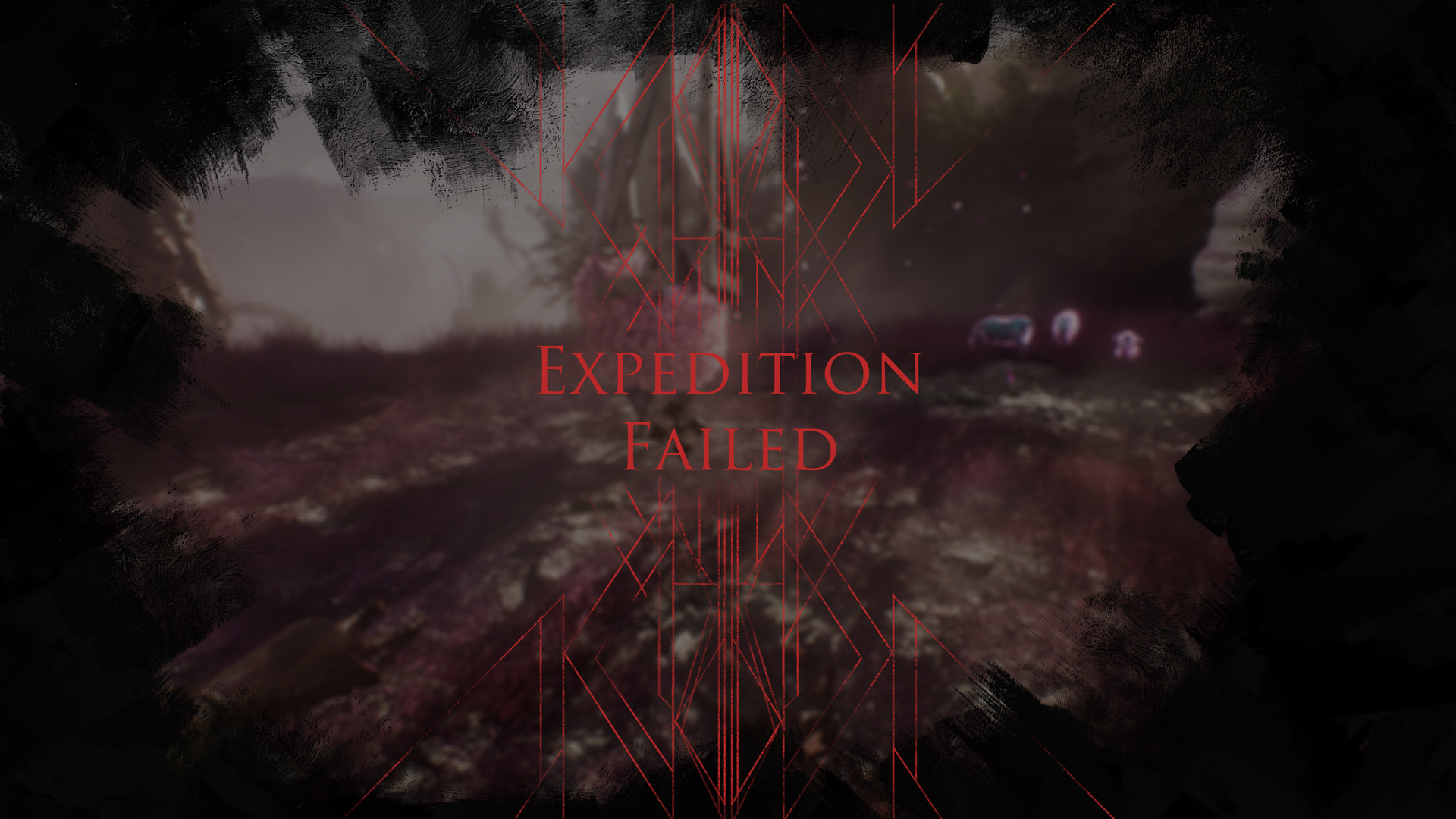 A party wipe reads "Expedition Failed," not "Game Over," and drops you at the last flag. In a game about the 67th consecutive doomed expedition, the failure screen is a lore document. Source: Game UI Database.
Death costs progress-since-flag only; there's no corpse run and no currency loss. The game's punitive energy is spent entirely inside fights (one bad defensive turn can be lethal late game), never on the meta-structure around them.
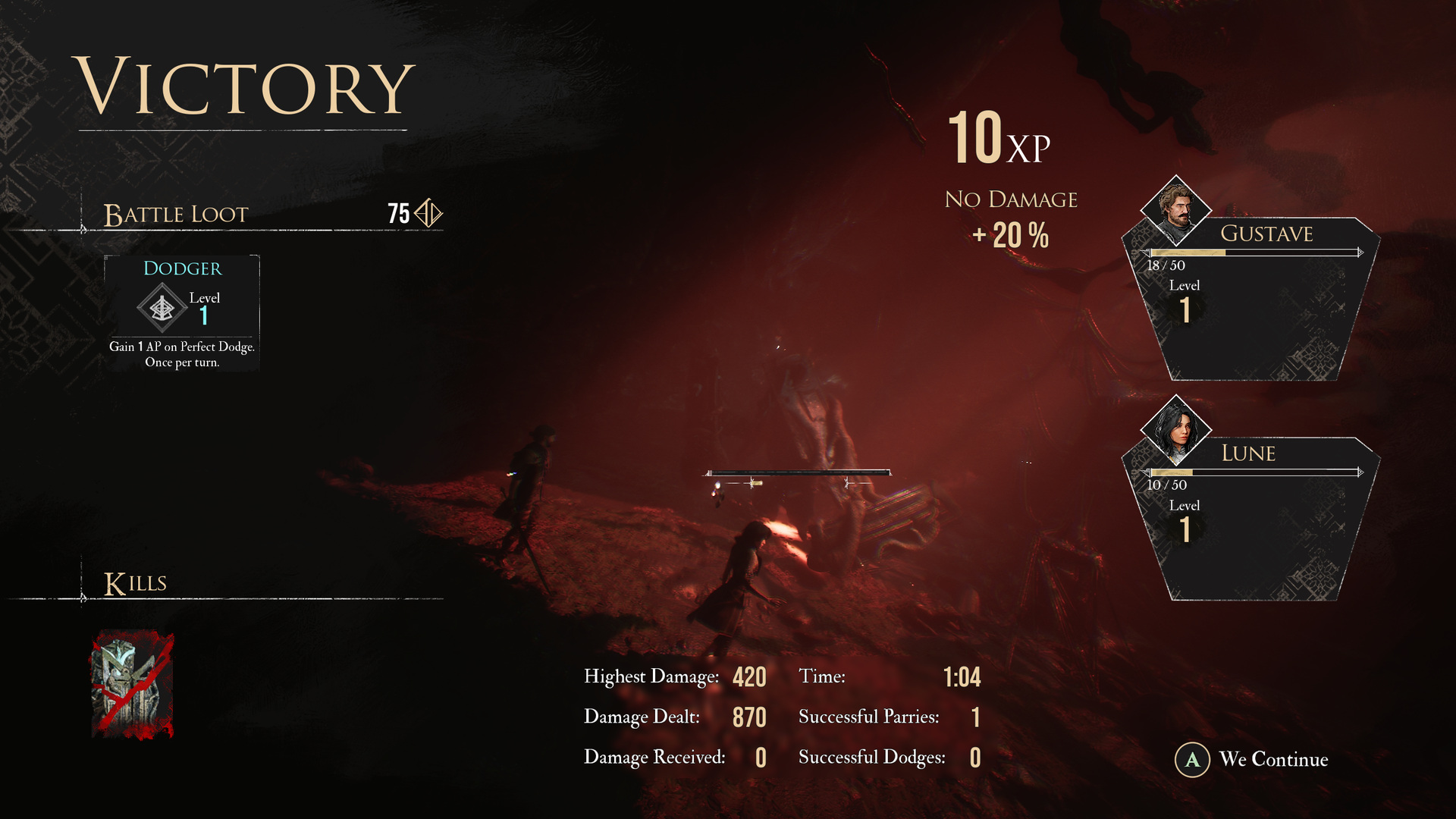 The inverse incentive: finish a fight untouched and the XP payout grows 20%. Mastery is paid in progression speed, not just survival. Source: Game UI Database.
Economy
Chroma is the single currency, earned per battle and from pickups, spent at Gestral merchants (the recurring NPC race that runs shops, arenas, and minigames) and on upgrades. Chroma Catalysts gate weapon levels; Colours of Lumina extend build budgets; Recoats buy respecs. Everything scarce is a build resource; nothing scarce is a survival resource.
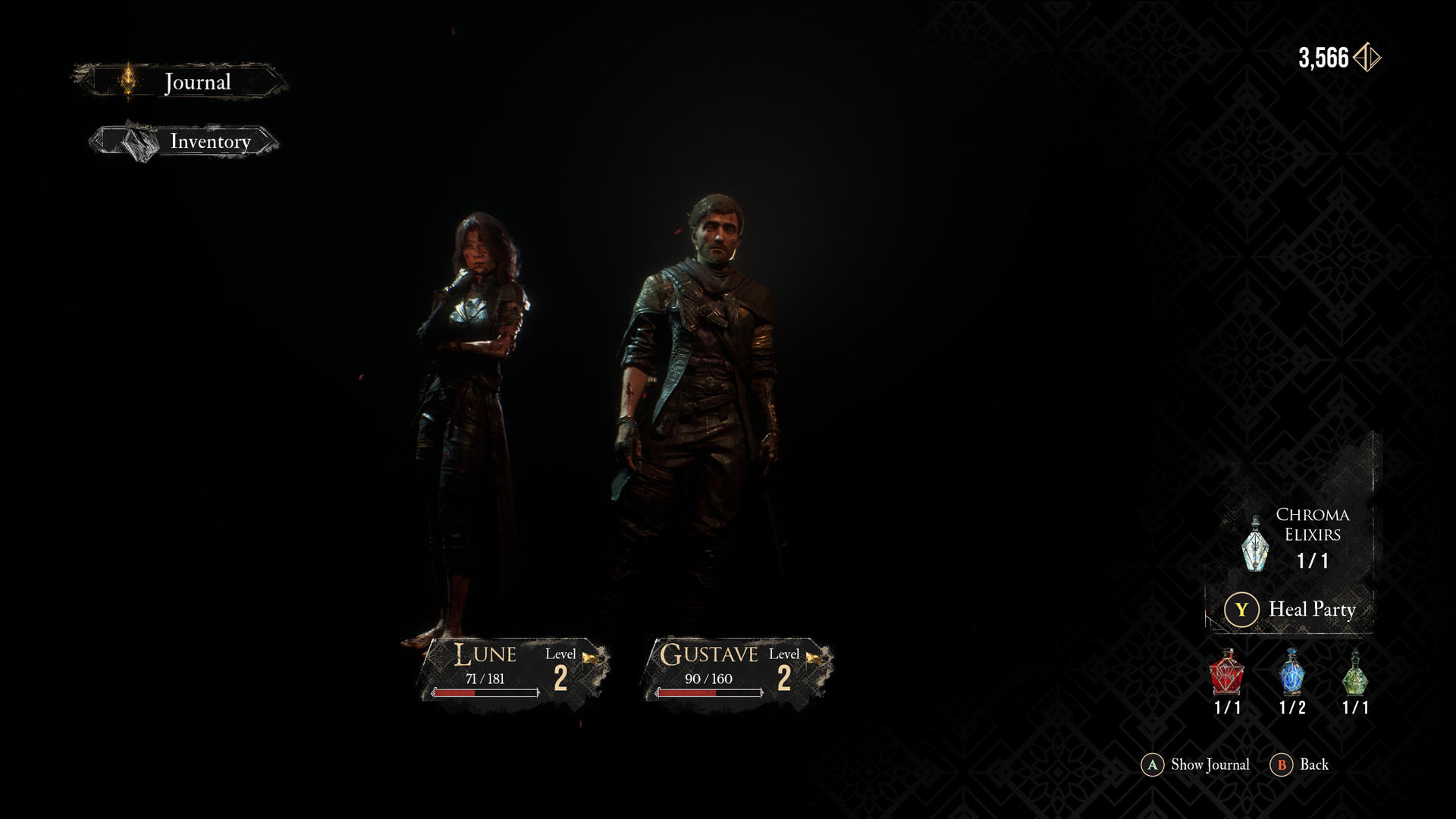 The pause screen: Chroma top right, tint stock bottom right, Heal Party as a one-button convenience between fights. Source: Game UI Database.
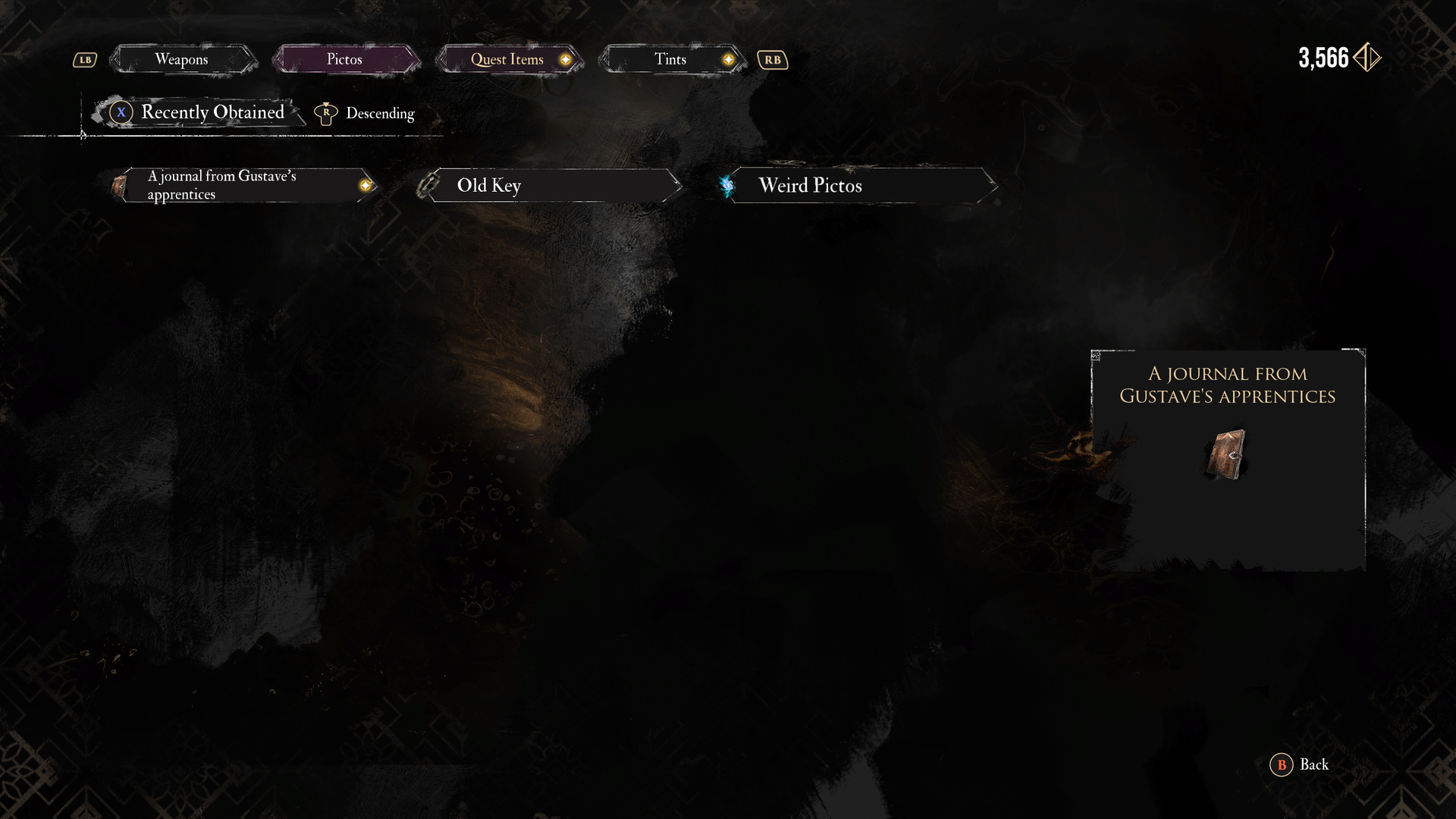 Quest items are few and diegetic (a dead colleague's journal, an old key, "Weird Pictos"). There's no crafting-material drawer; the inventory stays as small as the design. Source: Game UI Database.
Difficulty modes
Three settings: Story, Expedition (default), Expert, differentiated mostly by timing strictness and damage. Offensive QTEs can be auto-resolved via an option; defensive timing cannot be automated on any difficulty (the accessibility gap critics kept pointing at). Post-launch patches widened Story-mode parry/dodge windows by 40% and added player-set challenge modifiers (raised damage caps, enemy HP multipliers), effectively letting endgame players tune their own balance.
Patterns this exemplifies
bonfire-rest-point: checkpoint + refill + respec in one placed object; hoard-proof consumables.equip-to-learn: the flag/camp loop is where the Pictos → Luminas curriculum gets spent.