Sidearms & Joules
The sidearm is Mina's secondary tool, a swappable gadget in its own HUD slot, powered by a resource called Joules. Where the weapon is your constant melee verb and the burrow is your movement verb, the sidearm is the situational verb: a burst of damage, a panic button, or a traversal key you reach for when the basic kit isn't enough.
You carry one sidearm equipped at a time and swap your loadout between encounters. So the sidearm slot is a single high-value decision, not an accumulating arsenal, which is what makes it a opportunity-cost-loadout slot rather than a hotbar.
The three families
Sidearms sort into three roles, and which one you slot reshapes what the run is about:
| Family | What it does | Examples |
|---|---|---|
| Offensive | Direct damage / ranged burst | Gyro Dagger (thrown, returns), Volt Hatchet, Bounding Bombs |
| Utility | Defense, control, support | Deflector Parasol (block/reflect), Beckoning Collar (pull/aggro), Mist Jar |
| Traversal | Movement & exploration keys | Angler's Raft (cross water), Drill Driver, Iron Steed (mount/speed) |
The traversal family is the Metroidvania-gating layer: a sealed area you bounced off in hour three opens once you own the raft or the drill, so sidearms double as the game's "items" in the Zelda sense: each one is both a combat option and a key. The Seismic Belt fuses the two, an offensive tool that only fires through the movement verb:
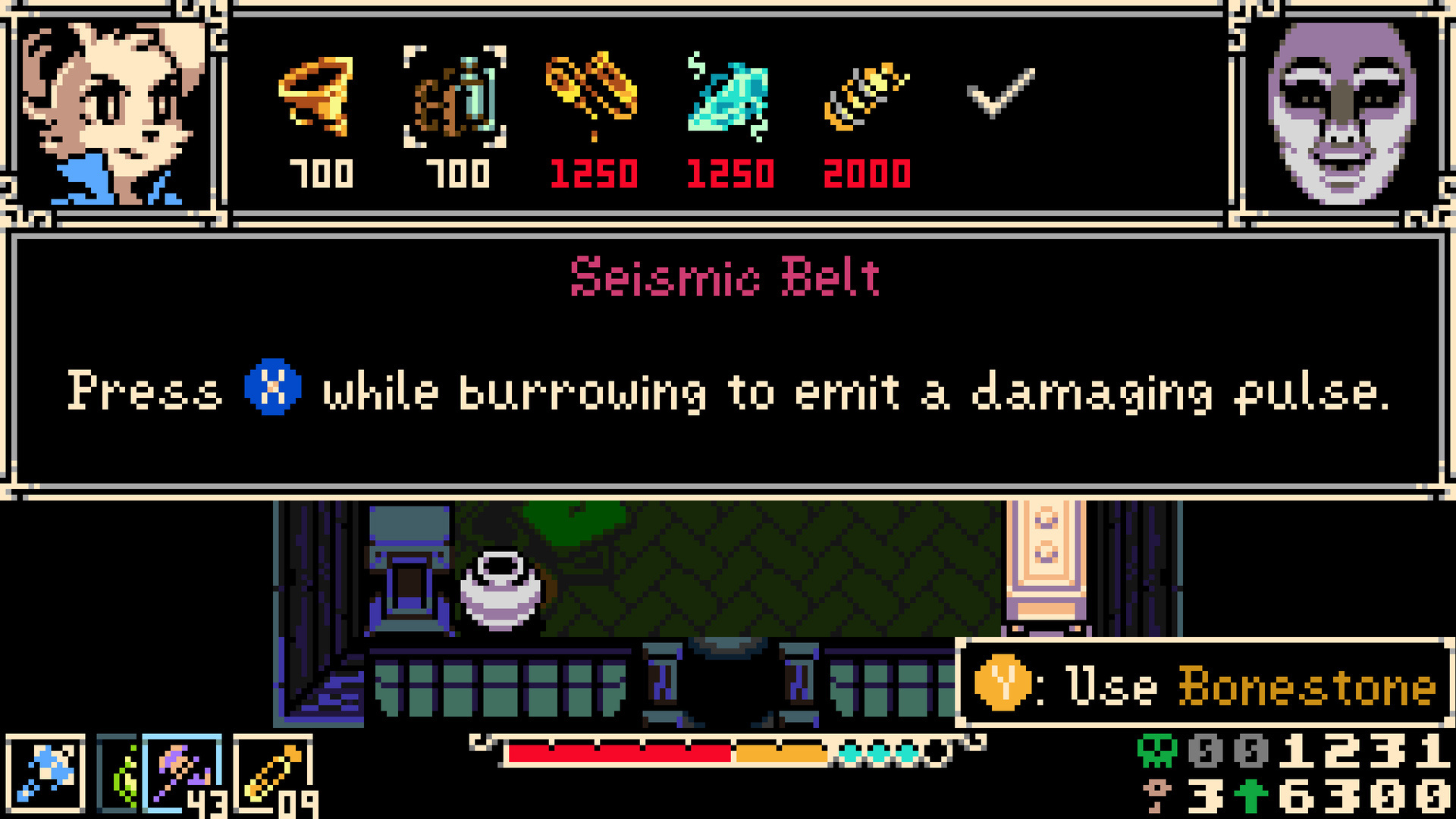 The Seismic Belt keys directly off the burrow: "Press B while burrowing to emit a damaging pulse." A defensive verb becomes an AoE attack: the sidearm doesn't add a parallel system, it deepens the one Mina already revolves around. Sidearms are bought (and stocked) at vendors with Bonestone, or found in chests and quest rewards. Source: Game UI Database.
Joules: the fuel, and the cost
Sidearms run on Joules. Each activation spends Joules; you replenish them through play (drops, combat), so leaning on a powerful sidearm is rate-limited by your Joule economy rather than free. The HUD shows the current sidearm and its Joule count next to the weapon icon.
The interesting part is what happens at the boundary with death: sidearms "carry real economic cost through Joules and death penalties." A sidearm is burst power you pay for, Joules to use, gold to buy, and risk to rely on. That keeps the basic loadout (weapon + burrow + shield) the spine of the game; the sidearm is the spice you reach for at a cost, not the meal.
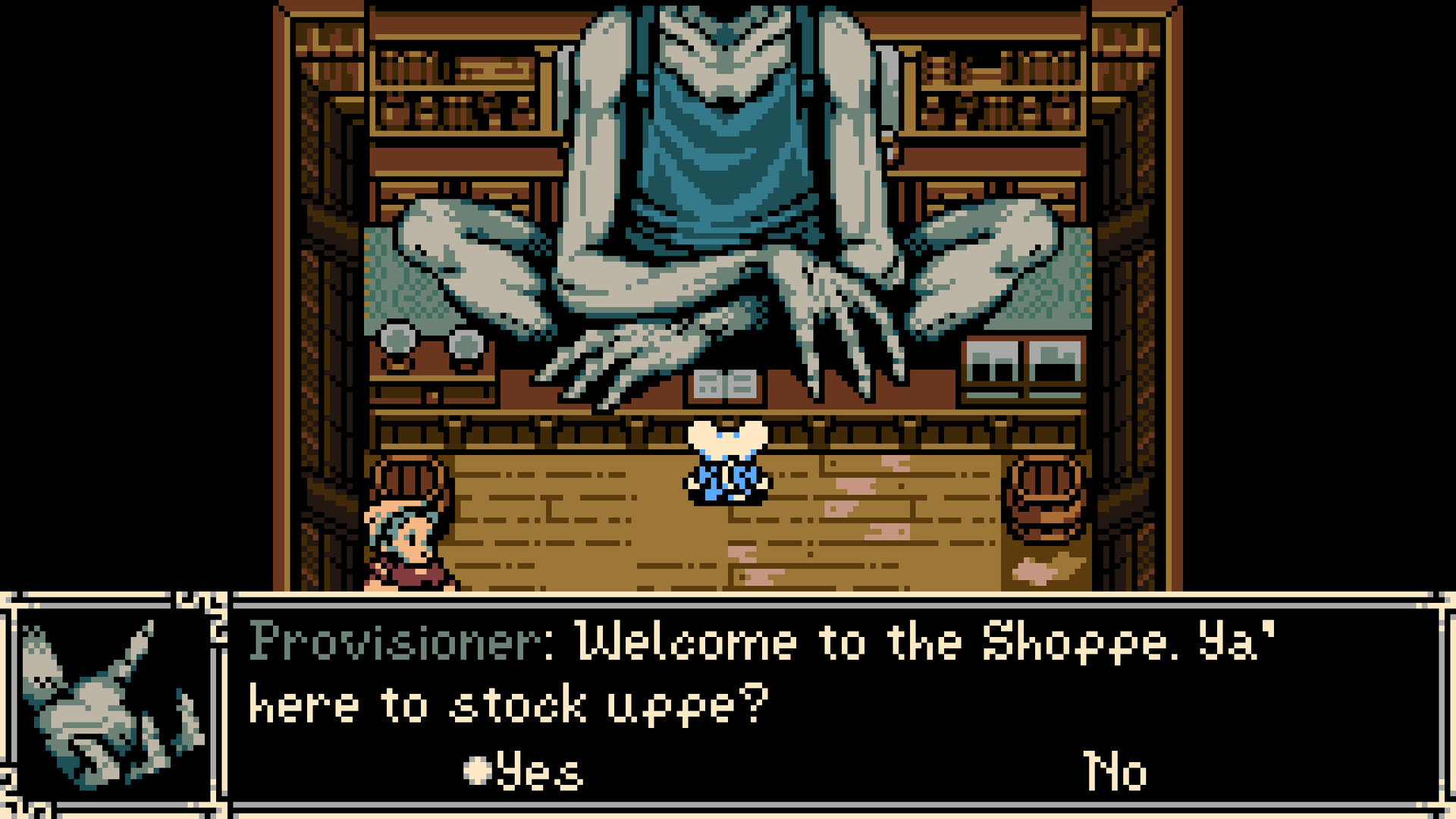 Restocking at a Provisioner. Vendors are where the sidearm and consumable economy lives: and, like every shopkeeper on Tenebrous Isle, they're rendered as a grotesque to keep even the menus inside the gothic-horror fiction. Source: Game UI Database.
Why one slot, not a belt
Restricting Mina to a single equipped sidearm is the design making a opportunity-cost-loadout decision out of what could have been a hotbar:
- It forces a read of the encounter. Heading into a ranged-enemy gauntlet? Slot the Deflector Parasol. A boss that punishes melee range? Slot the Gyro Dagger. You're committing to a plan, not carrying answers to everything.
- It keeps the basic kit central. If you could carry six sidearms, the melee + burrow core would become optional. One slot means the sidearm supplements the spine; it never replaces it.
- It makes vendors matter. Because you can only field one, which sidearm you buy and main is a genuine spend of Bones / Bonestone, not a checklist purchase.
This is the same lesson the trinket layer teaches at a different grain: power in this game is rationed by slots, and the player's job is to decide which risks to be equipped for.
Patterns this exemplifies
opportunity-cost-loadout: one equipped sidearm at a time; slotting a defensive tool means not slotting a damage tool for that stretch.- See
bonus-with-drawbackat the trinket and combat layers for the explicit upside/downside version of the same commitment pressure.