World, map & the Tenebrous Times
Mina is set on Tenebrous Isle, an 1700s gothic-horror island of anthropomorphic animals. Mina (an inventor-mouse of the Hollower guild) returns to investigate the Spark Generators she co-built with the philanthropist Lionel a decade earlier, which have begun to malfunction and warp the island. The structure is Zelda-shaped: an interconnected overworld of named regions, each with towns, dungeons, a boss, and a Generator to restore.
Region & completion structure
The island is divided into regions you progressively light up and clear. The world map tracks completion at the region grain:
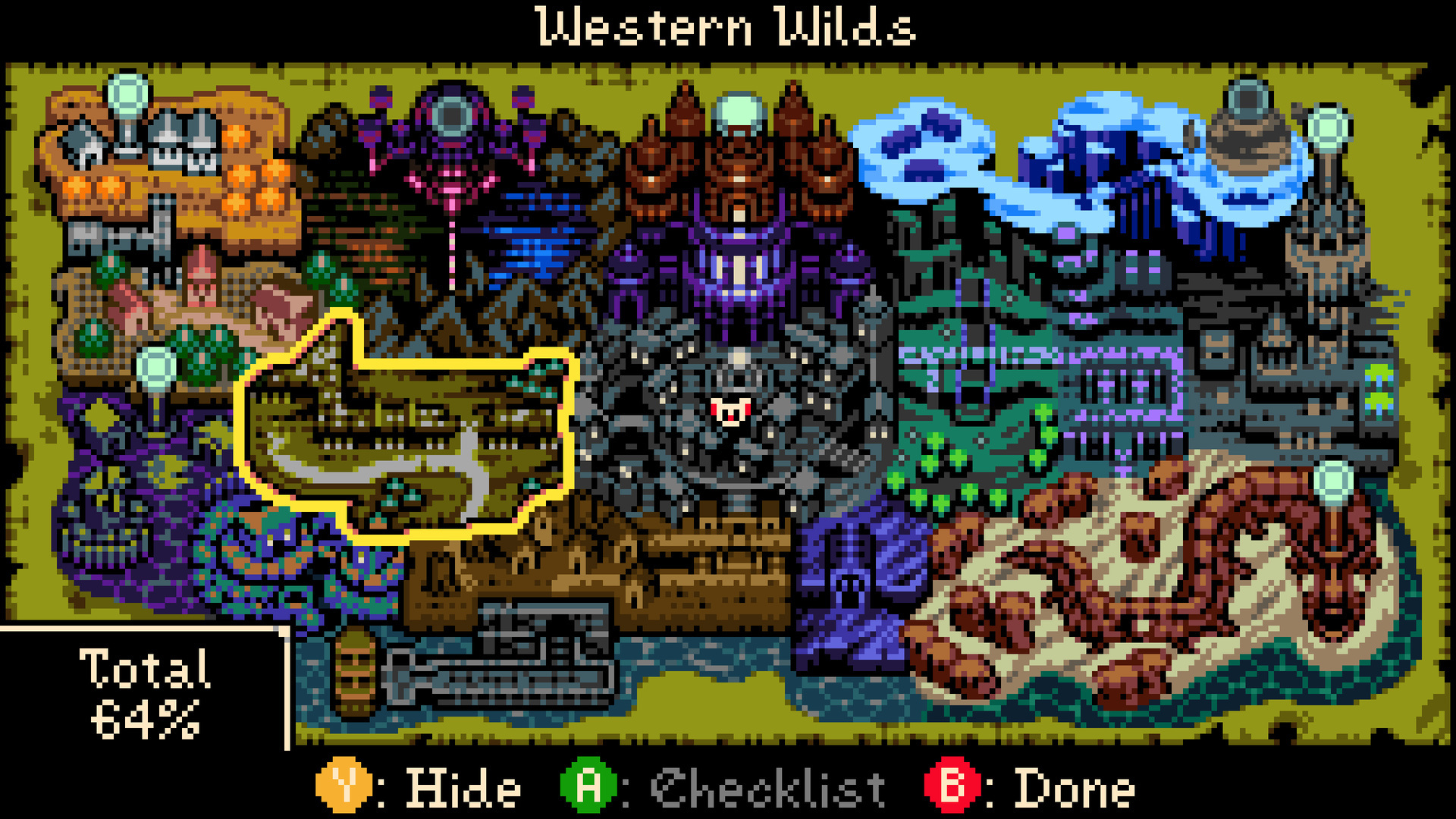 The overworld. A central corrupted citadel anchors a ring of biome regions (wilds, ice, swamp, town). "Total 64%" is the headline completion figure; the game keeps an explicit, visible counter of how much of the island you've uncovered. Source: Game UI Database.
Drill into a region and the game shows a per-category collectible checklist: the completionist's contract, stated plainly:
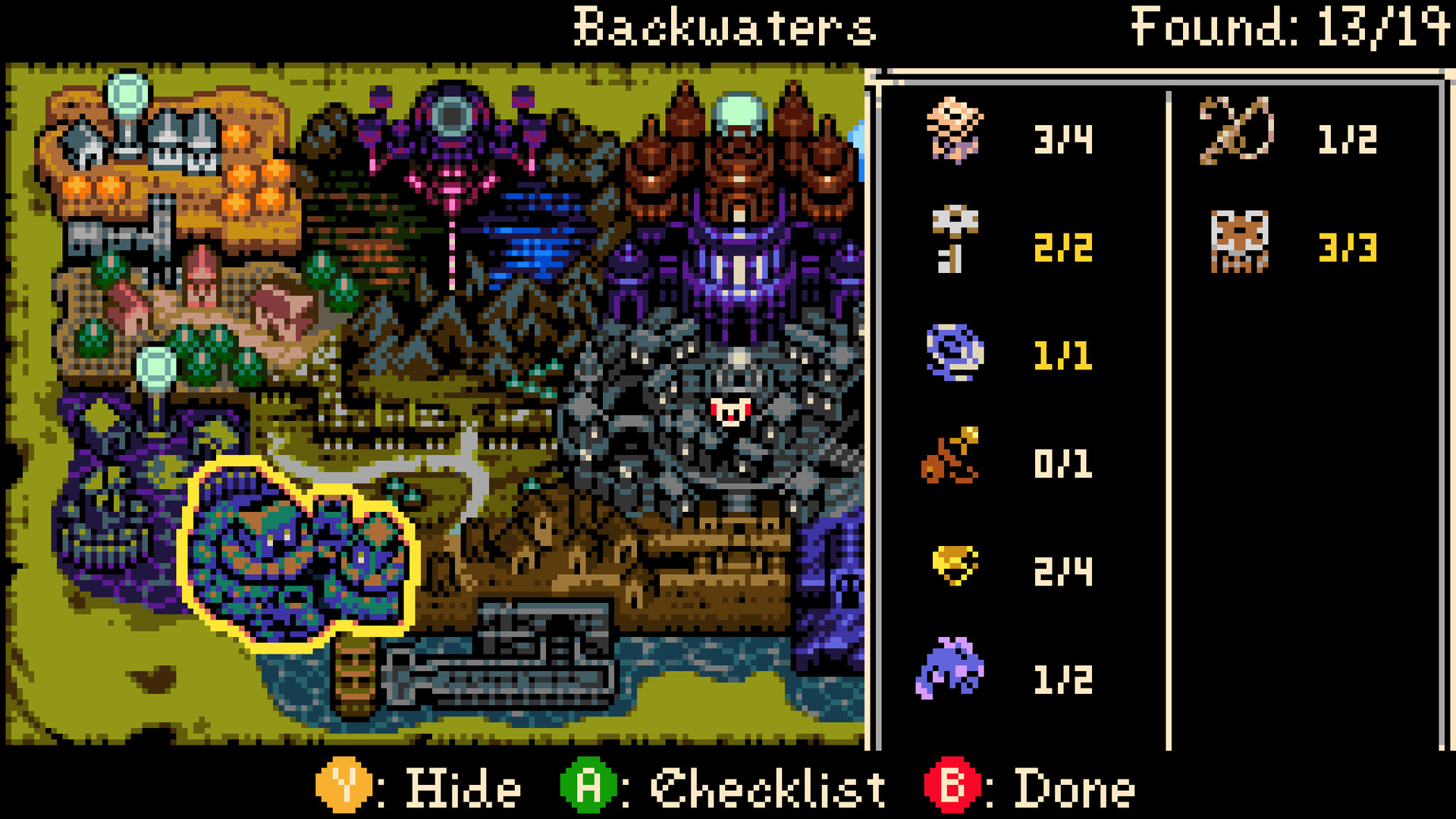 Backwaters at 13/19 found. Each icon is a collectible category (trinkets, Spark containers, key items, etc.) with its own count. This is how a single-player adventure sustains a long completion tail: the map itself is a to-do list, legible at a glance. Source: Game UI Database.
Restoring a region's Spark Generator is the gating verb: it re-lights the map, opens sealed routes, and serves as the checkpoint. Combined with traversal sidearms (raft, drill) and the wall-burrow trinket, the world opens in the Metroidvania way: old areas yield new things once you own new verbs.
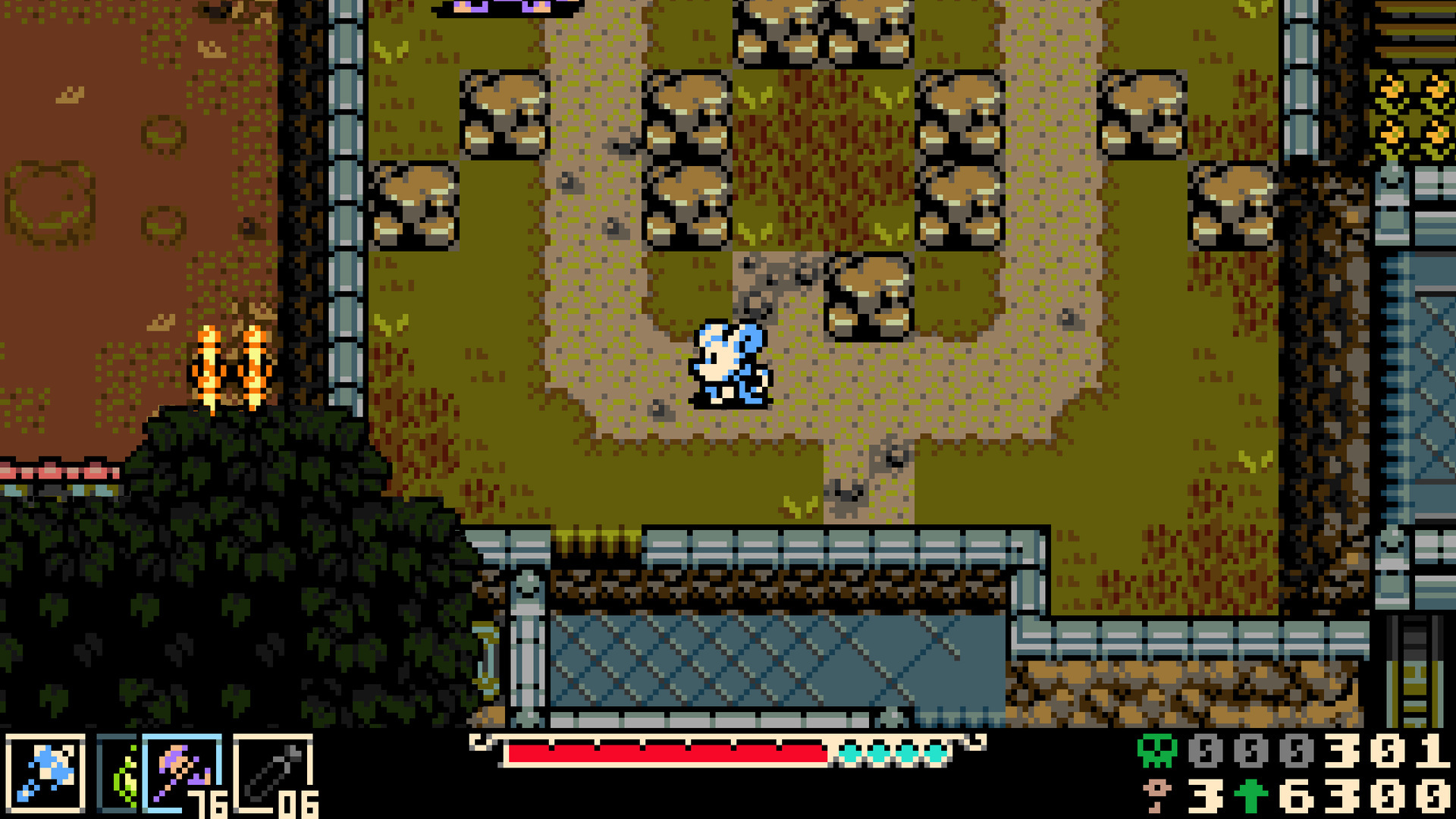 Field traversal. The chunky tile grid and limited palette are doing combat-design work as much as art: clean silhouettes and high-contrast hazards keep telegraphs readable, which a timing-based combat game lives or dies by. Source: Game UI Database.
The island is dense with optional contraptions and environmental puzzles, like vault-style lock mechanisms you solve from clues found elsewhere:
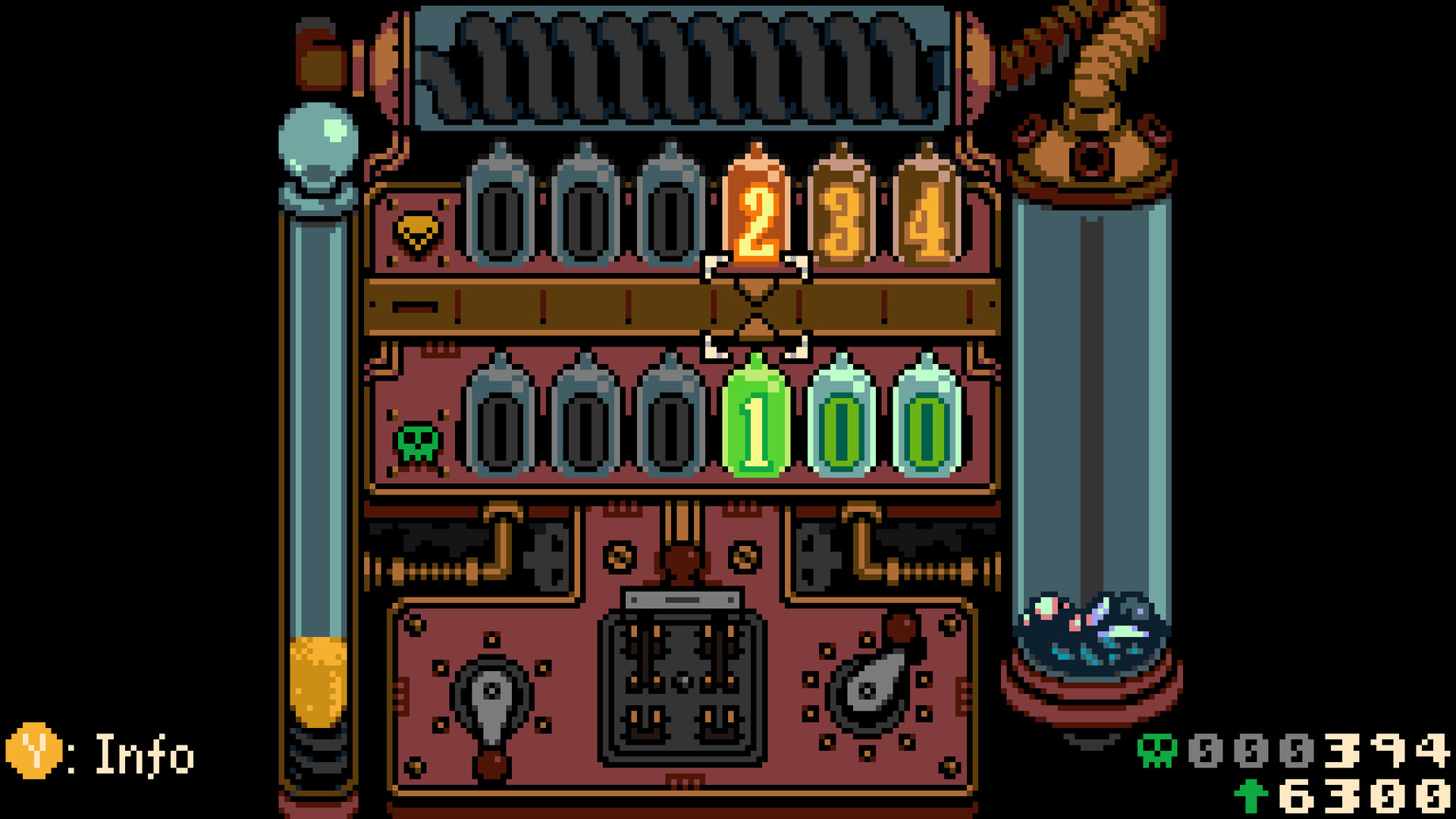 A combination-lock contraption. Puzzles like this send you reading the world for the code, which is exactly what the in-world newspaper exists to feed. Source: Game UI Database.
The Tenebrous Times: a diegetic stat screen
The Tenebrous Times is an in-world Victorian newspaper that triples as lore delivery, quest board, and your stats screen. Your progress is printed as news rather than shown in a menu:
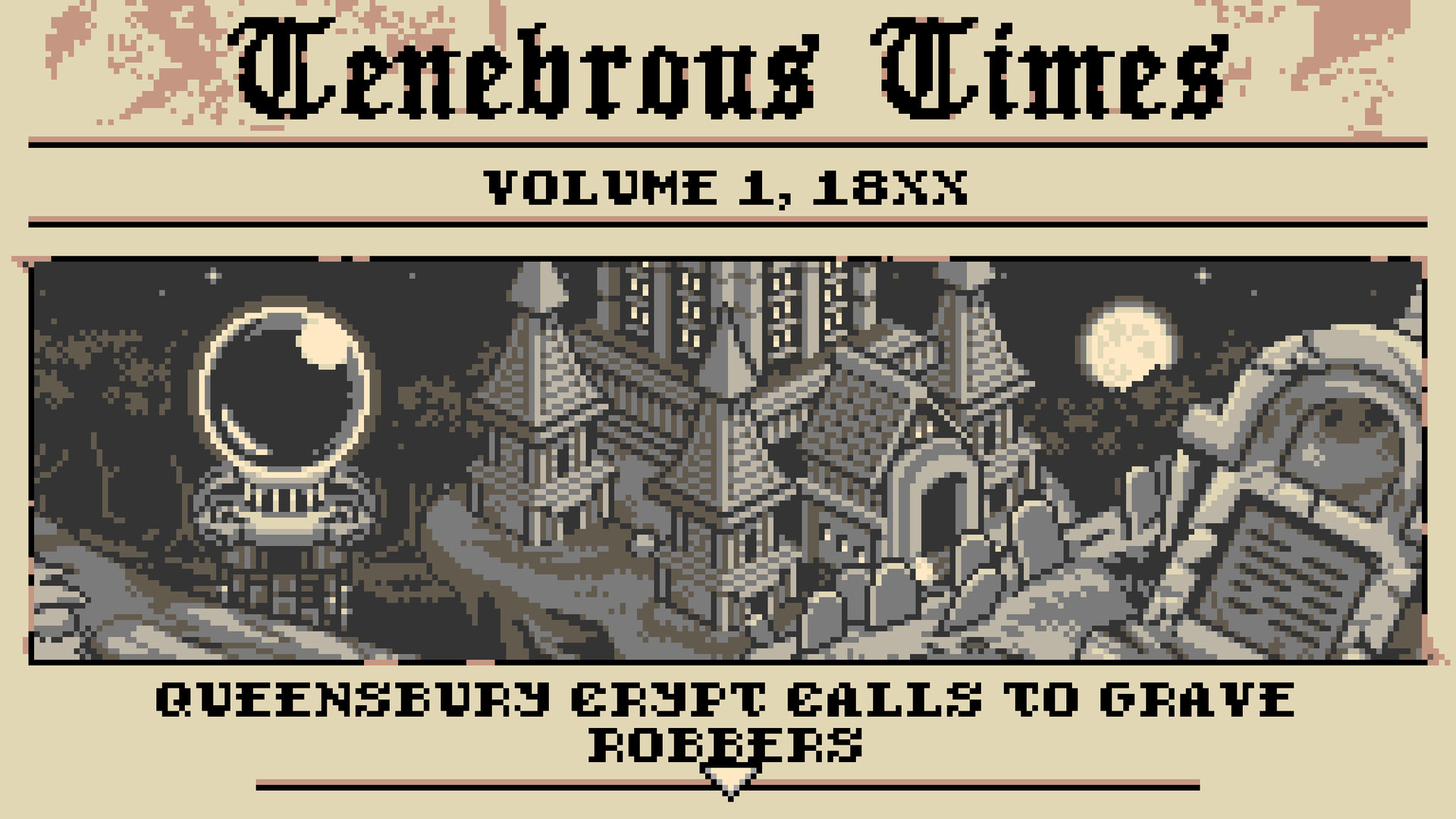 The masthead. Period dressing ("Volume 1, 18XX"), woodcut-style art, and headlines that double as quest hooks ("Queensbury Crypt calls to grave robbers"). The newspaper is the connective tissue between the player's actions and the island's reaction to them. Source: Game UI Database.
The Facts Corner formats your run statistics as a newspaper sidebar:
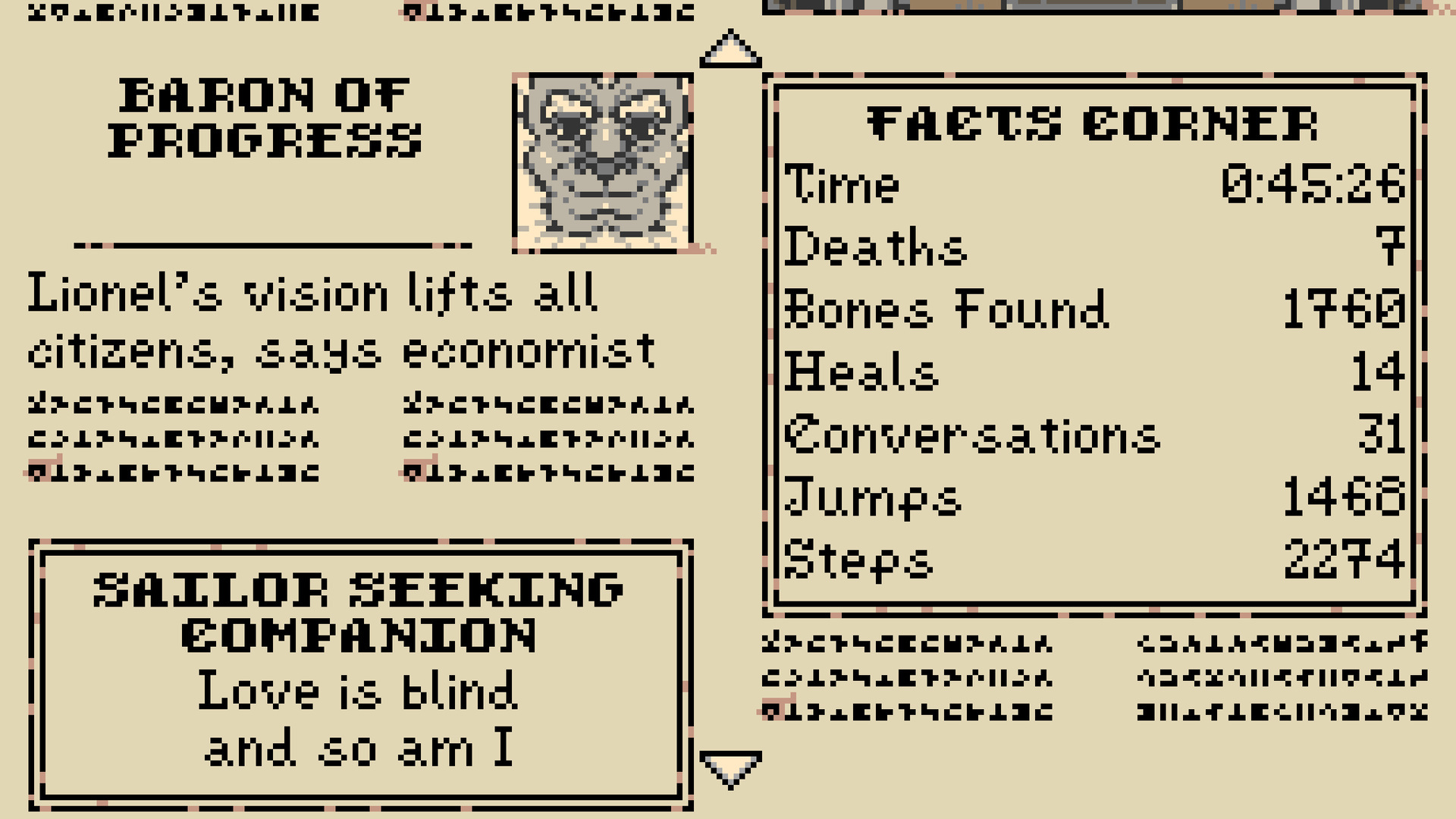 "Facts Corner": Time, Deaths, Bones Found, Heals, Conversations, Jumps, Steps. These are exactly the numbers a normal game buries in a stats submenu, here published as gossip-column trivia. Reframing the stat screen as diegetic print makes a dry readout feel like part of the world's voice. Source: Game UI Database.
And the paper carries substitution-cipher puzzles: blocks of encrypted text the player decodes using a cipher learned in-world, turning the newspaper into an actual puzzle artifact rather than flavour text:
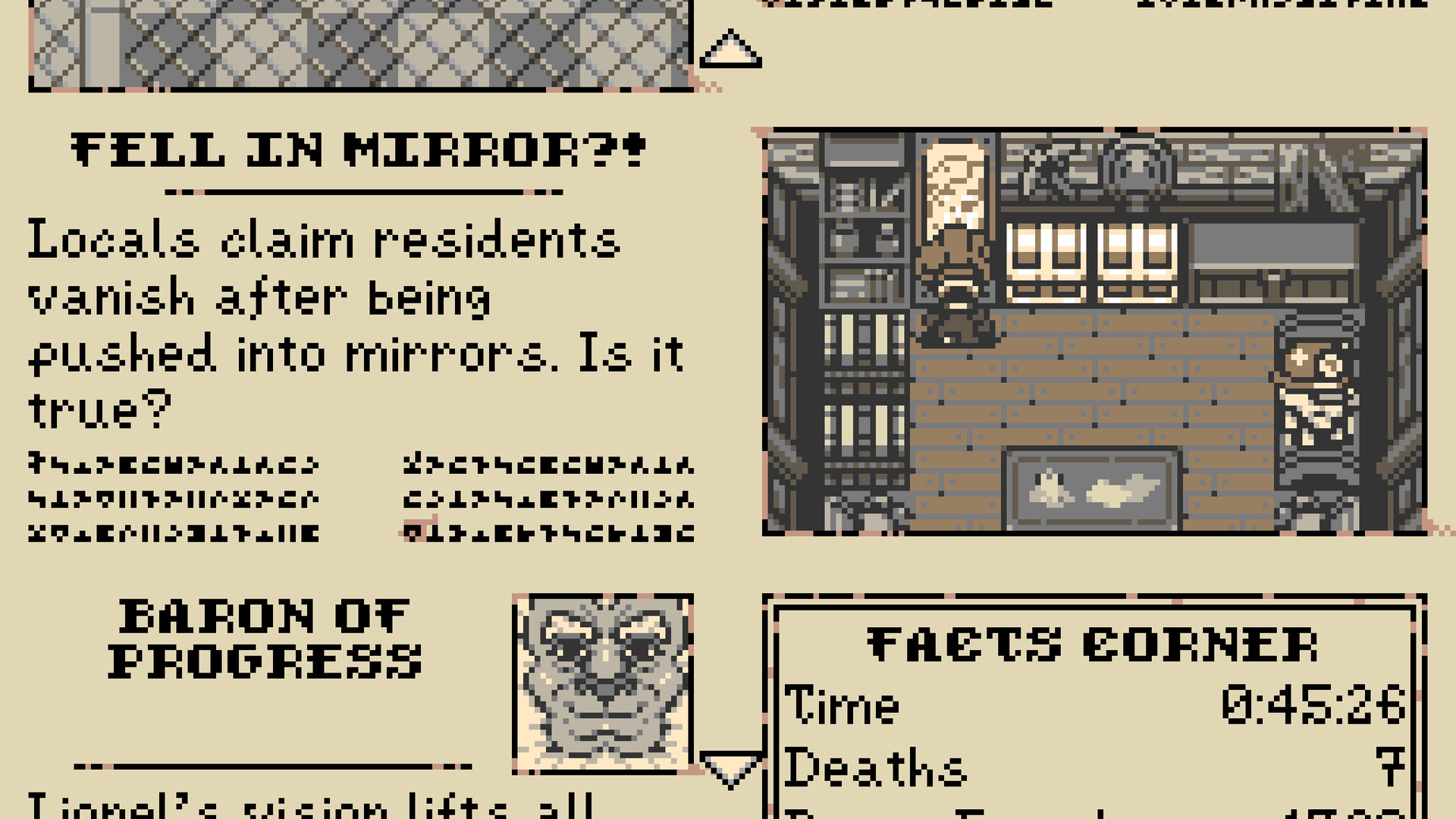 "Fell in Mirror?!": readable headline, enciphered body. Decoding the cipher rewards lore and hints (some feeding puzzles like the vault above). The newspaper threads back into the town NPCs, whose dialogue references the same stories. Source: Game UI Database.
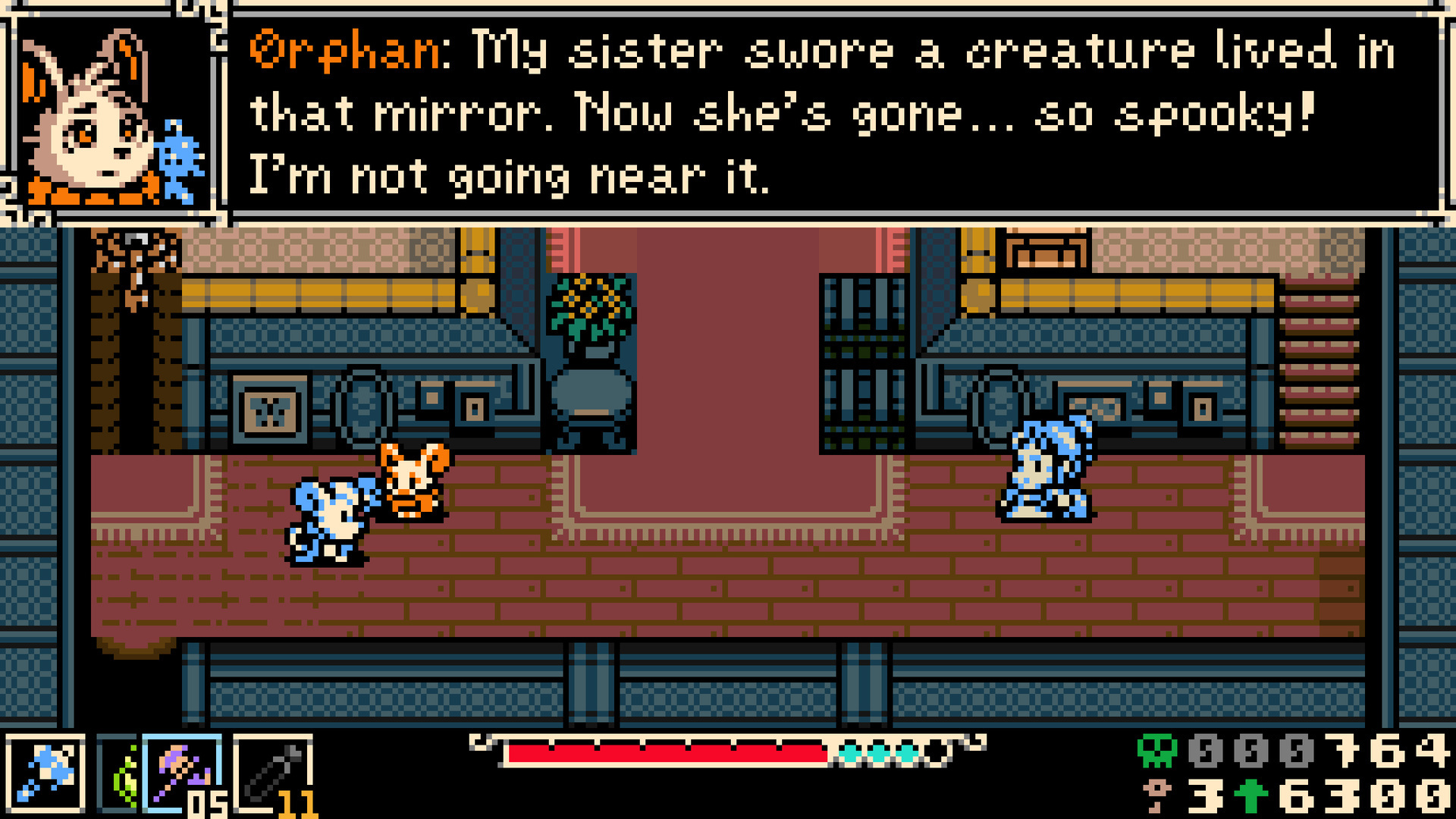 The "Fell in Mirror?!" headline isn't isolated. An Orphan in town tells you the same rumour. The newspaper, the NPCs, and the dungeons cross-reference one another, so reading the paper is genuinely informative, not decorative. Source: Game UI Database.
The constraint as a feature
Mina commits to a Game Boy Color-style presentation (limited palette, chunky tiles, sprite-flicker aesthetics) but cheats the hardware's limits deliberately:
"We definitely packed way more backgrounds and sprites on screen than was capable, even by the best Game Boy programmers.", David D'Angelo
The constraint does real design work. A restricted palette forces high-contrast, readable silhouettes; a chunky grid forces clean hazard and telegraph shapes; a small UI vocabulary pushes the team toward diegetic solutions like the newspaper instead of HUD clutter. For a game whose combat is built on reading attacks and timing a burrow, the rule "everything must be legible at GBC resolution" pushes in exactly the right direction. The gothic palette also does genre work, selling the horror tone that "2D Dark Souls" needs.
Patterns this exemplifies
diegetic-stats-newspaper(uncurated): the stat screen, quest log, and lore codex are unified into an in-world newspaper, with run stats as a gossip column and cipher puzzles as real content. UI as worldbuilding. Candidate for a curated concept page if a second game on the site does something comparable.retro-constraint-aesthetic(uncurated): adopting a specific historical hardware's visual grammar (here GBC) as a design constraint that improves legibility, while selectively breaking its technical limits. Shares DNA with Pokémon RSE and Mega Man Battle Network as "design under a deliberate platform pastiche."