AP & Gradient economy
Two currencies run combat: AP (per character, the skill fuel) and the Gradient gauge (party-wide, the ultimate fuel). Both are earned by playing well on defense as much as offense, which is what welds the reactive layer to the strategic layer.
AP: earned by hand
AP is displayed as pips under each character portrait. The flows:
| Source | AP |
|---|---|
| Base Attack | +1 |
| Each successful Parry | +1 per parried hit |
| Perfect Dodge with the Dodger Picto (and similar Luminas) | +1, once per turn |
| Small/regular Energy Tint (item) | +3 or more to one ally |
| Skills | −3 to −7 typical |
| Aim shots | −1 each |
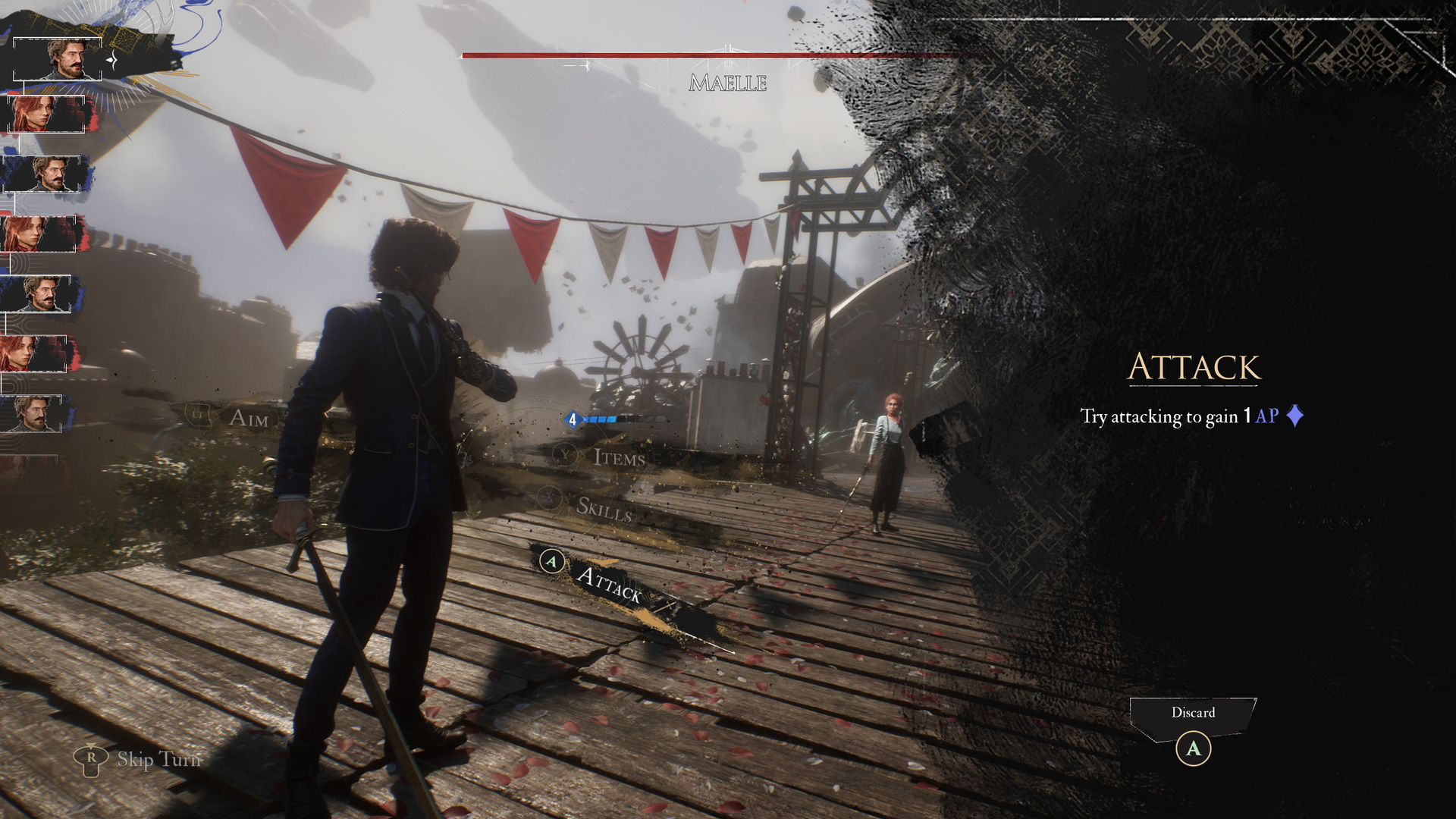 The tutorial duel drills the base loop: attack to bank AP, spend it on skills. The right panel already advertises the other half: Gustave's arm charges "by dealing damage, dodging & parrying." Source: Game UI Database.
The consequence: your defensive performance funds your offense. A player who parries a four-hit string comes out of the enemy turn richer than they entered it; a player who face-tanks pays twice, in health and in tempo. This is the sharpest economic statement in the design, and also the root of its most-criticized dynamic (parry strictly dominates dodge for anyone who can execute it; see design tensions).
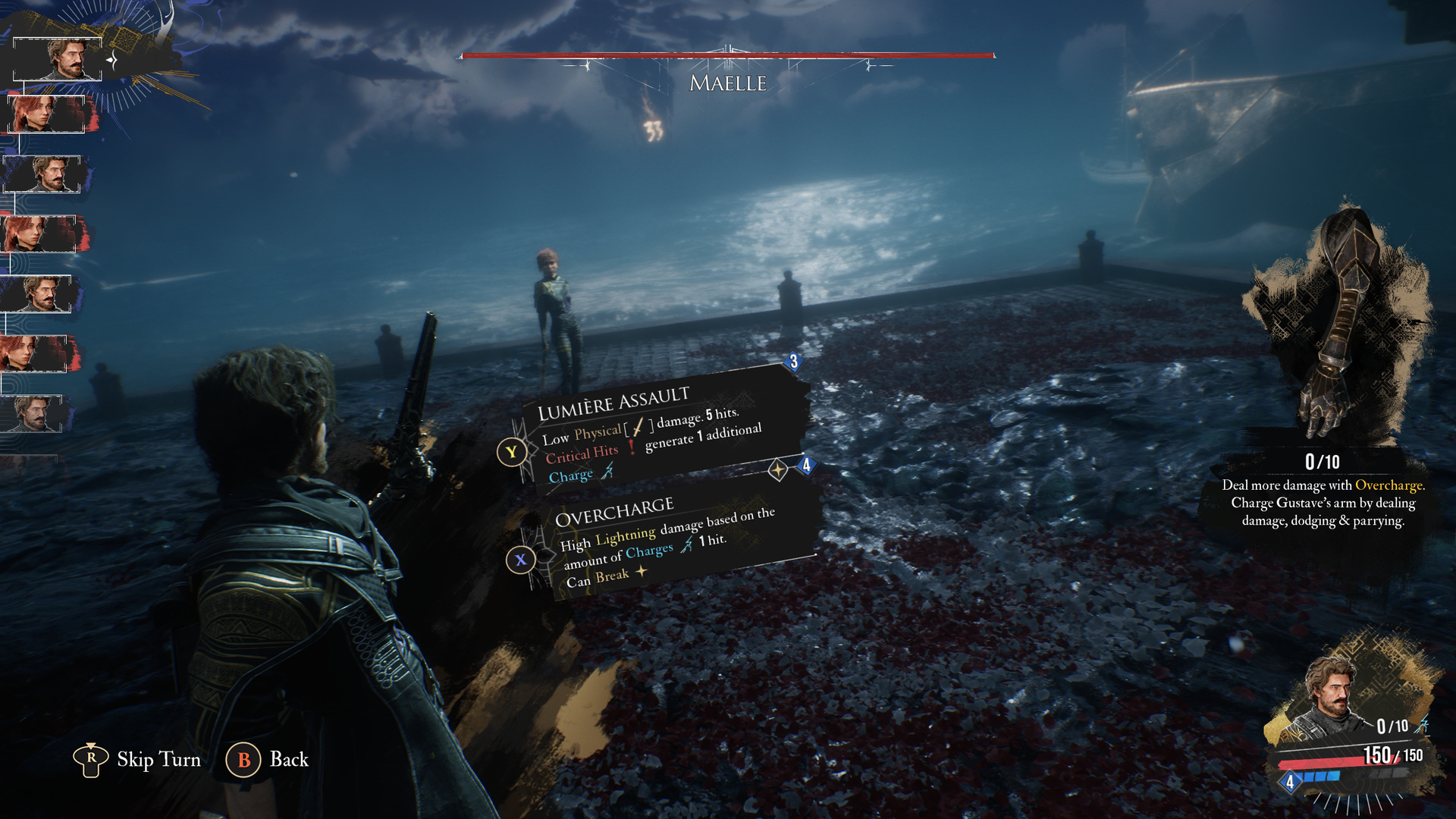 Skill select mid-fight: Lumière Assault (3 AP, crits generate an extra Charge) vs Overcharge (4 AP, spends all Charges). Costs sit right on the buttons. Source: Game UI Database.
The Gradient gauge
Below the party frames sits a shared segmented bar that fills as the fight goes on: dealing damage, taking turns, defending well. It pays for two things:
- Gradient Attacks: per-character cinematic ultimates unlocked through the story, costing one or more full segments.
- Gradient Counters: the only answer to attacks flagged with the special indicator, which can't be parried.
Because the gauge is party-wide, spending it is a group decision: a Gradient Counter spent to survive is an ultimate you can't cash later. One pool, two uses, offense vs insurance: shared-party-gauge logic applied at the per-fight timescale, a close cousin of the fixed budgets in loadout-as-budget.
Items: tints
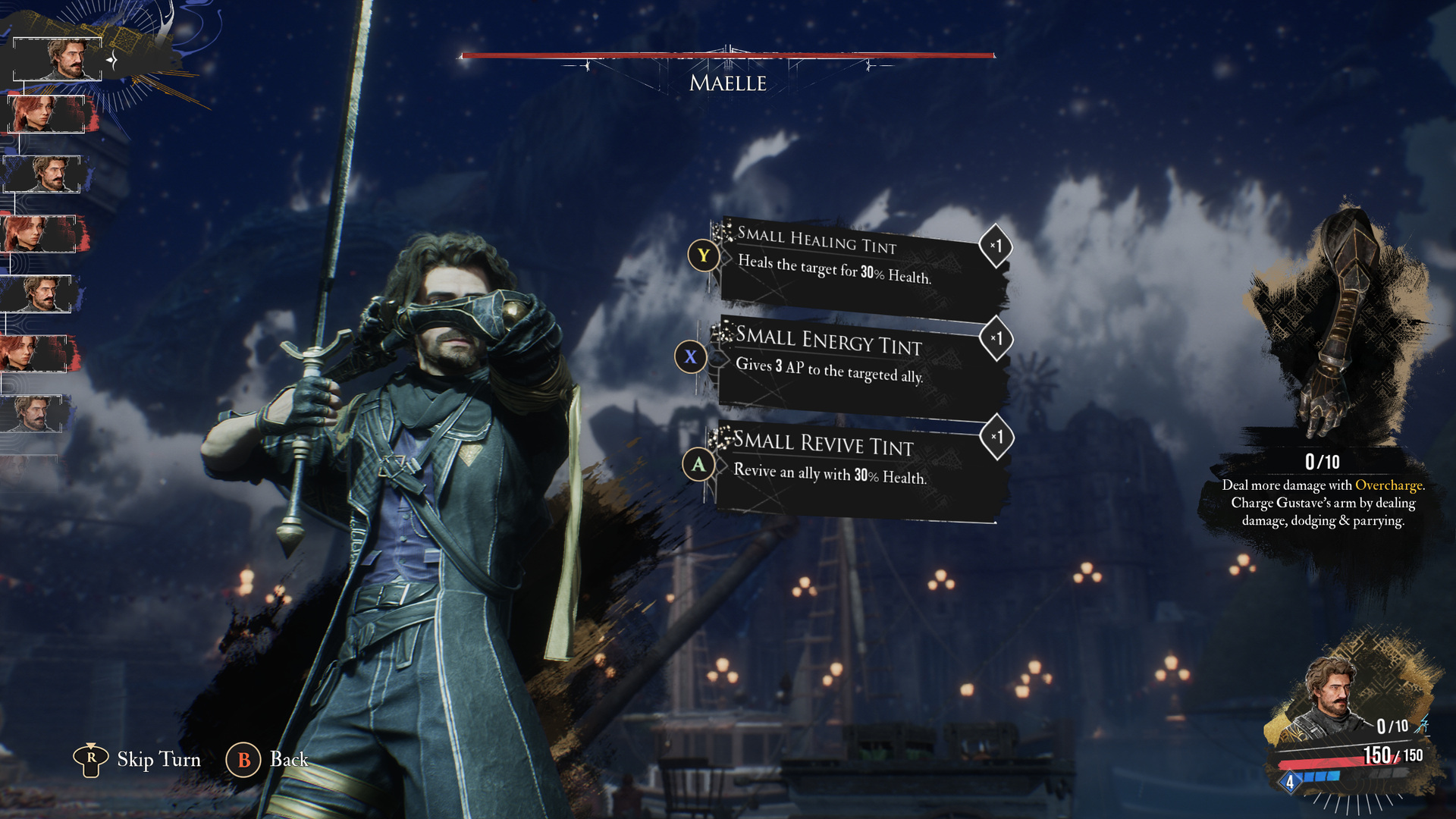 Tints: Healing (30% HP), Energy (+3 AP), Revive (30% HP ally revive). Stock is small and refills at every expedition flag, Estus-style, so hoarding is pointless and using them is never a long-term loss. Source: Game UI Database.
The refill-at-flag design (see world & camp) keeps the item economy per-attempt instead of per-playthrough: a deliberate anti-hoarding stance borrowed from Souls bonfires rather than from JRPG shopping.
Patterns this exemplifies
shared-party-gauge: one party-wide resource with competing offensive and defensive uses.reactive-turn-based: the AP flows are what make the real-time layer strategically legible rather than cosmetic.