Death & Sparks
Mina wears its Souls influence openly, but its death penalty is graduated rather than all-or-nothing. You have a buffer of Sparks, and only running that buffer dry actually costs you anything.
The two-tier penalty
Sparks are the small blue pips at the end of your health bar. They function as a death insurance pool:
- Die with Sparks → you drop one Spark at the spot you fell (a recoverable "bloodstain"), respawn at the last Spark Generator, and keep all your carried Bones. Run back to the spot to reclaim the Spark.
- Die without Sparks → there's no pip to drop, so the penalty falls on your wallet: every carried Bone is lost outright.
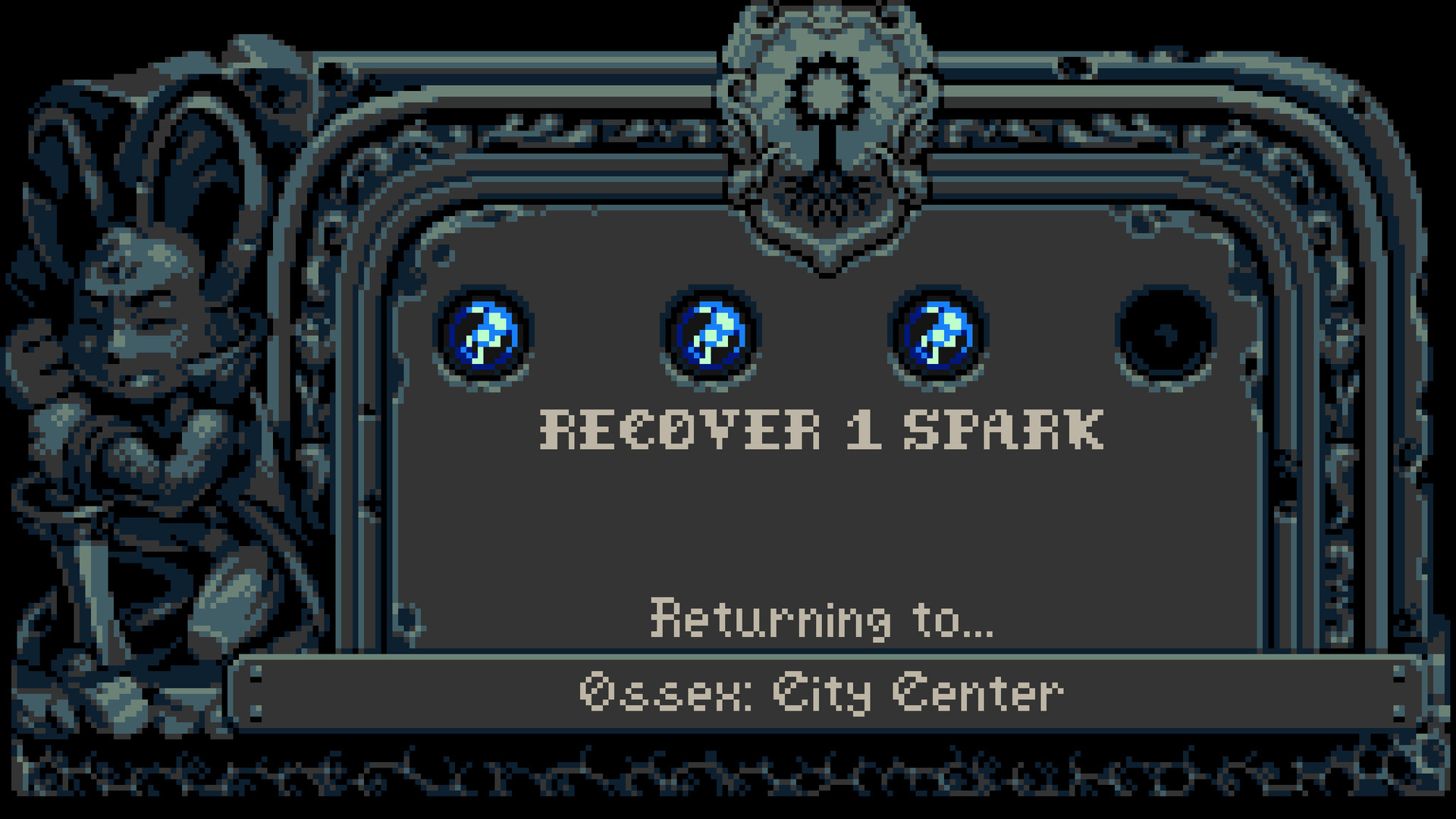 The death screen returns you to a checkpoint and tracks the Spark you dropped. Sparks are the currency the death loop actually plays with; your Bones stay safe as long as the buffer holds. Source: Game UI Database.
This inverts the usual Souls anxiety. In Dark Souls, every death threatens your entire souls stack the moment you die twice. In Mina, the first several deaths in a tough stretch are nearly free: you keep your Bones, you just have a Spark waiting to be fetched. The fear only escalates when you've burned through your Sparks and the next death is the one that empties your pockets. The penalty ramps with your carelessness instead of being maximal from the first stumble.
The "Bone Up" mercy rule
The safety valve: if you trigger a level-up on your run back (the "Bone Up!" screen), the game auto-retrieves all your lost Sparks from across the map.
That turns a normal frustration (losing your bloodstain on a second death) into a strategic out. If you're close to a level, it's often smarter to grind a few weak enemies near the Underlab to tip yourself over the threshold (the Bone Up reclaims your Sparks automatically) than to risk a dangerous trek back to a boss arena to pick one up. The system rewards a deliberate, low-risk recovery play instead of forcing a white-knuckle corpse run every time.
The design throughline of the whole death system: make the first mistakes cheap and the discipline-rewarding plays cheaper. It's hard enough to be a "2D Dark Souls" without being mean about resource loss.
Spark Generators as checkpoints
The fiction and the checkpoint system are the same object. Spark Generators are machines Mina (and her former partner Lionel) built across Tenebrous Isle; restoring them is both main-story progression and how you unlock checkpoints:
- They act as save / respawn points and refill your Sparks and health.
- Restoring a region's Generator re-lights its map and opens previously dark/sealed routes (progression gating done diegetically).
- The Underlab is the hub where you refit, Bone Up, and re-equip trinkets.
Scattered Spark containers (collectibles, à la heart pieces) raise your maximum Spark count, so exploration directly buys you a deeper death buffer. The more of the map you've cleared, the more forgiving dying becomes, which is a nice difficulty-easing curve baked into completion rather than into a menu.
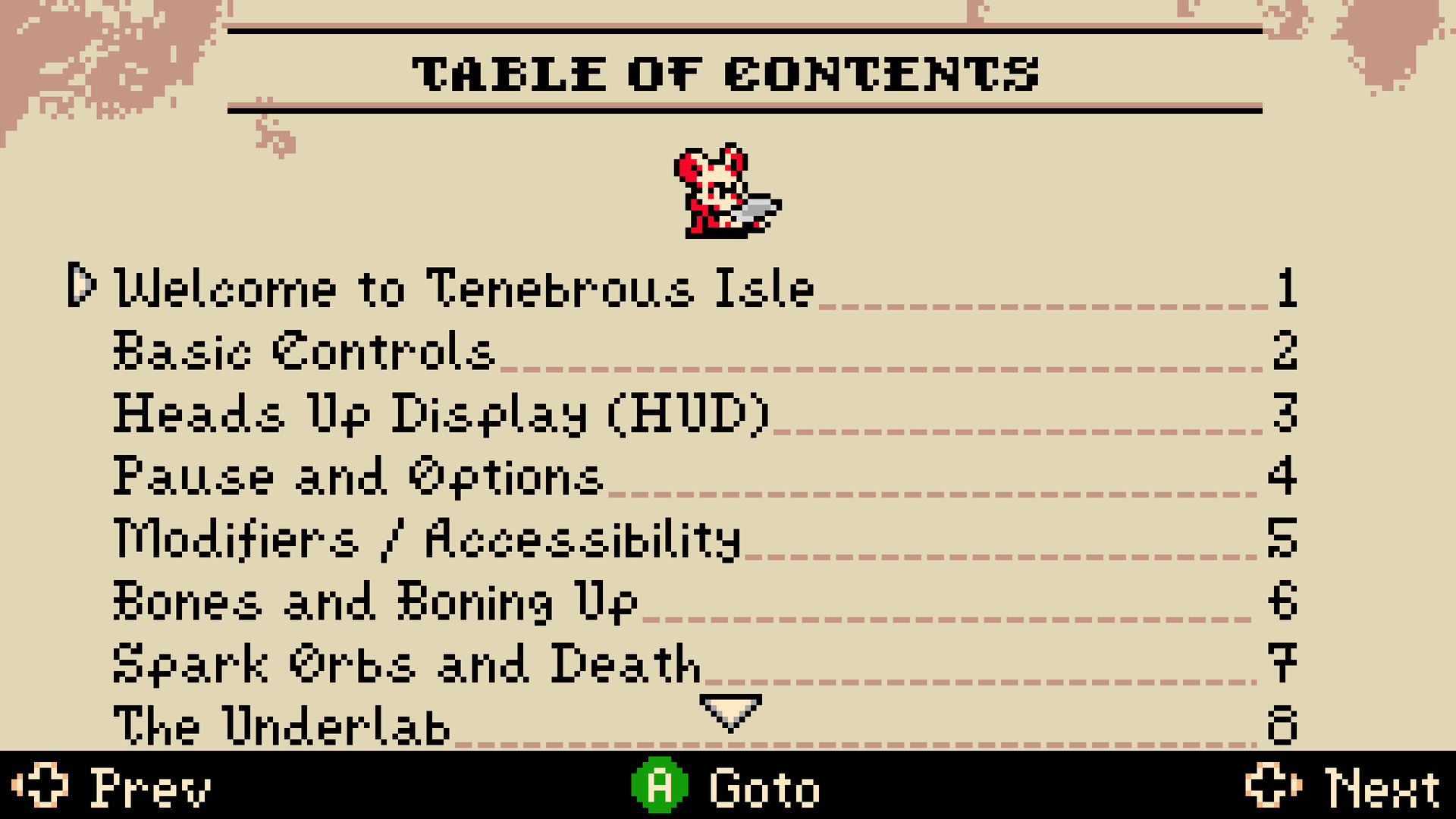 The manual itself frames Bones/Boning Up, Sparks/Death, and the Underlab as the three pillars new players must understand: the economy and the death loop are taught as first-class systems, not buried. Source: Game UI Database.
Difficulty & accessibility
The graduated penalty sits alongside an explicit Modifiers / Accessibility menu (also flagged in the manual). Reviewers repeatedly described the game as "soulsy in difficulty yet beautifully accessible": punishing by default, but with toggles that let a very wide range of players tune the fragility. The Spark buffer and the Bone Up rule are the systemic half of that accessibility: they soften the death loop for everyone, before any menu toggle is touched.
Patterns this exemplifies
graduated-death-penalty(uncurated): a Souls-style retrieval loop where a buffer resource (Sparks) absorbs the early deaths and only sustained failure escalates to losing your real currency, with a level-up auto-forgiveness rule on top. A more humane variant of the chip-drop / corpse-run lineage. Candidate for a curated concept page once a second game on the site exemplifies a buffered death stake.