Bones & progression
Mina has two currencies, and keeping them straight is the key to the economy:
- Bones: the green-skull currency enemies drop. This is your XP and your spending money in one. You bank Bones into levels ("Boning Up") and the same Bones are what you ultimately put at risk when you die.
- Bonestone: a scarcer premium currency. This is what vendors charge for the big stuff: weapon/shield upgrades, sidearms, trinkets.
The split keeps grind-able power (Bones, from any enemy) separate from gated power (Bonestone, from exploration and bosses), so you can always level by farming but you can't buy out the shop by farming.
Boning Up: three upgrade tracks
Bones are spent at the Underlab / save points to level three parallel tracks:
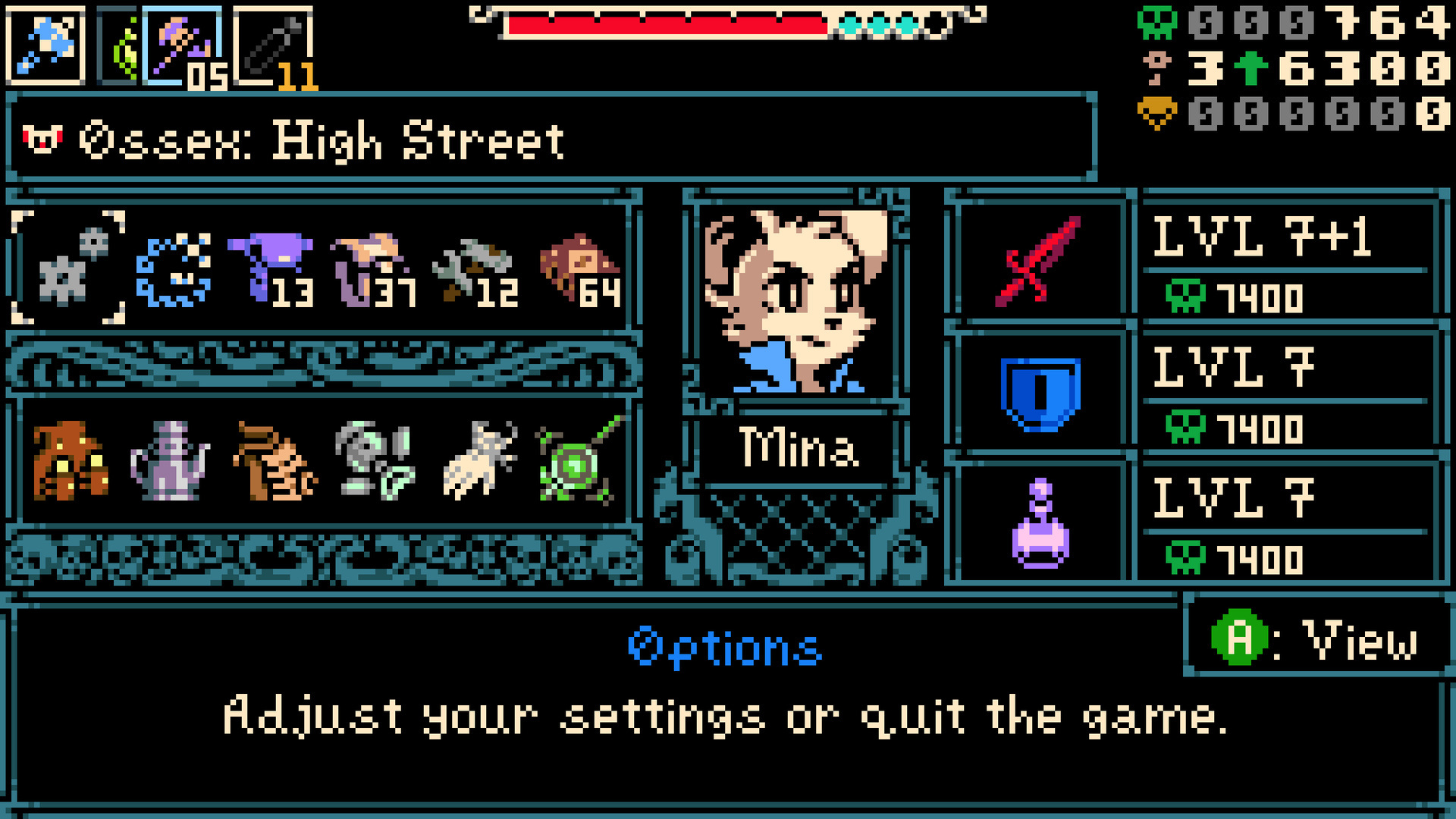 Three competing tracks: Attack (main weapon power), Shield (defense / parry), Plasma Vial (heal strength). Each shows the Bones cost to the next level (all 7400 here), so levelling is a choice between offense, defense, and survivability with one shared currency. The Attack track reads "LVL 7*+1**" because an equipped trinket is adding a level on top. Source: Game UI Database.*
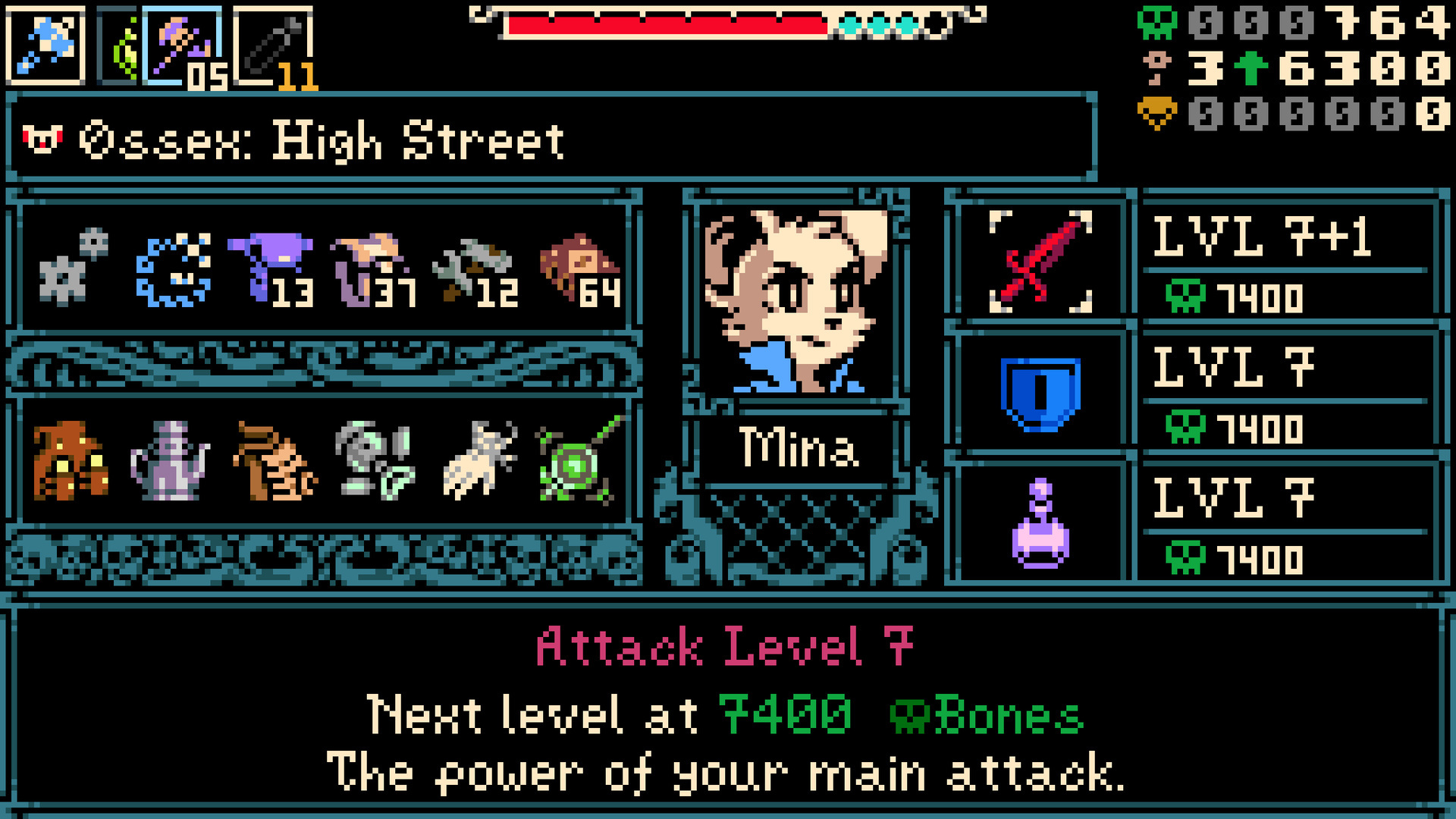 Each track states its cost and what it buys in one line: "The power of your main attack." Costs climb per level, so late upgrades are real commitments and the Attack-vs-Shield-vs-Vial decision keeps biting the whole game. Source: Game UI Database.
Because all three tracks draw on the same Bones pool and costs escalate, you can't max everything in step. Early on you're choosing whether to become a glass cannon (pump Attack), a wall (pump Shield), or a marathoner (pump Plasma Vial). That choice rhymes with the trinket and weapon decisions. The whole game is one long "where does the next bit of power go?"
Bonestone: the vendor currency
Bonestone is what shops want. It buys the upgrades that aren't on the three level tracks: new sidearms, trinkets, and weapon-skill unlocks like the parry counter:
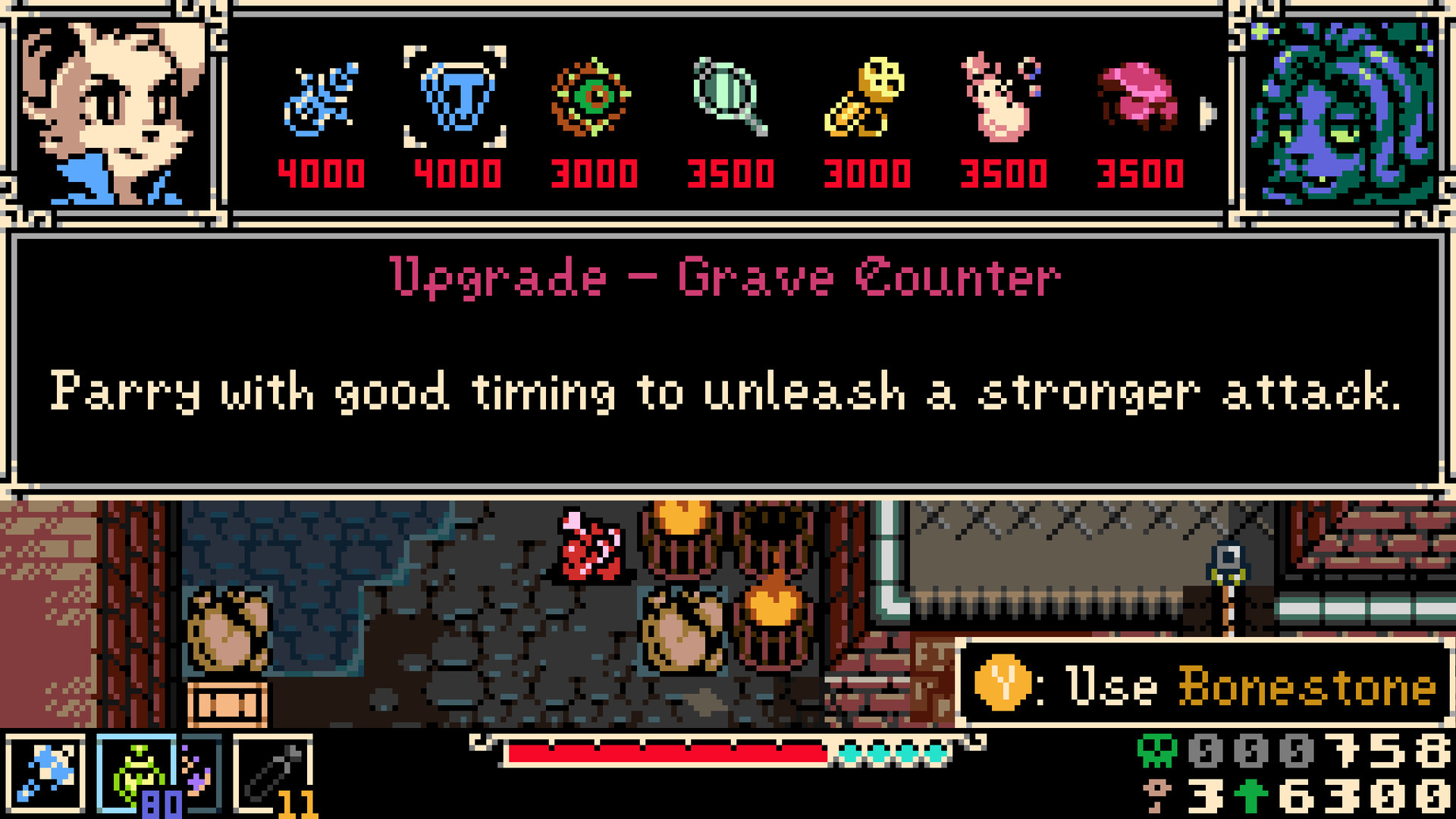 Vendor stock priced in Bonestone (4000 / 3500 / 3000…). Bonestone is scarcer than Bones and isn't farmable from trash mobs, so vendor purchases are deliberate, exploration-funded choices. The merchants themselves are part of the worldbuilding, a grim cast of ghouls and oddities. Source: Game UI Database.
The economy in one diagram
Enemies ─► Bones (XP + cash)
              ├─ Boning Up at the Underlab → +1 Attack / Shield / Plasma Vial level
              └─ AT RISK on death: kept while you have Sparks, forfeited if you die with none

Exploration / bosses ─► Bonestone (premium)
              └─ Vendors → sidearms · trinkets · weapon-skill upgrades (e.g. Grave Counter)

Spark containers (found) ─► more Sparks  → bigger death buffer (see Death & Sparks)
The wiring that matters: Bones are simultaneously your progress and your stake. Every Bone you're carrying is a level you haven't banked yet and the thing you'll lose if you get greedy. That single overlap is what makes the death system tense without needing a separate "souls" currency: your XP is your bloodstain.
Patterns this exemplifies
currency-as-progression(uncurated): one currency (Bones) doubles as experience, spending money, and death stake; a second, scarcer currency (Bonestone) gates vendor power so farming can't trivialise it. Related in spirit tocurrency-as-crafting, but here the twist is the overlap of XP and risk rather than the elimination of generic gold.